
2026 Best Custom Parts Manufacturing Companies?

Choosing the 2026 best Custom Parts Manufacturing companies requires more than comparing polished websites. A reliable supplier must turn a clear drawing into consistent parts, not just a promising prototype. This guide examines CNC machining, injection molding, sheet metal fabrication, additive manufacturing, finishing, inspection, and production support. It also considers practical details, including tolerance control, material traceability, lead times, minimum order quantities, and communication during revisions.

The evidence should be concrete. Can a supplier provide inspection reports for a tight-tolerance aluminum bracket? Does its coordinate measuring machine support repeatable verification? Can its team explain why a stainless-steel part warped after heat treatment? These questions reveal experience. Manufacturing engineer Shigeo Shingo warned, “The most dangerous kind of waste is the waste we do not recognize.” His observation fits this market closely. Unclear specifications, hidden setup charges, and repeated samples can quietly damage a project.

This ranking aims to help engineers, product teams, and purchasing managers make informed decisions. It does not assume that the largest factory is automatically the best choice. A smaller specialist may deliver stronger feedback and better control for complex parts. That judgment can change.

Supplier capabilities also evolve during 2026. Certifications may expire, equipment may move, and quoted lead times may become optimistic. Some company information comes from supplier-published material, so independent verification remains essential. Request recent quality records, sample parts, realistic pricing, and a documented production plan before approval. Practical proof matters most.
2026 Best Custom Parts Manufacturing Companies?

Custom Parts Manufacturing Explained: Processes, Materials, and Applications

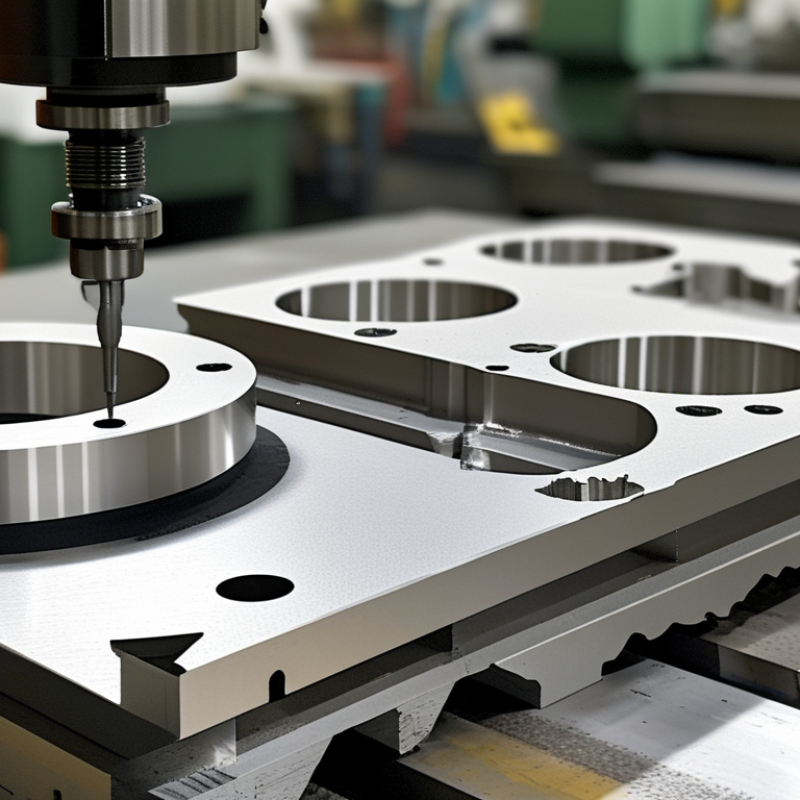
Custom parts manufacturing combines design judgment, process control, and material science. CNC machining removes material from aluminum, steel, titanium, or engineering plastics. Injection molding suits repeated plastic parts, while sheet-metal fabrication forms brackets, housings, and enclosures. Additive manufacturing builds complex geometries layer by layer, often reducing tooling needs.

The 2024 Wohlers Report valued the global additive manufacturing industry at about 20.0 billion dollars in 2023. Its growth reflects demand for lightweight aerospace components, medical prototypes, and customized industrial tools. Yet additive production is not automatically cheaper. Surface finishing, support removal, inspection, and batch size can change the decision quickly. Small details matter.

Designers should define tolerances, load conditions, surface requirements, and expected volume before requesting quotations. A drawing can still be wrong. Material certificates, dimensional inspection, and traceable process records improve reliability, especially for safety-sensitive applications. ISO manufacturing guidance supports controlled documentation, but certification alone cannot fix poor design input. A practical review compares machining, molding, forming, and printing against cost, strength, lead time, and repairability.

The International Energy Agency reports that industry remains a major global energy consumer, making material efficiency increasingly important. Reducing scrap can help, but it should not excuse weak durability. Experienced manufacturers test prototypes, question unrealistic tolerances, and revise designs when evidence disagrees with assumptions. That discipline often matters more than a sophisticated machine.

Market Baseline: U.S. Manufacturing Added $2.3 Trillion in 2023

2026 Best Custom Parts Manufacturing Companies?

The U.S. manufacturing sector remains a substantial economic force. The National Association of Manufacturers reported approximately $2.3 trillion in manufacturing output during 2023. The sector also supported about 13 million direct jobs, according to the same industry analysis. These figures create a strong baseline for evaluating custom parts manufacturers in 2026.

A capable supplier should prove more than production capacity. Buyers should examine dimensional inspection records, material traceability, process controls, and realistic lead times. The U.S. Census Bureau’s Annual Survey of Manufactures offers useful benchmarks for plant activity and production costs. Deloitte’s 2024 manufacturing research also highlights ongoing investment in automation, digital production, and workforce skills. These trends matter for complex machined, formed, or fabricated parts. Yet the $2.3 trillion figure can mislead. It measures a massive sector, not every supplier’s quality. A large facility may still provide weak communication. That uncomfortable detail deserves attention.

Tips: Request a sample inspection report before approving a production run. Compare quoted tolerances with the actual drawing requirements. Ask how nonconforming parts are documented and corrected. Review capacity evidence for your material, volume, and delivery schedule. Experience matters here. So does skepticism. A smaller supplier may offer better engineering support, while a larger operation may provide stronger redundancy. Neither assumption is automatically safe. Use audited records, technical questions, and a limited pilot order to test performance before scaling.

Supplier Qualification: ISO 9001, IATF 16949, and AS9100 Compliance

Choosing a custom parts manufacturer in 2026 requires more than comparing prices. Supplier qualification should begin with current certificates, audit scope, and production evidence. ISO’s ISO Survey 2022 recorded more than 1.2 million ISO 9001 certificates worldwide, showing broad adoption but not equal performance. A certificate alone is not proof of process control.

Look deeper. ISO 9001 suppliers should show controlled drawings, inspection records, corrective-action logs, and traceable material certificates. For automotive parts, IATF 16949 adds stronger requirements for risk analysis, defect prevention, and customer-specific controls. IATF industry data has reported more than 80,000 certified sites globally. That scale makes certificate verification essential. Ask for the certificate number, issuing body, expiry date, and exact manufacturing location.

Aerospace work needs additional discipline. AS9100 qualification should include configuration control, calibration history, nonconforming-product handling, and personnel competence records. The IAQG OASIS database can support independent certificate checks. Request a sample first-article package. Review its revision control. Small gaps matter. A supplier may have excellent machining skills but weak documentation. I have seen qualification reviews focus on equipment while missing delayed corrective actions. That mistake deserves reflection. A practical scorecard should weight compliance, delivery history, process capability, and transparent communication, not certification logos alone.

2026 Company Comparison: Tolerances, Lead Times, Capacity, and Cost

Comparing custom parts manufacturers in 2026 requires more than checking hourly prices. The U.S. Census Bureau’s Annual Survey of Manufactures reports over six trillion dollars in annual shipments. That scale hides major differences in process control, equipment, and inspection discipline. Ask for measured tolerances, not advertised capabilities. A supplier promising ±0.02 mm should provide inspection records, calibration dates, and material certificates.

Lead time also needs a practical breakdown. Request separate estimates for design review, programming, production, finishing, and shipping. A five-day machining promise may exclude anodizing or first-article approval. For urgent parts, confirm available machine hours and backup capacity. The Bureau of Labor Statistics reported private-industry compensation growth of about 4.2% year over year in December 2024. Labor pressure can quietly change quotations, especially for skilled inspection and complex five-axis work.

Cost comparisons should use identical drawings, materials, quantities, and acceptance criteria. A low unit price can become expensive after rework, tooling, or freight. Ask whether the quote includes statistical inspection and packaging. My own caution is simple: capacity claims are difficult to verify before production. A short pilot order exposes more truth than a polished capability page. It also reveals where the comparison was too optimistic.

2026 Best Custom Parts Manufacturing Companies? — 2026 Company Comparison: Tolerances, Lead Times, Capacity, and Cost
Anonymous Supplier Profile Primary Processes Typical Materials Standard Dimensional Tolerance Prototype Lead Time Production Lead Time Annual Capacity Typical Unit Cost
Precision CNC Specialist 3-, 4-, and 5-axis CNC milling; CNC turning; surface finishing Aluminum, stainless steel, carbon steel, brass, copper, engineering plastics ±0.05 mm standard
Up to ±0.01 mm on selected features
5–10 business days 3–8 weeks Approx. 100,000–500,000 parts/year Medium–High
Typically $8–$250 per part
High-Volume CNC Production Supplier CNC turning, milling, Swiss-type machining, automated inspection Aluminum alloys, stainless steel, brass, titanium, acetal and nylon ±0.05 mm standard
±0.02 mm with controlled process capability
7–14 business days 4–10 weeks Approx. 500,000–5,000,000 parts/year Low–Medium
Typically $1.50–$80 per part
Rapid Sheet Metal Fabricator Laser cutting, CNC bending, punching, welding, powder coating Cold-rolled steel, stainless steel, aluminum, galvanized steel ±0.10–0.20 mm typical
Dependent on sheet thickness and bend geometry
3–7 business days 2–6 weeks Approx. 50,000–1,000,000 parts/year Low–Medium
Typically $5–$150 per part
Metal Injection Molding Supplier Metal injection molding, debinding, sintering, secondary machining Stainless steel, low-alloy steel, tool steel, selected nickel alloys ±0.30–0.50% of dimension
Secondary machining improves critical features
8–16 weeks for tooling and first samples 8–20 weeks after tool approval Approx. 1,000,000–20,000,000 parts/year Low at scale
Typically $0.30–$25 per part, excluding tooling
Investment Casting Supplier Wax pattern production, investment casting, heat treatment, machining Stainless steel, carbon steel, nickel alloys, cobalt alloys, aluminum alloys ±0.10–0.25% of dimension
Machining may be required for tight fits
6–12 weeks 6–16 weeks Approx. 20,000–500,000 parts/year Medium
Typically $10–$300 per part, excluding tooling
Additive Manufacturing Bureau Selective laser fusion, resin printing, fused-filament printing, finishing Polyamide, photopolymer resin, stainless steel, aluminum, titanium ±0.10–0.30 mm typical
Varies by technology, orientation, and build size
2–7 business days 1–4 weeks Approx. 5,000–100,000 parts/year Medium–High
Typically $15–$500 per part
Plastic Injection Molding Supplier Prototype tooling, injection molding, insert molding, automated assembly ABS, PC, PP, POM, PA, PEEK, glass-filled polymers ±0.10–0.30 mm typical
Material shrinkage and tool design affect results
6–14 weeks for tooling and samples 6–18 weeks after tool approval Approx. 100,000–10,000,000 parts/year Very low at scale
Typically $0.20–$20 per part, excluding tooling
Fabricated Weldment and Large-Part Supplier Plate cutting, structural welding, machining, stress relieving, painting Carbon steel, stainless steel, aluminum, abrasion-resistant plate ±0.50–1.50 mm typical
Machining required for precision interfaces
2–5 weeks 5–14 weeks Approx. 1,000–50,000 assemblies/year Medium–High
Typically $100–$10,000 per assembly
Precision Grinding and Finishing Supplier Surface grinding, cylindrical grinding, honing, lapping, polishing Hardened steel, carbide, ceramics, stainless steel, tool steel ±0.005–0.02 mm typical
Fine finishing can achieve tighter form and surface requirements
7–15 business days 3–8 weeks Approx. 10,000–250,000 parts/year High
Typically $20–$500 per part
Integrated Contract Manufacturing Partner CNC machining, sheet metal, molding, assembly, testing, supply-chain management Metals, plastics, elastomers, composites, electronic subassemblies ±0.05–0.30 mm typical
Defined by process, material, and drawing requirements
7–21 business days 6–20 weeks Approx. 250,000–5,000,000 parts/year Medium
Typically $5–$2,000 per finished assembly
Data note: The figures above are representative 2026 market ranges for anonymous supplier profiles, not quotations or audited claims from named companies. Actual tolerance, lead time, capacity, and cost depend on geometry, material, order quantity, surface finish, inspection requirements, tooling, shipping, and certification needs. Unit-cost ranges exclude taxes, freight, tooling, and non-recurring engineering unless otherwise stated.

Technology Outlook: McKinsey Reports 70% of Digital Transformations Fail to Scale

The best custom parts manufacturing companies are not defined by machines alone. Their advantage lies in scaling digital transformation across quoting, engineering, production, and inspection. A widely cited consulting study reports that about 70% of digital transformations fail to reach scale. That warning matters when a factory has advanced software, yet operators still rely on spreadsheets and disconnected work instructions.

A 2024 smart manufacturing survey found that 92% of manufacturers view digital operations as a major competitiveness driver. In practice, scalable production needs more than automation. It requires linked CAD/CAM data, real-time machine monitoring, revision control, and inspection records that follow each part. A five-axis machine may cut complex aluminum accurately, but poor data transfer can still create rework, delays, and scrap.

The strongest suppliers test technology against measurable shop-floor results. Useful indicators include first-pass yield, setup time, on-time delivery, and traceability completeness. Industry research on industrial cybersecurity also shows that connected factories face growing operational risk. Access controls and offline recovery plans deserve the same attention as artificial intelligence.

Some implementations remain imperfect. A dashboard can look impressive while hiding weak operator adoption. Digital transformation is not a software purchase. It is a repeated discipline, and many manufacturers underestimate the human change required.