Why Choose Quality Welding Parts for Your Business?
In production, a welding component may look simple: a bracket, frame, or reinforced joint. Its performance depends on more than appearance. Accurate dimensions, suitable material, consistent welds, and clear inspection records all matter. If a mounting hole is misplaced by a few millimeters, assembly can slow down or require rework. That small mismatch can affect an entire production run.
Choosing quality Welding Parts helps businesses manage these risks and keep equipment dependable. Well-made parts can fit more consistently, reduce avoidable adjustments, and support predictable maintenance. They do not eliminate every problem. Still, clear specifications and suitable quality checks make problems easier to identify. Buyers can review material details, dimensional tolerances, weld inspection methods, and traceability documents before placing an order. These records offer practical evidence, not a promise that every part will be perfect.
Fit matters. So does communication. A supplier should understand the part’s intended use, operating conditions, and required production volume. Ask how changes are handled and what checks are performed before shipment. A useful evaluation compares total cost, including rework, downtime, and replacement—not just the quoted unit price. Keep it measurable. The right choice depends on the application, and a lower-cost part may be adequate for some jobs. For critical assemblies, however, careful sourcing can support safer, steadier operations and more reliable schedules. It is worth checking the details, even when a part seems ordinary.
What Are Quality Welding Parts?
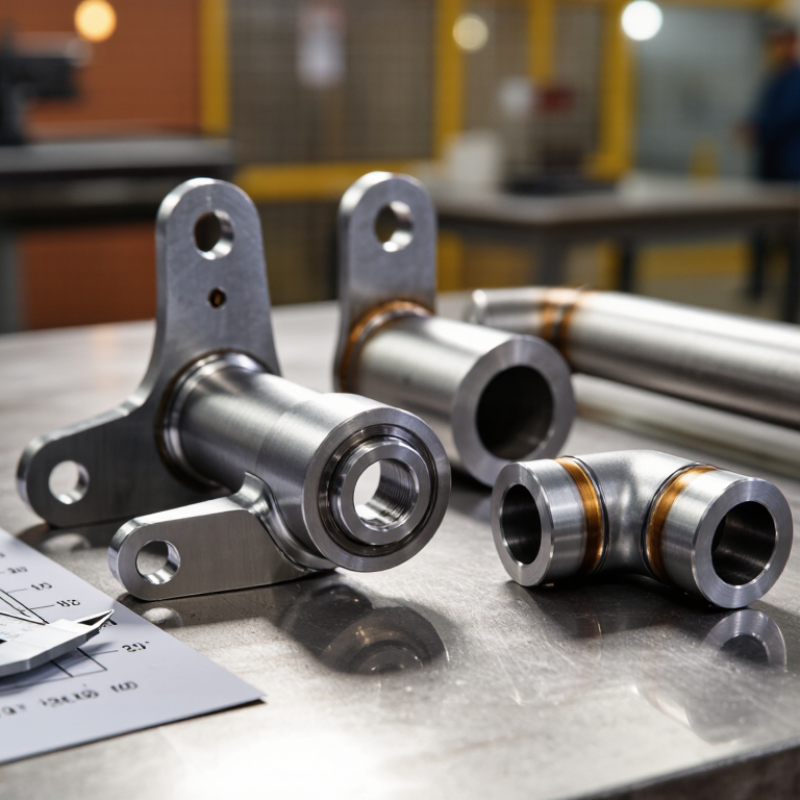
Quality welding parts are components that meet defined requirements for material, dimensions, weld integrity, and service conditions. They are not simply parts with smooth, attractive weld beads. A supplier should be able to provide material identification, inspection records, and clear acceptance criteria. These details help buyers trace a part back to its specifications when questions arise.
The American Welding Society’s workforce outlook projected a U.S. need for 360,000 welding professionals by 2027. That pressure makes documented processes and qualified inspection especially important. For structural steel, AWS D1.1 sets requirements for welding, while ISO 3834 addresses quality management in fusion welding. The right reference depends on the part’s design and use. Check the drawing, applicable standard, and inspection plan together.
Look closely at fit-up, weld consistency, and critical dimensions. For parts exposed to fatigue or pressure, visual checks alone may not reveal internal flaws; appropriate nondestructive testing may be needed. A polished bead can still conceal a problem. No part is perfect. Even a thorough inspection has limits, so buyers should agree on acceptance criteria before production, not after a batch arrives.
How Are Welding Parts Quality Assessed?
Welding-part quality is assessed against the drawing, material specification, and intended service—not appearance alone. Inspectors check dimensions, alignment, bead profile, undercut, visible cracks, and porosity. A weld can look tidy and still contain hidden defects. That matters.
ISO 5817:2023 defines three quality levels for many fusion-welded joints: B, C, and D, with B setting the most demanding requirements. The correct level depends on design and service conditions; “highest” is not automatically the most practical choice. Visual testing can follow ISO 17637, while ultrasonic or radiographic testing may be selected when internal flaws could affect performance. The method should fit the joint, material, thickness, and risk.
Reliable assessment also checks whether the part meets its specified mechanical requirements. Tensile, bend, or impact tests can reveal weaknesses that visual inspection misses. Test frequency should reflect the production plan and risk, rather than assuming every part needs every test. Keep records of inspection results, material traceability, welding procedures, and any repairs. These make trends easier to spot across batches. Still, sampling has limits: a passing sample does not prove every weld is sound. Clear acceptance criteria and qualified inspectors help, but no test is perfect.
What Benefits Do Quality Welding Parts Provide?
Why Choose Quality Welding Parts for Your Business?
What Benefits Do Quality Welding Parts Provide?
Quality welding parts help businesses build assemblies that fit correctly and perform consistently. Accurate edges and stable dimensions reduce time spent adjusting components at the workbench. That matters. When parts align cleanly, welders can focus on steady joints instead of correcting gaps with extra passes. This may reduce rework, consumable use, and delays, though results still depend on process settings and operator skill.
Consistent material thickness and prepared surfaces make inspection more predictable. Teams can check fit, dimensions, and weld appearance against project specifications. Material records and inspection documents also support traceability when required. Still, a polished surface alone does not prove a part meets requirements. Verify drawings, tolerances, material certificates, and samples before ordering at scale. Small fit-up issues can go unnoticed until final assembly. An incoming check helps catch them early, even when parts appear well made. Quality components improve workflow, but they cannot replace sound welding procedures or careful inspection.
How Do Quality Parts Affect Business Operations?
Reliable welding parts affect daily operations long before a finished assembly leaves the shop. When brackets, frames, or fittings arrive with consistent dimensions, workers spend less time adjusting gaps and correcting poor fit-up. That saves labor and keeps production schedules more predictable. Small differences matter. A misaligned plate can slow an entire assembly station.
Quality also influences inspection and maintenance. Sound welds and suitable materials can reduce the chance of early cracking or repeated repairs, though no part can prevent every failure. Clear material records and inspection results help teams trace issues and make informed decisions. This is especially useful when a component operates under vibration or changing loads. Still, quality checks take time, and a specification that looks good on paper may not match actual shop conditions.
Tips: Check dimensions, weld profiles, and material documents when parts arrive. Keep a few inspection notes. They can reveal recurring fit-up problems before they become costly delays.
Some friction is normal. Even well-made parts may need minor adjustments as designs or processes change. Reviewing those adjustments with fabricators helps businesses improve drawings, set realistic tolerances, and avoid paying for precision that operations do not need.
Why Choose Quality Welding Parts for Your Business? — How Do Quality Parts Affect Business Operations?
The comparison below uses illustrative planning assumptions for 100 welded parts. It is not an industry benchmark; actual results depend on part design, materials, welding process, inspection criteria, and supplier performance.
How Can Businesses Choose Welding Parts?
Choosing welding parts starts with the work they must handle. Match each part to the welding process, base material, and expected operating load. Check dimensions, connection type, heat resistance, and compatibility with the equipment already in use. For parts exposed to moisture or sparks, consider the working environment and likely wear. A small mismatch can cause poor fit, unstable operation, or extra downtime.
Tips: Compare technical drawings with the actual part before ordering. Ask suppliers for material specifications, tolerances, and inspection records. Test a sample when fit or performance is uncertain. Keep the old part nearby for a careful side-by-side check.
Price matters, but it should not outweigh dependable performance. Review expected service life, replacement frequency, and the cost of installation. For critical parts, traceable quality records can help teams check consistency between batches. A common oversight is choosing by appearance alone; two parts may look similar but differ in material or tolerance. It is worth checking the details, even when the first choice seems obvious. Maintain a simple record of part numbers, dimensions, and replacement dates to make future purchasing more accurate.