

What Are Round Slings Used For?
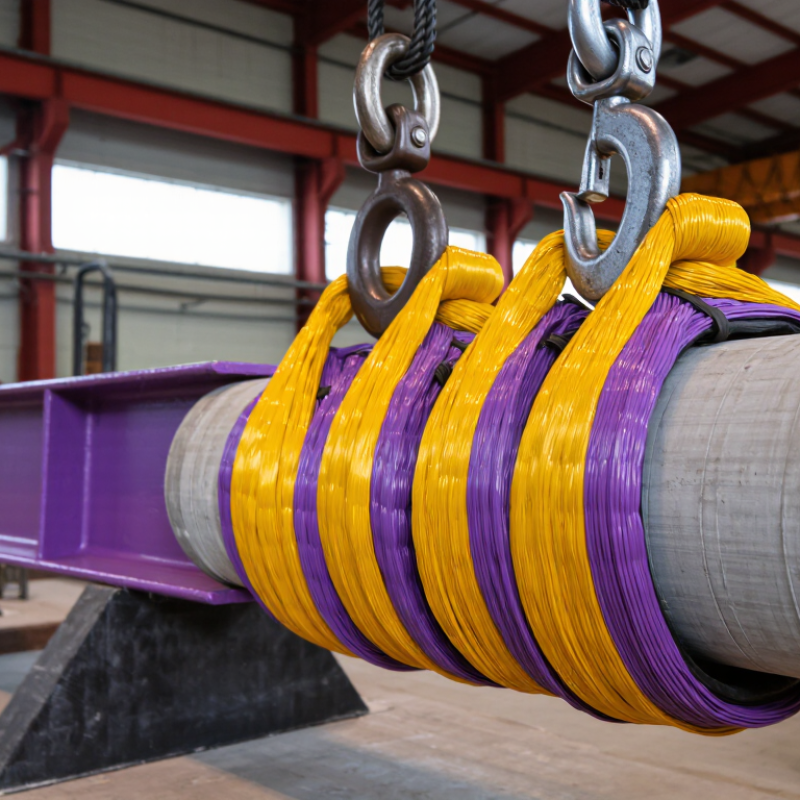
Round Slings are flexible lifting tools used to raise, position, and control loads without damaging finished surfaces. Their soft polyester body can wrap around painted steel, machinery, pipes, and concrete components. In construction, manufacturing, marine work, and warehouse handling, they support loads where chains may leave marks. They also adapt to vertical, basket, and choker hitches. Each hitch changes the sling’s working load limit.
Industry data shows why this equipment matters. Grand View Research identifies lifting equipment as a growing global market, driven by construction, manufacturing, and infrastructure investment. MarketsandMarkets also reports continuing demand for synthetic lifting products because they are lightweight and easier to handle than wire rope. These reports describe market direction, not permission to exceed a sling’s rated capacity. That distinction is often missed.
Mike Parnell, a recognized rigging educator and former Industrial Training International president, offers a practical reminder: “Rigging is a system, not a single piece of hardware.” The sling, hooks, shackles, load shape, angles, and operator all affect safety. OSHA 1910.184 and ASME B30.9 require careful inspection, identification, and proper use. Look closely at the fibers. Cuts, melted areas, abrasion, chemical damage, or unreadable labels can make a sling unsuitable. A damaged sling may still look strong. That is the problem. Round Slings are useful, but they are not automatically safe. Selection must match the load, hitch, environment, and lift plan. The safest practice remains simple: inspect before use, protect against sharp edges, keep the load balanced, and stop when conditions change.
Definition and Basic Structure of Round Slings
What Are Round Slings Used For?
Definition and Basic Structure of Round Slings
Round slings are flexible lifting devices built as endless loops. They connect loads to cranes, hoists, or lifting beams. Common applications include lifting pipes, motors, steel frames, machinery, and bundled materials. Their soft surface can reduce scratching on painted or polished loads.
A typical round sling contains three parts: a load-bearing core, a protective cover, and an identification label. The core usually contains high-tenacity polyester yarns. The cover holds the yarns together and helps limit abrasion, dirt, and ultraviolet exposure. It is not decorative. The label identifies rated capacity, length, material, and hitch limitations. Capacity changes with vertical, choker, or basket arrangements, especially when sling angles become shallow.
OSHA 1910.184 specifies a minimum design factor of five for synthetic web slings. ASME B30.9 also provides inspection and removal criteria for synthetic slings. These figures do not make every lift safe. The U.S. Bureau of Labor Statistics recorded 1,069 fatal injuries in transportation and material-moving occupations during 2023. That figure does not prove sling failure, but it shows why lifting details deserve attention. A sling may look clean while its inner core is damaged. Field inspections should check cuts, heat glazing, chemical discoloration, stretched sections, and unreadable labels. Capacity tables are not magic. Real loads remain uneven, awkward, and sometimes poorly understood.
Common Lifting and Rigging Applications
What Are Round Slings Used For?
Common Lifting and Rigging Applications
Round slings are used to lift, position, and secure heavy loads without directly gripping them. Their soft, flexible body can conform to machinery, steel beams, pipes, and irregular equipment. This reduces surface damage compared with some rigid lifting methods. However, the sling must match the load and lifting plan.
Common applications include vertical lifts, choker hitches, and basket hitches. A basket hitch can provide greater capacity when the load remains balanced. Choker hitches help bundle pipes, timber, and long components. Workers also use round slings to move pumps, motors, fabricated frames, and construction materials around tight work areas. The load’s weight, center of gravity, sling angle, and hitch type all affect the working load limit.
Inspection should happen before every use. Look for cuts, burns, chemical damage, pulled stitching, flattened areas, and unusual stretching. Protect the sling from sharp edges with suitable sleeves or padding. Never drag it across concrete or trap it beneath a load. A low lifting angle can create higher tension than expected. That detail is easy to underestimate.
In practical work, clear communication matters as much as equipment selection. I have seen teams focus on capacity labels while ignoring load balance. That mistake deserves more attention. Stop the lift when the sling shifts, twists, or shows damage. A qualified person should verify the setup before movement begins.
How Round Slings Handle Different Loads
Round slings are used for lifting machinery, steel sections, pipes, timber, and other heavy loads. Their flexible, endless design spreads contact around the load. This helps reduce pressure on painted or polished surfaces.
Different loads require different rigging choices. A balanced load can often use a vertical hitch, provided the rated capacity is suitable. A basket hitch can support more weight, but only when both legs share the load evenly. A choker hitch grips cylindrical items well, though it usually reduces lifting capacity. As the sling angle becomes narrower, tension increases quickly. Keep lifting angles wide and controlled.
Long or uneven loads may shift during lifting. Use two slings, proper spacing, and a guide line when needed. Never assume equal loading without checking the center of gravity. Sharp edges can cut synthetic fibers, even when the sling appears strong. Edge protection is essential. It should stay in place throughout the lift.
Temperature, chemicals, abrasion, and repeated bending also affect performance. Inspect for cuts, melted fibers, damaged stitching, and flattened sections before every use. A sling can look acceptable and still be unsafe. That point is easy to forget.
Do not knot, twist, drag, or shock-load a round sling. Follow the capacity tag, site procedures, and guidance from a qualified lifting person. My own inspection habits still need discipline, especially when a familiar load feels routine.
Choosing the Right Sling for Each Task
What Are Round Slings Used For?
Choosing the Right Sling for Each Task
Round slings support lifting operations where loads need flexible, gentle contact. They are commonly used with machinery, pipes, steel frames, and finished surfaces. Their soft, endless construction can wrap around irregular shapes without leaving sharp marks. However, flexibility does not mean unlimited strength. The working load limit must match the lift, hitch type, and sling angle.
Read the identification tag before connecting anything. Check the rated capacity for vertical, choker, and basket hitches. A basket hitch may carry more than a vertical hitch, but the load must remain balanced. A shallow sling angle increases tension quickly. Keep it above 30 degrees whenever the lifting plan allows. Better yet, use a qualified lifting professional to verify the configuration.
Inspect the sling closely. Look for cuts, melted fibers, pulled stitching, discoloration, or crushed sections. Remove damaged equipment from service. Use edge protection when the load has corners or rough surfaces. The sling may seem strong enough. That assumption can fail suddenly. Environmental conditions matter too. Choose suitable materials for heat, chemicals, moisture, or outdoor exposure. I have seen crews select the correct capacity but overlook abrasion. That small oversight deserves a second check before every lift.
| Sling Type or Configuration | Typical Construction | Common Working Load Limit* | Best-Suited Tasks | Key Advantages | Important Limitations and Checks |
|---|---|---|---|---|---|
| Vertical or straight lift | One synthetic round sling connected directly to the load and lifting point | Approximately 1.0 × rated vertical capacity | Lifting balanced loads with a single attachment point | Simple setup; the rated capacity is easy to identify; suitable for controlled, balanced lifts | Do not use for unstable or off-center loads. Confirm that the attachment point can support the load and that the sling remains aligned. |
| Choker hitch | One end passes around the load and through the sling eye to form a tightening loop | Typically up to 0.80 × vertical capacity | Bundled materials, pipes, beams, and loads that can be securely gathered | Helps grip the load; useful when no dedicated lifting points are available | Capacity can be reduced by the choke angle and how tightly the sling forms around the load. Keep the choke point away from the sling eye and avoid shock loading. |
| Basket hitch | The sling passes beneath the load with both eyes connected to the lifting hook | Typically up to 2.0 × vertical capacity when balanced | Long, stable loads with adequate support underneath | Can provide higher capacity than a straight lift; distributes contact over a wider area | The load must be balanced and supported. Use a spreader or other control method when the load may slide or separate. |
| Two-leg bridle or basket arrangement | Two round slings or two sling legs connected to a master link or lifting beam | Varies with leg angle; about 1.41 × total vertical capacity at 45° from horizontal | Large loads requiring two lifting points and improved stability | Improves load control and helps reduce rotation during lifting | As the angle becomes flatter, leg tension rises. Do not use angles below the minimum specified by the sling manufacturer or applicable lifting standard. |
| Multi-leg lifting arrangement | Three or four sling legs connected to a common top fitting | Must be calculated for the actual angle and load distribution | Large, rigid loads with multiple engineered lifting points | Can provide excellent stability when lifting points are correctly positioned | Do not assume every leg carries an equal share. Uneven geometry, load flexibility, and angle effects can significantly reduce the allowable capacity. |
| Protective-sleeved round sling | Synthetic load-bearing core with a replaceable abrasion-resistant sleeve | Use the marked rating; the sleeve does not increase capacity | Painted, polished, machined, or moderately abrasive loads | Reduces surface damage and helps protect the sling from abrasion | Inspect both the sleeve and the inner core. A sleeve can hide cuts, melting, chemical damage, or broken fibers. |
| High-temperature application sling | Heat-compatible synthetic material selected for a controlled temperature range | Use only the temperature-adjusted rating | Work near warm components where the sling material is specifically approved | Suitable for selected elevated-temperature environments when properly specified | Standard synthetic round slings can melt or lose strength near hot surfaces, sparks, flames, or molten metal. Follow the manufacturer’s temperature limits. |
| Low-temperature outdoor lift | Synthetic round sling rated for the expected environmental conditions | Use the marked rating unless a specific reduction is required | Construction, equipment handling, and general lifting in cold weather | Lightweight and flexible compared with many wire-rope alternatives | Inspect for ice, stiffness, cuts, and trapped moisture. Do not drag a sling through snow, ice, or contaminated surfaces. |
| Chemical-exposure application | Material selected for compatibility with the specific chemical and concentration | Confirm the chemically compatible rating before use | Handling loads in controlled industrial environments with known chemical exposure | Some synthetic materials resist selected acids, alkalis, or solvents | Chemical compatibility depends on the exact substance, concentration, temperature, and exposure time. Remove from service if fibers become brittle, swollen, discolored, or damaged. |
| Short-length or precision-positioning sling | Compact round sling selected to minimize excess slack | Based on the marked vertical, choker, or basket rating | Machine positioning, confined work areas, and short connection distances | Reduces loose material and can improve control around compact loads | Check that the sling is not bent sharply around fittings and that the hook or connector does not load the eye incorrectly. |
Safe Use, Inspection, and Storage Practices
What Are Round Slings Used For?
Round slings lift pipes, machinery, structural steel, and irregular loads. Their soft, flexible body can protect painted surfaces better than rigid lifting accessories. Safe performance depends on correct capacity, hitch selection, and load balance. OSHA 1910.184 requires employers to inspect synthetic web slings before use and remove damaged slings from service. The same discipline should apply to round slings.
Inspection must be practical, not ceremonial. Look for cuts, burns, chemical damage, melted fibers, pulled stitching, and crushed sections. Check the identification tag before every lift. It should show rated capacity and applicable hitch details. ASME B30.9 emphasizes following the manufacturer’s rated limits and removing defective slings. The HSE reported 138 worker fatalities in Great Britain during 2023/24. Not every incident involves slings, but the figure shows why lifting controls deserve attention. A sling can appear clean and still be unsafe inside.
Tips: Keep the sling centered under the load. Use edge protection around sharp corners. Never drag it across concrete. Do not knot, twist, or shorten it with makeshift methods. Store slings indoors, dry, and away from sunlight, heat, chemicals, and welding sparks. Hang them on rounded supports, not nails or hooks. A useful reflection is simple: clean equipment is not automatically sound equipment. If damage is uncertain, quarantine the sling and ask a competent person. Guessing is not a lifting plan.

