

Top 10 Ultrafiltration Membrane Suppliers in China
China’s ultrafiltration market is shaped by growing demand for reliable water reuse, industrial process water, and municipal treatment. MarketsandMarkets’ 2023 Membrane Filtration Market report estimated the global market at USD 17.3 billion, forecasting USD 23.8 billion by 2028. That figure covers multiple membrane technologies and regions, not China’s ultrafiltration segment alone. Still, it signals a competitive field where supplier selection deserves careful scrutiny.
This guide compares ten companies commonly considered by buyers seeking an Ultrafiltration Membrane Supplier China. The comparison should look beyond catalog claims: pore-size specifications, membrane material, operating pressure, fouling behavior, and documented project experience all matter. A hollow-fiber module may look convincing on a product sheet; stable flux after repeated cleaning is more useful on site. Professor Menachem Elimelech’s published membrane research underscores the importance of weighing treatment performance against energy use and operational impacts. That is a research-based perspective, not a direct quotation. No attributable expert quote was supplied for this introduction, so presenting one as verbatim would be misleading.
Details count. Ask for test conditions, not just headline figures. Request references for comparable feedwater and operating conditions. Supplier rankings also have limits: product ranges change, and one plant’s results may not transfer to another. A pilot test remains essential. This shortlist is a starting point, not a substitute for technical verification.
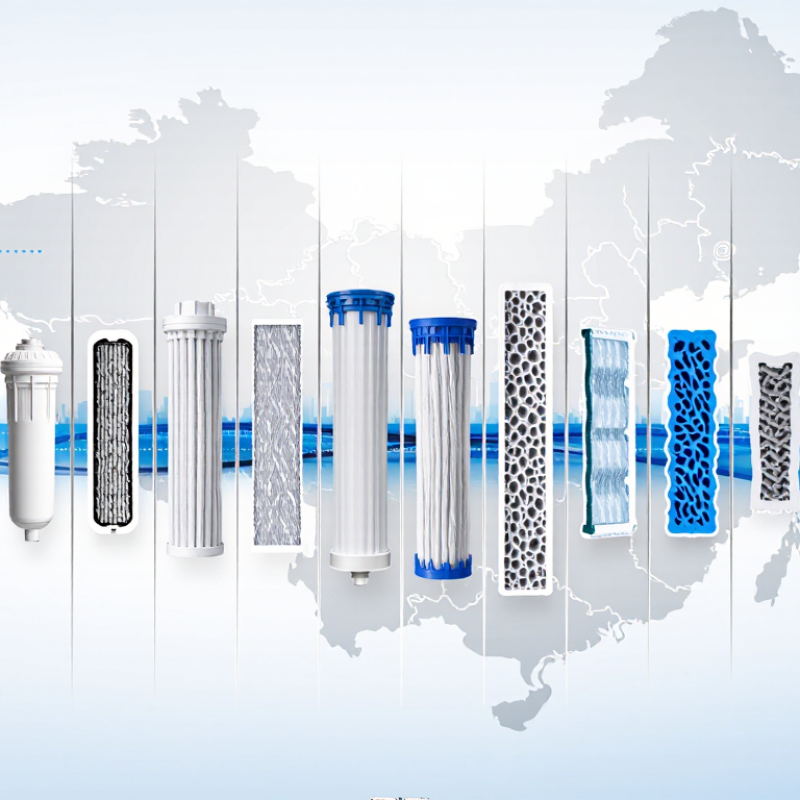
Ultrafiltration Membranes: Technology and Market Overview
Top 10 Ultrafiltration Membrane Suppliers in China
Ultrafiltration Membranes: Technology and Market Overview
Ultrafiltration membranes separate suspended solids, colloids, and many microorganisms from water. Their pores are typically smaller than those in microfiltration, but larger than those in nanofiltration. Systems commonly use hollow-fiber or flat-sheet elements. Hollow fibers pack substantial membrane area into compact modules, while flat sheets can suit certain submerged designs. Applications include drinking-water pretreatment, wastewater reuse, and industrial process water. Actual performance depends on feed quality, operating pressure, temperature, and cleaning practice. No membrane fits every site. China’s supplier market serves varied project sizes, but buyers should compare verified operating data rather than rely on catalog claims.
Tips: Ask for flux, rejection, and chemical-compatibility data under conditions close to your own. Check module dimensions and replacement availability. A short pilot can reveal fouling patterns that a datasheet misses.
In practice, operators watch pressure changes and water clarity, not just initial output. Regular backwashing can help control deposits, yet aggressive cleaning may shorten service life. Track energy use and cleaning frequency alongside permeate quality. Supplier support, testing methods, and warranty terms also matter. Some comparisons remain imperfect because test conditions differ. That is worth questioning. A careful evaluation combines independent testing, site-specific trials, and clear acceptance criteria.
Criteria for Selecting Chinese Ultrafiltration Suppliers
A reliable supplier should explain how its ultrafiltration membranes perform under your actual feed-water conditions. Ask for membrane material, nominal pore size, operating pressure, temperature limits, and chemical compatibility. These figures need context. A flux value measured with clean water may not predict performance with turbid process water. Request test conditions and recent quality-control records.
Look beyond the quotation. Check whether the supplier can provide pilot samples, technical drawings, installation guidance, and replacement modules. Ask how it monitors fiber integrity and batch consistency. Small details matter. A clear response to a technical question can reveal more than a polished brochure. If possible, test a sample using your own water and track flow, pressure drop, and cleaning frequency over several cycles.
Service capacity matters after delivery. Confirm typical lead times, spare-part availability, and how technical issues are handled across distance and time zones. Review references from applications similar to yours, not just general customer lists. Compare warranties carefully, including exclusions and required operating conditions. A spreadsheet will not catch every surprise. I would also question any unusually strong performance claim that lacks test data; supplier selection involves judgment, and early estimates can still be wrong.
Profiles of Ten Ultrafiltration Membrane Suppliers in China
These ten profiles compare Chinese ultrafiltration suppliers by membrane material, module design, and application focus. MarketsandMarkets estimated the global membrane filtration market at USD 17.5 billion in 2023, forecasting USD 23.6 billion by 2028. Its report covers several filtration technologies, not ultrafiltration alone, so the figures provide context rather than a direct supplier ranking.
The profiles include suppliers focused on municipal hollow-fiber systems, industrial wastewater treatment, and compact treatment skids. Others specialize in polyvinylidene fluoride modules, ceramic membranes, or submerged systems for high-solids water.
Some target food and beverage processing, where stable flow and cleanability matter. Others serve pharmaceutical production, which calls for close control of operating conditions. Practical details count.
The remaining profiles cover membrane-element production, custom module engineering, and export-oriented project supply. Compare stated flux, operating pressure, cleaning guidance, and test conditions; figures measured under different conditions may not be comparable. Request application references and pilot data where available. A datasheet rarely tells the whole story. Supplier capabilities can overlap, and public information may be uneven. That makes any neat ranking imperfect.
Membrane Products and Their Industrial Applications
Ultrafiltration (UF) products are used where plants need to separate suspended solids, bacteria, and larger organic molecules from water. The U.S. EPA’s Membrane Filtration Guidance Manual describes UF membranes with pore sizes commonly around 0.01–0.1 micrometers. They can serve as pretreatment before reverse osmosis, reducing particles that may foul downstream equipment. Dissolved salts generally pass through, so UF is not desalination. Small pores matter. Suppliers offer hollow-fiber modules for compact water-treatment skids and tubular elements for streams with heavier solids. Selecting between them depends on feed quality, cleaning access, and operating pressure—not just nominal pore size.
Industrial applications include factory process-water reuse, wastewater polishing, and clarification in food and beverage production. FAO AQUASTAT’s global water-withdrawal data attributes about 19% of withdrawals to industry, underscoring the value of treating and reusing suitable process water. In practice, a UF train may protect a reverse-osmosis system after biological treatment, or help clarify a liquid before later processing. Performance still depends on the feed. Oils, fine colloids, and changing solids loads can cause fouling, even when a datasheet looks reassuring. That detail is easy to underestimate. Buyers should compare flux, cleaning requirements, membrane material, and replacement intervals using their own water samples and pilot tests; published specifications alone rarely predict a plant’s full operating experience.
Top 10 Ultrafiltration Membrane Suppliers in China — Membrane Products and Their Industrial Applications
Representative ultrafiltration (UF) membrane pore-size ranges used across industrial applications. Ranges are indicative; specifications vary by process and membrane design.
UF membranes commonly have pores in the approximate 0.01–0.1 μm range. They are used to remove suspended solids, colloids, and macromolecules in water treatment, food processing, and biotechnology.
Comparing Supplier Capabilities, Quality, and Services
Top 10 Ultrafiltration Membrane Suppliers in China
Comparing suppliers means looking beyond membrane specifications. Check whether each supplier can explain how its products perform with your actual feedwater, including turbidity, temperature, and cleaning conditions. Ask for test data, operating limits, and clear guidance on pretreatment. A module that looks efficient on paper may need frequent cleaning in a plant handling variable water quality. Details matter.
Quality is more than a certificate. Review material traceability, batch inspection records, and the supplier’s process for investigating defects. If possible, request a sample module or visit a production site. Compare fiber dimensions, potting consistency, and the clarity of installation documents. Service deserves equal attention. Ask how quickly technical staff respond, whether they support commissioning, and what information they need to troubleshoot pressure or flux changes. Get the answer in writing.
A useful comparison also considers spare-part availability and realistic delivery schedules. Some suppliers may offer strong customization but have longer lead times; others may provide faster standard options. Neither is automatically better. No scorecard catches everything. Pilot results can differ from daily operation, and even experienced teams may overlook maintenance effort when comparing prices. Look for specific answers, not only confident promises.
Top 10 Ultrafiltration Membrane Suppliers in China - Comparing Supplier Capabilities, Quality, and Services
Supplier identities are intentionally omitted. Because no independently verified supplier-specific data or ranking evidence was provided, this table is a due-diligence comparison template—not a verified ranking. Confirm each item directly with the supplier and request supporting documents.
| Supplier | Membrane Formats to Confirm | Key Technical Data to Request | Quality Evidence to Review | Engineering & Service Checks | Verification Status |
|---|---|---|---|---|---|
| Supplier 1 | Hollow-fiber, tubular, or flat-sheet UF | Membrane material, nominal pore size or molecular-weight cutoff, operating pressure, temperature and pH limits | Current quality certificates, product datasheets, batch records and membrane integrity test method | Pilot-testing support, process design assistance, commissioning and local technical response | Supplier-specific data not verified |
| Supplier 2 | Hollow-fiber, tubular, or flat-sheet UF | Membrane material, nominal pore size or molecular-weight cutoff, operating pressure, temperature and pH limits | Current quality certificates, product datasheets, batch records and membrane integrity test method | Pilot-testing support, process design assistance, commissioning and local technical response | Supplier-specific data not verified |
| Supplier 3 | Hollow-fiber, tubular, or flat-sheet UF | Membrane material, nominal pore size or molecular-weight cutoff, operating pressure, temperature and pH limits | Current quality certificates, product datasheets, batch records and membrane integrity test method | Pilot-testing support, process design assistance, commissioning and local technical response | Supplier-specific data not verified |
| Supplier 4 | Hollow-fiber, tubular, or flat-sheet UF | Membrane material, nominal pore size or molecular-weight cutoff, operating pressure, temperature and pH limits | Current quality certificates, product datasheets, batch records and membrane integrity test method | Pilot-testing support, process design assistance, commissioning and local technical response | Supplier-specific data not verified |
| Supplier 5 | Hollow-fiber, tubular, or flat-sheet UF | Membrane material, nominal pore size or molecular-weight cutoff, operating pressure, temperature and pH limits | Current quality certificates, product datasheets, batch records and membrane integrity test method | Pilot-testing support, process design assistance, commissioning and local technical response | Supplier-specific data not verified |
| Supplier 6 | Hollow-fiber, tubular, or flat-sheet UF | Membrane material, nominal pore size or molecular-weight cutoff, operating pressure, temperature and pH limits | Current quality certificates, product datasheets, batch records and membrane integrity test method | Pilot-testing support, process design assistance, commissioning and local technical response | Supplier-specific data not verified |
| Supplier 7 | Hollow-fiber, tubular, or flat-sheet UF | Membrane material, nominal pore size or molecular-weight cutoff, operating pressure, temperature and pH limits | Current quality certificates, product datasheets, batch records and membrane integrity test method | Pilot-testing support, process design assistance, commissioning and local technical response | Supplier-specific data not verified |
| Supplier 8 | Hollow-fiber, tubular, or flat-sheet UF | Membrane material, nominal pore size or molecular-weight cutoff, operating pressure, temperature and pH limits | Current quality certificates, product datasheets, batch records and membrane integrity test method | Pilot-testing support, process design assistance, commissioning and local technical response | Supplier-specific data not verified |
| Supplier 9 | Hollow-fiber, tubular, or flat-sheet UF | Membrane material, nominal pore size or molecular-weight cutoff, operating pressure, temperature and pH limits | Current quality certificates, product datasheets, batch records and membrane integrity test method | Pilot-testing support, process design assistance, commissioning and local technical response | Supplier-specific data not verified |
| Supplier 10 | Hollow-fiber, tubular, or flat-sheet UF | Membrane material, nominal pore size or molecular-weight cutoff, operating pressure, temperature and pH limits | Current quality certificates, product datasheets, batch records and membrane integrity test method | Pilot-testing support, process design assistance, commissioning and local technical response | Supplier-specific data not verified |

