What Are the Top Types of Camping Grills?
Choosing a Camping Grill is less about finding one perfect model and more about matching fuel, size, and cooking style to the trip. A compact charcoal grill can add smoky flavor beside a picnic table, while a gas grill offers quick starts and easier temperature adjustments. Pellet grills bring steady heat and wood-fired character, but usually need more space and power. Electric models suit places with an outlet, and portable tabletop grills help when every inch of trunk space matters.
Barbecue expert Steven Raichlen’s practical approach can be paraphrased this way: choose the grill for the food, fuel, and setting—not for the biggest flame. That is useful advice, though real trips complicate neat comparisons. Wind can shift heat; a tiny grate can crowd dinner; and cleanup may matter more than a feature list suggests. Small details count.
This guide compares the top types of camping grills by portability, heat control, flavor, setup, and upkeep. It will explain where charcoal, gas, pellet, electric, and compact multi-fuel designs tend to perform well, and where each can frustrate. Expect concrete trade-offs: the click of a gas igniter, ash under a charcoal grate, or a power cord that limits campsite placement. No single type wins every trip. The best choice depends on what you cook, how far you carry it, and how much time you want to spend tending heat. A little uncertainty belongs here; a grill that works beautifully for burgers may feel awkward for breakfast.
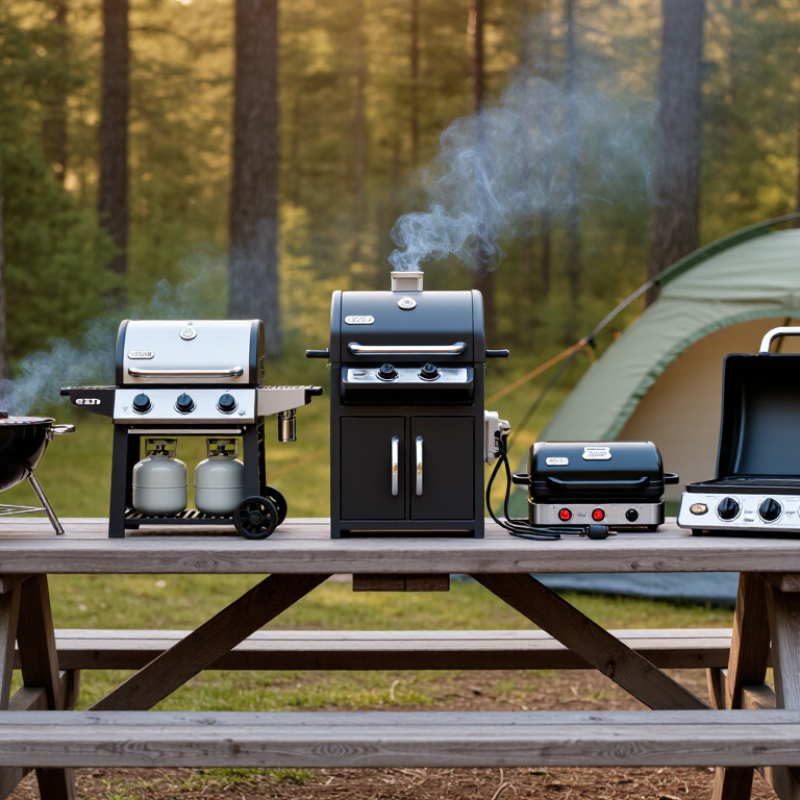
Propane Camping Grills: Fast, Adjustable Heat
Propane camping grills suit cooks who want heat without waiting long for charcoal to catch. A small cylinder feeds the burner, and a control knob lets you raise or lower the flame. That adjustment helps when breakfast sausages brown quickly but sliced vegetables need gentler heat. Turn the knob down. The change is immediate, though the cooking surface may take a little time to cool. A built-in lid can also help hold warmth, but it does not make every grill heat evenly.
Wind can change the experience. On an exposed campsite, a gust may cool one side of the grate and stretch cooking time. Place the grill on firm, level ground, outdoors, and away from tents or dry brush. Keep the fuel connection clear, and check it according to the grill’s instructions before lighting. It is easy to assume a steady flame means steady cooking; watch the food, not just the knob. Propane models also require carrying fuel and managing the cylinder, which takes space. That trade-off is worth considering when packing for a short trip.
Propane Camping Grills: Fast, Adjustable Heat
Propane contains about 21,600 BTU per pound. At a constant grill input of 10,000 BTU per hour, a 1-pound cylinder provides about 2.2 hours of theoretical burn time, while a 20-pound cylinder provides about 43.2 hours. Actual runtime varies with heat setting, weather, and usable fuel.
Charcoal Camping Grills: Traditional Flavor and High Heat
Charcoal camping grills bring a campfire-like flavor to food. With a well-managed bed of coals, they can sear burgers and vegetables, leaving browned edges and a smoky aroma. That takes patience. Wait until the charcoal is covered in pale ash before cooking; flames can scorch food before the center is done.
A grill with adjustable vents gives you some control over airflow and heat. Spread coals in a single layer for steady cooking, or bank them to one side for a hotter zone and a cooler place to finish food. Bring enough fuel, heat-resistant gloves, and long-handled tongs. Wind and cold can change cooking times, so use the food’s doneness—not the clock alone—to judge when it is ready.
Charcoal has drawbacks worth considering. It takes longer to light, creates ash to manage, and offers less precise temperature control than some alternatives. A small grill can also feel crowded when cooking for several people; I have found that working in batches is often easier, though it does slow dinner down. Set the grill on a stable, nonflammable surface, keep it away from tents and dry brush, and let the coals cool fully before handling the ash.
Wood-Burning Camping Grills: Cooking with Natural Fuel
A wood-burning camping grill uses sticks or split firewood instead of a fuel canister. It suits campers who enjoy tending a small fire and cooking over natural fuel. Check local fire rules before lighting one; restrictions can change with weather and season. Use only a designated fire area when required.
Choose dry, untreated wood that fits the grill’s firebox. Damp branches often smoke heavily and produce uneven heat. Let the wood burn down until it forms a bed of glowing embers. Flames look dramatic, but they can scorch food before the center cooks.
Give the fire time. A simple grate with adjustable height helps you move food farther from the heat. Thin sausages cook quickly; thicker vegetables need gentler warmth and occasional turning.
Natural fuel takes practice. Wind can shift the heat, and wood sizes rarely match, so cooking times are less predictable than with a controlled burner. Keep extra fuel nearby, but add small pieces gradually. Use sturdy, heat-safe tools, and never leave the fire unattended.
After cooking, let the fire and ashes cool completely, then follow the site’s disposal rules. Even careful cooks misjudge a coal bed sometimes. That is part of the learning curve.
Electric Camping Grills: Convenient Cooking Where Power Is Available
Electric camping grills suit established campsites with powered pitches, RV parks, and picnic areas that provide suitable outlets. They heat with a control knob, so cooks can adjust heat while turning vegetables or checking a pan of sausages. No flame to tend. Before plugging in, check the grill’s rated wattage, the outlet’s capacity, and campsite rules. A long, outdoor-rated cord can help with placement, but keep connections dry and away from foot traffic.
The 2024 North American Camping Report recorded 58 million U.S. households camping in 2023, a useful sign of the activity’s broad reach. That figure does not show how many campers have electrical hookups, so power access still needs checking trip by trip. On a powered site, an electric grill can mean less fuel to pack and simpler cleanup; its limits are equally real. It cannot cook during an outage, and high heat may take longer in cold or windy weather. A damp morning, a distant socket, or a shared circuit can turn convenience into a small project. I would treat one as a campsite-specific tool, not a universal replacement for other grill types.
Multi-Fuel Camping Grills: Flexible Options for Different Campsites
Multi-fuel camping grills offer flexibility when campsite conditions change. Some models use propane and charcoal, while others support different fuels through separate burners or inserts. Check the grill’s manual before buying fuel; “multi-fuel” does not mean every fuel is suitable. A campsite with fire restrictions may allow a gas grill but prohibit open-flame cooking. At a windy lakeside site, a sheltered burner can also be easier to manage than glowing coals.
Pack only the fuel you need. A small propane canister is convenient for quick meals, while charcoal can provide steady heat for slower cooking. Wood may be available at some sites, but local rules and supply vary. Fuel changes take planning. Keep fuel containers upright and away from hot surfaces, and let the grill cool before switching components. I’ve seen campers focus on fuel choice and forget the boring parts: cleaning, safe storage, and carrying enough fuel. Those details matter. A greasy grate can flare, and cold evenings make fuel use harder to estimate. Multi-fuel designs add options, but extra parts can mean extra weight and setup. Before a trip, test the controls at home and note how long each fuel lasts. You may still pack the wrong amount once or twice. That is useful feedback for the next trip.