
7 Best S235 Steel Sheet Pile Manufacturers Worldwide

S235 Steel Sheet Pile remains a practical choice for temporary retaining walls, cofferdams, river protection, and shallow foundation works. Its familiar 235 MPa minimum yield strength makes specification accessible, but the label can mislead. Under EN 10025-2, S235JR commonly refers to structural steel, while hot-rolled sheet piles may follow EN 10248 and use different grade designations. Buyers should verify the actual standard, thickness range, impact value, and mill certificate.

The global steel market provides important context. The World Steel Association reported approximately 1.89 billion tonnes of crude steel production in 2023. That scale supports broad supply, but it also increases the need for traceability. EN 1993-5, Eurocode 3, addresses steel piling design, including resistance, buckling, and durability. These requirements matter beside a muddy excavation, where interlocks must close tightly and corrosion can reduce wall thickness over time.

“Uncertainty is the only certainty in design.” — Karl Terzaghi, a foundational geotechnical engineering expert. His warning still fits S235 Steel Sheet Pile selection. Product catalogs rarely show the complete risk. A reliable manufacturer should provide chemical analysis, mechanical test results, dimensional tolerances, coating options, production capacity, and delivery evidence. Factory audits and project references add useful confidence. Still, no shortlist is perfect. Soil chemistry, driving equipment, and local standards can change the result. This guide examines seven worldwide manufacturers through those practical measures, rather than relying on brand visibility alone.
7 Best S235 Steel Sheet Pile Manufacturers Worldwide

S235 Steel Sheet Piles: Properties, Standards, and Industrial Uses

S235 steel sheet piles are widely used for temporary and permanent retaining structures. The grade belongs to the EN 10025-2 family of non-alloy structural steels. Its minimum yield strength is typically 235 MPa for thinner sections. Tensile strength commonly ranges from 360 to 510 MPa. Thickness changes the required performance.

The steel offers reliable weldability because of its moderate carbon content. However, welding still requires qualified procedures and controlled heat input. Hot-rolled sheet piles should meet relevant EN 10248 requirements for delivery conditions and dimensional tolerances. Buyers should check mill certificates, heat numbers, chemical composition, and impact-test details when specified. Visual inspection also matters. Small rolling defects can complicate interlocking during installation.

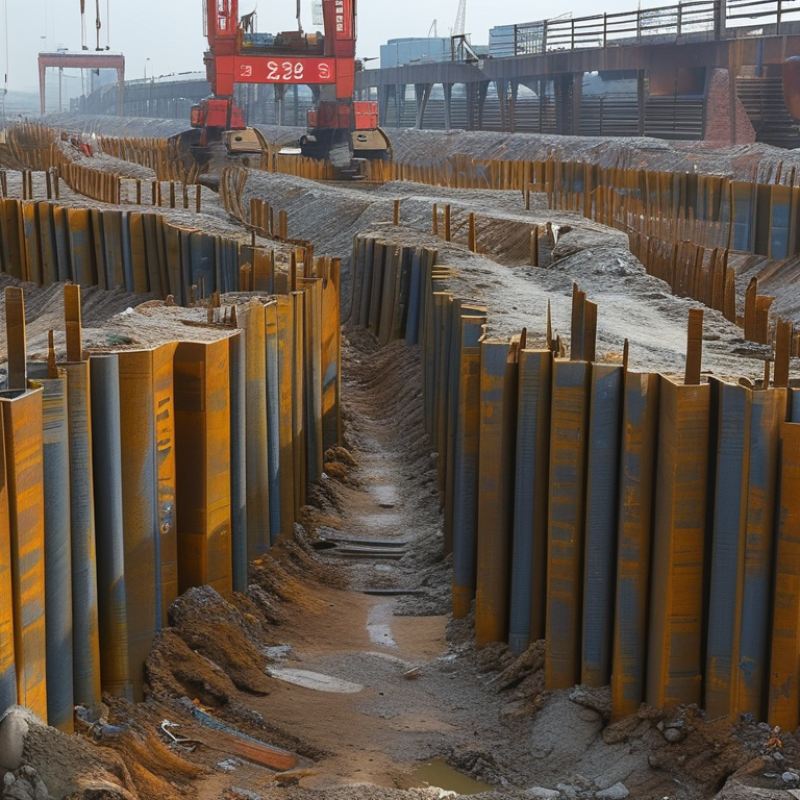
Industrial uses include cofferdams, quay walls, excavation support, flood barriers, and bridge construction. Their interlocking edges create continuous walls with efficient material use. In practice, pile selection depends on bending moments, soil pressure, groundwater, corrosion exposure, and driving conditions. A thicker pile is not automatically safer. It may increase handling costs without solving the real design problem. Corrosion allowances are often underestimated, especially in tidal zones. That deserves review.

When comparing manufacturers for the “7 Best S235 Steel Sheet Pile Manufacturers Worldwide,” evaluate more than price. Consistent interlock geometry, traceability, production capacity, testing access, and export packaging reveal manufacturing reliability. Ask for recent inspection records. Ask about straightness too. A polished datasheet cannot replace site experience, and even compliant steel can perform poorly when installation planning is weak.

S235 Steel Sheet Piles: Properties, Standards, and Industrial Uses

The chart shows the specified mechanical-strength range commonly referenced for S235JR structural steel with a product thickness of up to 16 mm. Actual sheet-pile values depend on the product standard, thickness, and mill certificate.

Reference standards: EN 10025-2 defines the mechanical requirements for S235 structural steel, while EN 10248-1 and EN 10248-2 cover hot-rolled steel sheet piles and their tolerances. S235-grade steel is commonly considered for temporary earth-retaining works, cofferdams, excavation support, flood protection, and foundation applications. For permanent or highly loaded structures, engineers should verify corrosion allowance, section modulus, weldability, and project-specific design requirements.

How to Evaluate Global S235 Steel Sheet Pile Manufacturers

How to Evaluate Global S235 Steel Sheet Pile Manufacturers

When evaluating global S235 steel sheet pile manufacturers, begin with technical evidence, not attractive photographs. S235 usually refers to structural steel meeting defined strength and chemical requirements under European standards. Ask for current mill certificates, tensile results, impact data, and third-party inspection records. A dependable manufacturer should clearly state yield strength, thickness tolerance, pile length, section properties, and interlock performance. Check whether the certificates match the delivered heat numbers. Small mismatches can create major site problems.

Tips: Compare quotations using the same specifications. Confirm steel grade, profile, length, coating, packaging, and delivery terms. Request production samples before placing a large order. Inspect weld quality and interlock alignment carefully. Keep records.

Production capacity also matters. Review monthly output, rolling equipment, quality-control procedures, and previous export experience. Port distance can affect delivery more than the quoted unit price. Ask how the supplier handles dimensional defects, damaged edges, and delayed shipments. Clear answers show practical experience. Vague promises do not.

An independent inspection can verify dimensions, surface condition, marking, and documentation before shipment. I would not trust a polished brochure alone. Even experienced buyers can overlook tolerance details during urgent projects. Factory visits may reveal storage issues, mixed steel grades, or weak packaging. The best evaluation combines laboratory evidence, production capability, transparent communication, and realistic logistics.

Seven Leading S235 Steel Sheet Pile Manufacturers Worldwide

Seven Leading S235 Steel Sheet Pile Manufacturers Worldwide

The seven leading S235 steel sheet pile manufacturers worldwide stand out through verified production, not advertising alone. S235 steel typically provides a minimum yield strength of 235 MPa for sections up to 16 millimetres, according to EN 10025-2. Manufacturers should also meet EN 10248 requirements for hot-rolled sheet piles. Consistent interlock geometry matters on crowded excavation sites.

Production scale remains important. The World Steel Association reported global crude steel output of approximately 1.89 billion tonnes in 2023. However, large capacity does not automatically prove better sheet pile quality. Buyers should review mill certificates, chemical analysis, impact testing, and ultrasonic inspection records. Traceability matters. Each bundle should connect clearly to its heat number and inspection report.

The Global Infrastructure Hub estimates a worldwide infrastructure investment gap of about 15 trillion dollars by 2040. This pressure supports demand for temporary works, ports, flood barriers, and deep foundations. Leading manufacturers usually offer several profiles, controlled straightness, and practical cutting services. Their engineers can check section modulus against excavation depth and soil pressure. Some suppliers still present incomplete corrosion assumptions. That deserves scrutiny. Project teams should compare design life, coating performance, welding guidance, delivery reliability, and independent certification before selecting a manufacturer.

Comparing Production Capacity, Quality, and Customization Services

7 Best S235 Steel Sheet Pile Manufacturers Worldwide

Comparing production capacity, quality, and customization services requires more than reading a product list. Production capacity should be checked through rolling equipment, monthly output, and delivery records. A reliable manufacturer can explain its furnace route, stock levels, and backup production plan. Factory visits or independent audits add valuable evidence. However, capacity figures can be optimistic. Peak output is not the same as stable supply.

Quality control begins with verified S235 chemical composition and mechanical properties. Inspectors should review mill certificates, heat numbers, thickness tolerances, and interlock dimensions. Test reports from accredited laboratories improve confidence. On a real project, a small interlock error can create installation delays and extra crane time. Surface discoloration may be acceptable, but lamination or serious edge damage is not. Details matter.

Customization separates capable suppliers from ordinary ones. Useful services include cut-to-length piles, corner sections, connectors, protective coatings, and custom punching. Technical teams should confirm drawings, tolerances, packaging, and replacement-piece availability before production. Good communication prevents expensive revisions. Still, customization is not always better. Complex modifications may extend lead times and reduce interchangeability. Each manufacturer should explain its limits honestly. That honesty may reveal gaps, but it also supports a more dependable purchasing decision.

7 Best S235 Steel Sheet Pile Manufacturers Worldwide - Comparing Production Capacity, Quality, and Customization Services
Rank Anonymous Manufacturer Profile Primary Manufacturing Region Indicative Annual Sheet-Pile Capacity Typical S235 Steel Grades Applicable Product Standards Typical Thickness Range Quality-Control Capability Customization Services Export and Project Support Overall Benchmark Score
1 Profile A – Integrated High-Volume Producer East Asia 300,000–800,000 tonnes/year S235JR, S235J0, S235J2 EN 10025-2; EN 10248-1; EN 10248-2 6–22 mm Continuous dimensional checks, chemical analysis, tensile testing, Charpy impact testing where specified, and mill test certificates to EN 10204 3.1 Multiple sections, custom lengths, interlocks, drilling, cutting, welding accessories, and project-based packing Strong container and break-bulk experience; technical submittals and production scheduling for large infrastructure projects 9.2/10
2 Profile B – European Structural-Steel Specialist Western Europe 150,000–400,000 tonnes/year S235JR, S235J0, S235J2 EN 10025-2; EN 10248; ISO 9001 quality systems 8–20 mm Strict heat traceability, ultrasonic inspection options, dimensional inspection, mechanical testing, and controlled welding procedures Tailored lengths, corner elements, fabricated connectors, corrosion-protection preparation, and detailed approval drawings High documentation quality; suitable for European public works and projects requiring detailed compliance records 9.0/10
3 Profile C – Large-Scale Asian Export Mill East Asia 200,000–600,000 tonnes/year S235JR and equivalent S235 grades subject to contract EN 10025-2; EN 10248; ASTM requirements available by agreement 6–25 mm Heat-number tracking, chemical composition testing, tensile testing, bend testing, coating inspection, and third-party inspection support Custom roll lengths, special section combinations, punched holes, welded lifting points, and anti-corrosion coating systems Competitive export pricing; experienced with bulk orders, port handling, and third-party inspection arrangements 8.8/10
4 Profile D – High-Precision Rolling Manufacturer Northern Europe 80,000–250,000 tonnes/year S235JR, S235J0, S235J2 with optional impact requirements EN 10025-2; EN 10248-1/-2; EN 10204 3.1 or 3.2 7–18 mm High dimensional consistency, automated profile monitoring, mechanical testing, weldability checks, and independent inspection access Close-tolerance lengths, fabricated pile walls, corner and junction piles, prefabricated assemblies, and engineered connection details Strong performance on technically demanding marine, transport, and foundation projects 8.7/10
5 Profile E – Flexible Regional Producer Central and Eastern Europe 50,000–180,000 tonnes/year S235JR and S235J2 EN 10025-2; EN 10248; project-specific national specifications 6–16 mm Routine chemical and mechanical testing, visual inspection, dimensional control, and batch-based certification Short and medium production runs, custom cut lengths, holes, simple fabrication, protective coating, and delivery consolidation Responsive for medium-sized contractors; practical support for regional foundation and retaining-wall projects 8.3/10
6 Profile F – Integrated Coastal and Marine Supplier East Asia and coastal export markets 100,000–350,000 tonnes/year S235JR, S235J0, S235J2 EN 10025-2; EN 10248; marine-project specifications when required 8–24 mm Impact testing options, coating-thickness measurement, weld-procedure documentation, pile interlock inspection, and loading supervision Marine-grade coatings, sacrificial thickness allowances, custom connectors, fabricated waler components, and cut-to-length supply Well suited to ports, quay walls, cofferdams, and temporary works requiring coordinated marine logistics 8.1/10
7 Profile G – Project-Focused Custom Fabricator South Asia and Middle East supply markets 30,000–120,000 tonnes/year S235JR and contract-specific equivalent grades EN 10025-2; EN 10248 where section availability permits 6–20 mm Batch certification, third-party laboratory testing, visual and dimensional inspection, and client witness inspection by arrangement Custom lengths, holes, welded attachments, temporary-works fabrication, coating, bundling, and project-specific labeling Flexible for smaller orders and special fabrication; lead times depend strongly on section availability and production scheduling 7.8/10

Benchmark note: Capacity figures are indicative market ranges for anonymous manufacturer profiles and should be verified directly for the selected mill, section, delivery condition, certification level, and project specification. S235 availability, dimensions, impact requirements, and customization options vary by production line and contract.

Key Factors for Selecting the Right S235 Steel Sheet Pile Supplier

Selecting the right S235 steel sheet pile supplier requires more than comparing prices. S235 grades are commonly specified for temporary works, cofferdams, retaining walls, and excavation support. Ask for current mill certificates confirming chemical composition, yield strength, tensile strength, and elongation. The supplier should also explain the applicable EN 10025 grade clearly. Ambiguous certificates create avoidable risk.

Inspect manufacturing controls closely. Reliable producers should provide dimensional tolerances, pile length records, interlock details, and traceability from coil to finished pile. Request recent inspection reports for thickness, straightness, surface condition, and interlock engagement. Production capacity matters when a project needs hundreds of piles within a fixed schedule. A supplier may offer low prices but lack enough rolling capacity. Delivery then becomes the real cost.

Tips: Ask for sample certificates before ordering. Confirm whether the quoted weight includes tolerances. Check packing, lifting points, and transport protection. Request references from similar ground conditions, not only attractive project photos. If possible, arrange an independent pre-shipment inspection. Keep communication written and specific. A perfect supplier rarely exists; even experienced teams can overlook coating damage or delivery details. Review those weak points before signing.