Top 10 Indexable Milling Tools You Should Consider for Machining?
In the world of machining, choosing the right tools is crucial. Indexable milling tools stand out due to their versatility and efficiency. Many manufacturers rely on these tools to achieve precision and reduce costs. As technology evolves, the demand for innovative tooling solutions grows.
When selecting indexable milling tools, various factors come into play. The material of the tool and the design affect the outcome. A well-chosen tool can enhance productivity, while a poor choice can lead to frequent tool changes or subpar finishes. Each tool serves a specific purpose, and understanding this is essential for optimization.
Despite the benefits, finding the best tools can be overwhelming. Different projects may require different approaches, and not every tool is ideal for every job. It’s a process of trial and learning. A thoughtful exploration of the top 10 indexable milling tools can help navigate this complexity and improve your machining results.
Overview of Indexable Milling Tools
Indexable milling tools are crucial for modern machining processes. They offer flexibility and efficiency, which are highly valued in manufacturing. According to a report by the International Production & Processing Expo, the global indexable cutting tools market is projected to grow at a CAGR of 5.3% from 2021 to 2028. This indicates a strong demand for such tools.
These tools allow quick changes without needing to replace the entire cutting system. This can reduce downtime and increase productivity. It's estimated that manufacturers can save up to 30% on tool costs by opting for indexable options. However, not all indexable tools are created equal. Choosing the right tool for specific applications can be a challenge. Misalignment can lead to tool wear and wasted materials, which affects overall project costs.
The materials used in indexable tooling vary widely, impacting performance. For example, carbide inserts are popular for their hardness but may underperform in specific conditions. A study from the Society of Manufacturing Engineers suggests that maintenance and careful monitoring can significantly improve tool lifespan. Many operations neglect this. Ignoring tool integrity can result in costly downtime and compromised work quality. Ensuring the right balance between tool selection and application is essential for optimal outcomes in machining projects.
Top 10 Indexable Milling Tools You Should Consider for Machining
| Tool Name |
Insert Type |
Material |
Application |
Diameter Range (mm) |
| Standard Face Mill |
Negative |
Carbide |
Facing |
50-100 |
| High-Feed Mill |
Positive |
Cobalt |
High-Feed Milling |
10-25 |
| Slab Mill |
Negative |
Carbide |
Heavy Milling |
80-150 |
| End Mill |
Positive |
HSS |
Slotting |
3-20 |
| T-Slot Cutter |
Negative |
Carbide |
T-Slots |
30-120 |
| Ball Nose Mill |
Positive |
Carbide |
Contouring |
6-40 |
| Face Mill |
Negative |
Carbide |
Finishing |
40-80 |
| Roughing Mill |
Negative |
Carbide |
Roughing |
50-150 |
| Chamfer Mill |
Positive |
HSS |
Edge Chamfering |
10-30 |
| Shoulder Mill |
Negative |
Carbide |
Shoulder Milling |
20-50 |
Key Features to Look for in Milling Tools
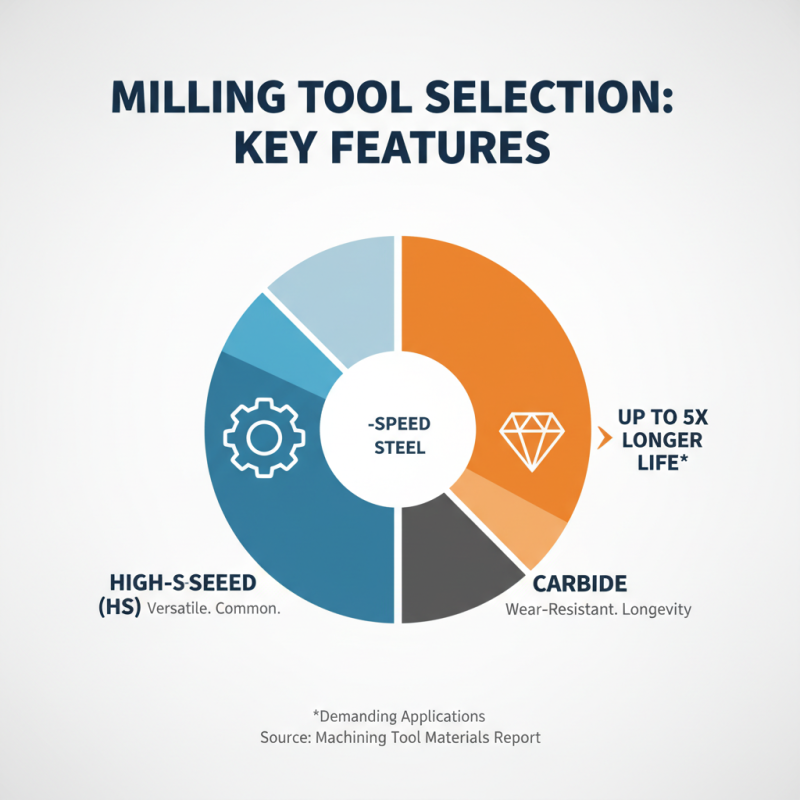
When selecting milling tools, key features play a crucial role in performance and efficiency. Material composition is vital; high-speed steel (HSS) remains popular due to its versatility. However, carbide tools often provide better wear resistance and longevity. According to the "Machining Tool Materials Report," carbide tools can last up to five times longer than HSS in demanding applications.
Tip: Consider the specific material you’re machining. This can impact tool choice significantly. For example, aluminum requires different cutting geometries than steel. Furthermore, tool coatings, such as TiN or TiAlN, can enhance performance, reducing friction and increasing tool life.
Next, look at the cutting geometry of the tool. Effective rake angles reduce cutting forces but can compromise tool strength. Finding a balance is crucial. A recent study indicated that optimal rake angles can improve cutting effectiveness by up to 30%.
Tip: Regularly assess your cutting parameters. Adjustments can lead to better performance and cost savings. Lastly, the tool size and versatility are important. Larger tools may increase material removal rates but can limit workpiece access. Evaluate your specific needs carefully.
Top 10 Recommended Indexable Milling Tools
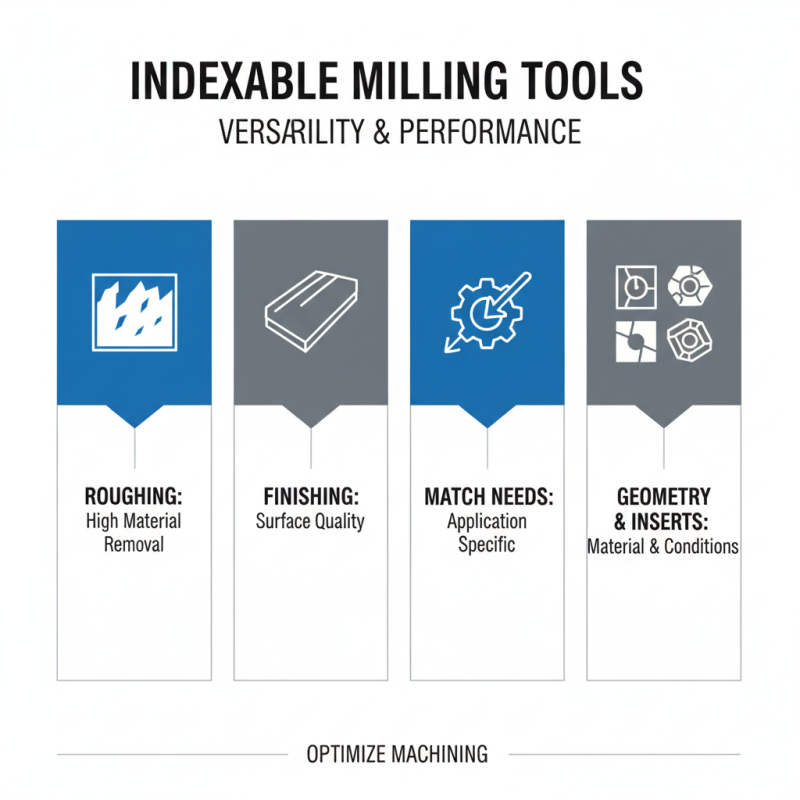
When choosing indexable milling tools, it's important to focus on versatility and performance. Some tools excel in roughing applications, while others shine in finishing. Select tools that match your machining needs. Consider different geometries and inserts. Each design serves specific materials and cutting conditions.
One highly recommended tool features a strong cutting edge. It allows for efficient material removal in tough metals. Another option is a tool with a unique chipbreaker design. This helps reduce cutting forces and enhances surface finish. For precision tasks, a tool with a low radial engagement is ideal. It minimizes vibrations and improves accuracy.
However, not every tool will work perfectly in every scenario. There can be challenges like tool wear and incorrect settings. Reflect on your machining environment and conditions. Understand that trial and error is part of the process. Finding the right tool might take time and careful analysis. Ultimately, the right indexable milling tool should enhance productivity and efficiency.
Applications of Indexable Milling Tools in Machining
Indexable milling tools play a significant role in various machining processes. They are designed for versatility and efficiency in cutting operations. Many manufacturers rely on these tools for finishing, roughing, and facing operations. The ability to replace only the insert rather than the entire tool saves time and costs.
In automotive and aerospace industries, indexable milling tools are crucial. They help shape components with high precision. The tools perform well on various materials, from metals to plastics. However, operators must choose the right insert geometry and coating for specific applications. Often, a one-size-fits-all approach leads to suboptimal results.
Despite their advantages, there can be challenges. Tool wear can be uneven, affecting performance. Regular monitoring is essential to ensure consistent cutting quality. User experience varies; some find it easier to work with indexable tools than others. Investing time in training can greatly improve operational efficiency. With proper care and attention, these tools can enhance productivity significantly.
Top 10 Indexable Milling Tools in Machining
Maintenance Tips for Long-lasting Milling Tools
Milling tools play a critical role in machining processes. Proper maintenance can significantly enhance their performance and longevity. According to a recent report by the American Machinists Institute, almost 30% of tool failures stem from inadequate care. Regular maintenance ensures the tools operate smoothly and reduces downtime.
Start by frequently cleaning the tools after use. Dust and debris can lead to wear and tear. A study from the National Tool Association revealed that tools without regular cleaning lose up to 20% of their efficiency over time. Check for signs of wear, such as chips or dull edges. Ignoring these signs may result in costly replacement and increased production time.
Additionally, oiling the tools should be part of the routine. Lubrication prevents rust and helps maintain sharpness. It’s surprising that nearly 25% of manufacturers overlook this step. Storing tools in a dry environment further protects them from moisture and temperature fluctuations.
Addressing these simple maintenance tips can transform the lifespan of milling tools, often leading to a 15-30% boost in productivity. Regular maintenance creates a win-win situation for efficiency and cost management.