

What Are the Top Electrical Enclosure Types for Buyers?
Choosing among Electrical Enclosure types is no longer a simple matter of selecting steel, stainless steel, or plastic. Buyers must match protection, heat control, installation conditions, and maintenance needs. A factory floor may expose equipment to oil mist, vibration, and metal dust. An outdoor cabinet may face rain, ultraviolet radiation, temperature swings, and accidental impact. The wrong choice can shorten component life and increase service interruptions.
Industry data shows why this decision deserves careful attention. Grand View Research reports that the global electrical enclosures market is expanding, supported by industrial automation, power distribution, and infrastructure investment. MarketsandMarkets also identifies smart manufacturing and connected electrical systems as major growth drivers. These trends increase enclosure requirements. Cabinets must protect wiring while supporting sensors, drives, networking equipment, and thermal management. More electronics often mean more heat.
Standards provide a reliable starting point. IEC 60529 defines IP protection ratings against solids and water. In North America, NEMA 250 classifies enclosure performance for environmental hazards. UL 50E addresses enclosure construction and environmental protection. These references do not replace site evaluation. They guide it. A buyer should examine corrosion exposure, cable entry points, internal heat load, cleaning methods, and available wall or floor space. Small details matter.
No single enclosure fits every project. That is the uncomfortable truth. A painted carbon-steel enclosure may suit an indoor control panel, while stainless steel may perform better in washdown areas. Polycarbonate can reduce weight and resist corrosion, but it may present different thermal and impact limits. This guide compares the top Electrical Enclosure types, their practical strengths, and the compromises buyers sometimes overlook. Performance matters. So does the installation reality.
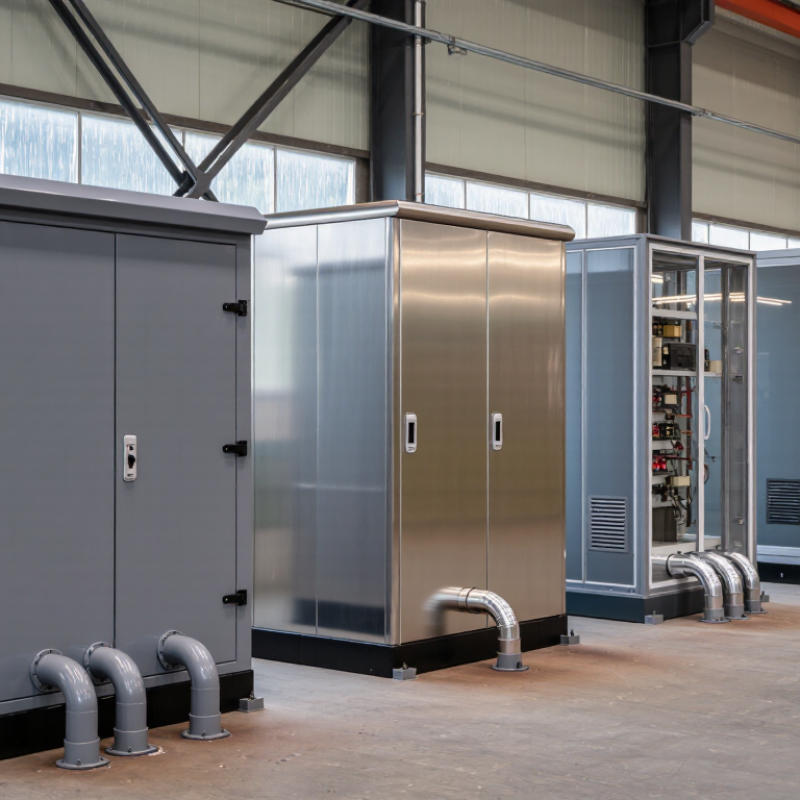
Classify Enclosures by NEMA and IEC 60529 Protection Ratings
What Are the Top Electrical Enclosure Types for Buyers?
Electrical enclosures are often classified through NEMA ratings or IEC 60529 IP codes. These systems describe protection, but they do not mean exactly the same thing. NEMA 1 suits clean, indoor areas with limited contact risks. NEMA 3R adds protection against rain and falling dirt. NEMA 4 handles water splashes, hose-directed water, and dust. NEMA 4X also addresses corrosion resistance, which matters near saltwater, chemicals, or washdown zones. NEMA 12 is commonly selected for indoor industrial spaces with dust, dripping oil, or cutting debris.
IEC 60529 uses the IP format, such as IP54, IP65, or IP66. The first digit measures protection against solid objects and dust. The second digit measures resistance to water. IP54 offers limited dust entry and water spray protection. IP65 provides dust-tight construction and protection from water jets. IP66 withstands stronger water jets, while IP67 covers temporary immersion under defined test conditions. The rating is specific.
A common buying mistake is treating IP67 as automatically superior for every installation. It may resist immersion, yet provide less information about corrosion, mechanical impact, or enclosure construction. NEMA ratings may cover these additional performance factors, depending on the standard and test method. Field checks should include cable glands, door seals, mounting position, drainage, and temperature. A perfect enclosure can fail after poor installation. Small gaps matter. Review the actual environment, cleaning method, moisture pattern, and maintenance access before choosing a rating.
Compare NEMA 1, 3R, 4, 4X, and 12 for Common Installations
Choosing an enclosure starts with the actual exposure, not the harshest label on a specification sheet. NEMA 1 suits clean, dry indoor spaces, such as offices or control rooms. It helps keep fingers and falling dirt away from electrical components. Simple, and often enough.
For outdoor equipment exposed to rain, NEMA 3R is a common choice. It is not dust-tight, so a dusty yard may call for a different type. NEMA 4 handles more demanding conditions, including windblown dust, splashing water, and hose-directed water. Think of a washdown area or equipment near a loading bay. NEMA 4X adds corrosion resistance, making it useful around salt air or corrosive cleaning environments. The exact material and site conditions still matter; the rating alone does not tell the whole story.
NEMA 12 is generally intended for indoor industrial settings where dust, falling dirt, and dripping noncorrosive liquids are concerns. It can fit a machine shop cabinet, but it is not a substitute for an outdoor rain-rated enclosure. Buyers sometimes over-specify to feel safer. That can add cost without solving the real exposure. Check how water enters, whether chemicals are present, and how the enclosure will be mounted. Small details matter. A door opened during maintenance can face a different risk than a sealed cabinet on a wall.
What Are the Top Electrical Enclosure Types for Buyers?
Compare NEMA 1, 3R, 4, 4X, and 12 by the environmental protections commonly relevant to installations.
How to read this chart: A value of 1 indicates the protection is included in the type’s general definition; 0 means it is not specified as a defining protection. This is a simplified comparison, not a measure of performance. NEMA types are not interchangeable with IP ratings; confirm the applicable standard and installation conditions before selecting an enclosure.
Match IP54–IP66 Ratings to Dust and Water Exposure per IEC 60529
For buyers, the IP code is a practical starting point, not a promise that every enclosure suits every site. IEC 60529 defines the first digit for solid-particle protection and the second for water ingress.
IP54 offers limited dust ingress protection and resistance to splashing water. It can suit indoor panels near routine washdown, but not direct hose cleaning. Small detail, big consequence: cable entries and door seals must maintain the enclosure’s rating.
IP65 is dust-tight and tested against water jets; IP66 is dust-tight and tested against more powerful water jets, according to IEC 60529.
Choose IP65 for dusty production areas with occasional controlled cleaning. Consider IP66 where stronger jets may strike the cabinet. Not for immersion.
The rating does not cover corrosion, impact, or temperature by itself. A 2023 NEMA technical guidance document also cautions that NEMA and IP ratings are not directly interchangeable, so buyers should compare test conditions rather than assume equivalence.
In real installations, a poorly fitted gland can undo a careful specification. I have seen that overlooked. Check the complete assembly, including hinges, seals, and cable glands, against the exposure expected at the mounting location.
Evaluate Wall-Mount, Floor-Standing, Junction, and Modular Enclosure Types
Wall-mount enclosures suit controls placed near the equipment they serve. They keep wiring accessible without taking floor space. Check the wall’s load capacity, door swing, and cable-entry location before ordering. A compact cabinet can still become awkward if technicians cannot open its door fully. Allow room for hinges and service work.
Floor-standing enclosures offer space for larger drives, distribution equipment, or multiple panels. Their footprint and weight need attention, especially on raised floors. Review internal heat sources and airflow needs; a crowded cabinet may run hotter than expected.
Junction enclosures protect connections and branch points. Choose a size that leaves workable space for terminals, bends, and future inspection. Small is not always efficient.
Modular enclosures help when equipment layouts may change or several sections must connect. They can simplify expansion, but joined panels require careful alignment and compatible sealing details. Check mounting patterns, cable routes, and access between sections before settling on a layout.
Also confirm the enclosure’s material and protection rating match the actual location, including dust, moisture, cleaning methods, and temperature swings. Ratings matter. They do not replace sound installation.
One easy mistake is selecting by dimensions alone; a cabinet that fits on paper may leave no room for safe maintenance. Specify the equipment, environment, and service access together, then verify the finished arrangement with the people who will work inside it.
Choose Steel, 304 Stainless Steel, Aluminum, or Polycarbonate by Environment
Steel suits indoor factories, machine rooms, and sheltered utility areas where impact resistance and cost matter. Its painted finish can chip; inspect corners and cut edges, where rust may begin. For washdown zones or coastal air, 304 stainless steel offers stronger corrosion resistance. It is not immune to chloride pitting, though. The Nickel Institute’s guidance on stainless steels notes that chloride exposure can promote localized corrosion, so salt spray and cleaning chemicals deserve careful review.
Aluminum is lighter than steel, making it useful on poles, mobile equipment, and installations where handling weight matters. It also forms a protective oxide layer, but harsh chemicals and galvanic contact with other metals can create problems.
Polycarbonate works well where low weight, electrical insulation, and visibility help—such as control cabinets with a clear door. It can scratch or degrade under some UV exposures, so check the enclosure’s rated service conditions.
IEC 60529 defines IP tests: IP65 is dust-tight and tested against water jets; IP66 uses more powerful jets. An IP rating does not identify a material’s corrosion resistance.
Tips: Match the enclosure to the actual exposure, not just the room name. Check NEMA 250 or IEC 60529 requirements, then verify temperature, UV, chemical, and impact limits in the product documentation. A small detail—like a damaged gasket—can undermine an otherwise suitable enclosure.

