

China Top 180 Degree Concealed Hinge Supplier
Cabinet and furniture growth continues to shape demand for dependable hardware. Fortune Business Insights estimated the global furniture market at USD 677.09 billion in 2023, with a forecast value of USD 968.23 billion by 2032. This is a broad market indicator, not a direct measure of hinge sales. Still, it shows why buyers scrutinize small components that affect daily use.
A 180 Degree Concealed Hinge can support wide door access while keeping much of its mechanism out of sight. Yet the opening angle alone tells little. Door weight, panel thickness, mounting geometry, adjustment range, and cycle-test results all matter. Details matter.
For buyers comparing China-based suppliers, useful evidence includes dimensioned drawings, material specifications, inspection records, and samples tested on the intended cabinet. Ask how the supplier checks opening consistency and finish quality across production batches. Confirm whether the stated 180-degree movement fits your door and cabinet layout; product designs differ. A catalogue image cannot answer every question. This overview examines supplier capabilities, technical checks, customization, and sourcing considerations. It also recognizes a practical limitation: specifications can look convincing on paper, but installation and repeated use reveal weaknesses that documents may miss.
What Is a 180-Degree Concealed Hinge?
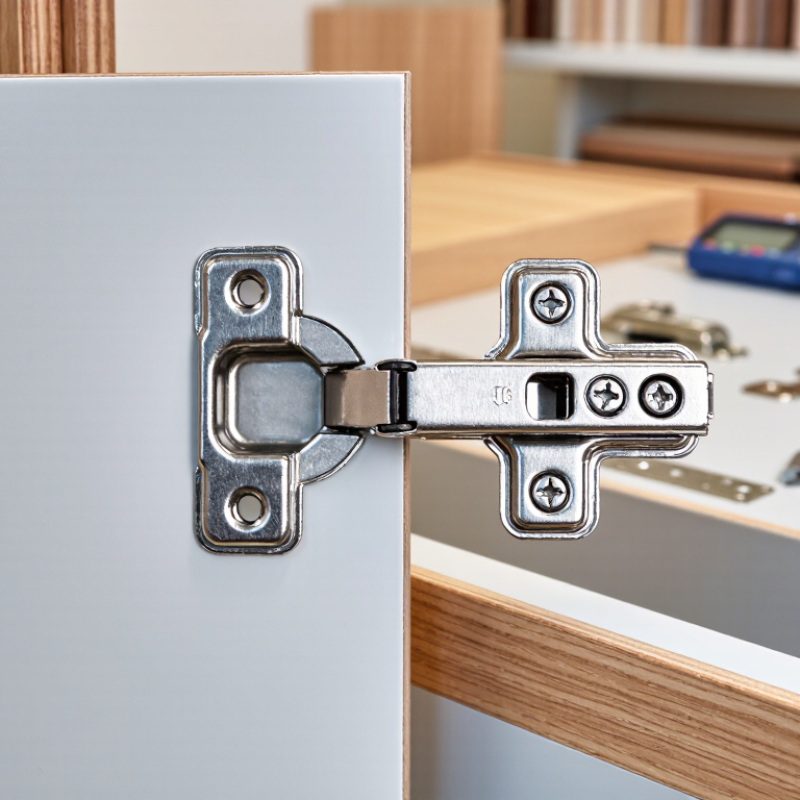
A 180-degree concealed hinge is a cabinet hinge designed to let a door swing wide while keeping most of its mechanism hidden when the door is closed. It connects the door to the cabinet frame through linked arms and pivot points. As the door opens, these parts guide it outward and around the cabinet edge. The wide opening can make drawers, shelves, and stored items easier to reach.
“180 degrees” describes the intended opening range, not a guarantee that every installation will reach exactly that angle. Cabinet walls, door thickness, mounting plates, and nearby handles can limit movement. That detail matters. Before fitting a hinge, check the manufacturer’s opening-angle specification and the available clearance. A careful installer also checks screw positions and door alignment, then tests the swing slowly. Small gaps count. In real projects, a hinge may look suitable on paper but still contact a side panel. Measuring the cabinet and door together is more reliable than choosing by angle alone.
How Its Structure Enables Wide-Opening Access
China Top 180 Degree Concealed Hinge Supplier
A 180-degree concealed hinge is designed to let a cabinet door swing wide while keeping its mechanism hidden when closed. In many designs, linked arms move the pivot away from the cabinet side. This gives the door more clearance than a basic concealed hinge. Geometry matters. Door thickness, overlay, and nearby walls can still limit the actual opening.
The benefit is practical: a wide-open door gives hands and tools clearer access to deep shelves. Yet “180 degrees” describes the hinge’s intended movement, not a guarantee for every installation. Small differences in mounting position can cause the door edge to brush a side panel.
Grand View Research’s 2024 global furniture market report valued the market at USD 647.7 billion in 2023. That figure signals a large furniture sector, but it does not measure hinge performance; buyers should check product drawings and test samples.
Tips:
Confirm the cabinet construction, door thickness, and required clearance before selecting a hinge. During fitting, open the door slowly and inspect for rubbing at the edge and arm. A millimeter can matter. Also, wide opening may expose the hinge to greater leverage, so check load ratings and adjustment instructions rather than relying on the opening angle alone.
Common Applications Across Furniture and Cabinets
A 180-degree concealed hinge is useful when a cabinet door needs to swing wide while keeping its hardware hidden when closed. In kitchens, this can help pantry doors clear the cabinet opening and give better access to deep shelves. In wardrobes, wide-opening doors make it easier to reach hanging rails and corner storage. The actual opening angle depends on the hinge design, cabinet position, and nearby walls. A handle or adjacent door can still limit movement. That detail is easy to miss.
These hinges also suit office cupboards, utility cabinets, and selected furniture doors where a clean exterior matters. On a display cabinet, concealed hardware keeps attention on the contents rather than visible metal fittings. Before choosing a hinge, check door thickness, overlay, weight, and the required clearance at the side panel. Accurate placement matters; even a small error can leave uneven gaps or cause the door to rub. Test the fit with the door supported, especially on heavier panels. A wide swing is helpful, but it is not always the best choice in a narrow room. The door may block a walkway when fully open, so measure the surrounding space as carefully as the cabinet itself.
How to Evaluate a China-Based Hinge Supplier
When evaluating a China-based supplier of 180-degree concealed hinges, start with the application, not the catalogue photo. Ask for a dimensioned drawing showing cup depth, arm clearance, and the required opening angle. A hinge may reach 180 degrees on a test fixture but bind against a real cabinet side.
Share door thickness, panel material, overlay, and expected load before requesting a sample. Check whether the stated load rating applies to one hinge or a complete pair. Small detail. It changes your calculation. Fit samples to your own door and frame, then inspect alignment, closing action, and screw movement after repeated opening cycles. Record the setup; otherwise, results are hard to compare.
Ask how incoming steel, surface finish, and batch dimensions are checked, and request inspection records for a trial order. A reliable supplier should explain tolerances plainly and flag design limits early. Vague answers are a warning. Also assess response quality: clear answers to technical questions matter more than polished sales language. One sample is not enough to judge consistency, though I have seen buyers treat it as proof. Check a later production batch before placing a larger order.
Manufacturing Quality, Customization, and Export Support
A 180-degree concealed hinge must do more than disappear when a cabinet door closes. Its opening path, mounting depth, and clearance need to suit the actual cabinet construction. A capable supplier checks these details against drawings or a physical sample before confirming production. Fit matters most. Even a small change in door thickness can affect alignment and movement.
Manufacturing quality depends on repeatable checks, not appearance alone. Useful inspections include measuring hinge dimensions, checking surface finish, and testing opening and closing movement across production samples. Load and cycle tests can reveal problems that a quick visual review misses. Small details matter. A smooth hinge is valuable, but a polished sample can still hide inconsistent batch tolerances; that deserves honest review.
Customization may cover mounting plates, materials, finishes, opening angles, and packaging requirements. Buyers should share cabinet dimensions, expected use, and installation constraints early. Export support also matters: clear product specifications, carton markings, packing lists, and timely answers help reduce avoidable delays. Requirements differ by destination, so documentation should be confirmed for each shipment. A supplier that reports limitations clearly is often more useful than one that promises every option without checking tooling, lead time, or sample performance.

