

Top 10 Chemistry Lab Tables for Every Budget
Choosing a Chemistry Lab Table is not just a question of price. It affects how students work, how equipment sits, and how easily a workspace can be cleaned. A low-cost bench may suit a dry teaching room, while regular wet work may call for chemical-resistant surfaces, sealed edges, and a sturdy frame. Details matter. The best choice depends on actual procedures, not a glossy product photo.
Laboratory safety educator James A. Kaufman is associated with a safety-first approach to laboratory decisions. A paraphrased principle for this guide is: “Choose a lab table around the tasks and hazards it must support, not price alone.” This is a paraphrase, not a verified verbatim quotation. Readers should confirm surface compatibility, load ratings, warranty terms, and installation needs with manufacturers or qualified facilities staff. A beaker ringed with dried residue or a crowded sink can reveal design weaknesses quickly.
This Top 10 guide compares tables across budget levels, from compact student stations to heavy-duty workbenches. It considers countertop materials, frame stability, storage, cleanability, and value over time. A modest table can be a sensible buy. Still, one weak joint or incompatible laminate may become an expensive regret. Prices and specifications change, so verify current details before purchasing. Use the rankings as a starting point, then match each option to your room, experiments, and maintenance capacity.
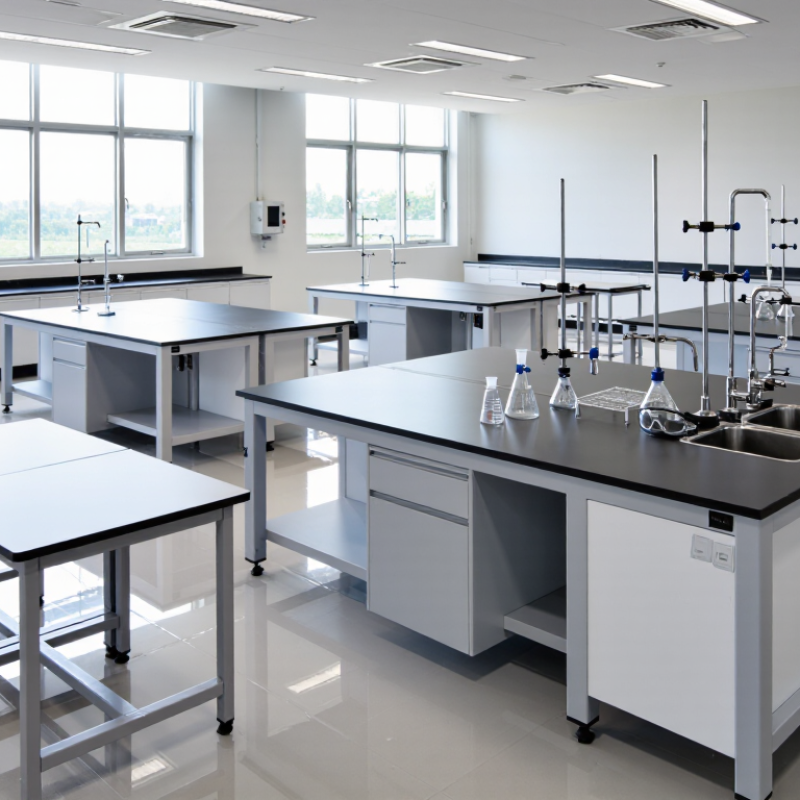
Define Chemistry Lab Safety Needs Under OSHA 29 CFR 1910.1450
Top 10 Chemistry Lab Tables for Every Budget
Define Chemistry Lab Safety Needs Under OSHA 29 CFR 1910.1450
OSHA’s Laboratory Standard applies to laboratory work involving hazardous chemicals. It requires employers to maintain a Chemical Hygiene Plan, train staff, and define controls for chemical exposure. That distinction matters. The rule does not prescribe one table material or design. Instead, table choices should follow the hazards, procedures, and controls documented for the lab.
Before comparing prices, list chemicals, container sizes, spill risks, and nearby equipment. Check that the work surface resists the chemicals actually used; verify compatibility against safety data sheets and product information. Consider raised edges for spill control, stable frames for heavy instruments, and clear space around sinks and eyewash stations. A cheap surface can become costly if it stains, corrodes, or needs early replacement. A table alone cannot make a lab safe.
The Bureau of Labor Statistics reported about 2.6 million nonfatal workplace injuries and illnesses in private industry in 2023. That figure covers many industries, not laboratories specifically, but it underlines why written procedures and practical controls matter.
OSHA 29 CFR 1910.1450 also calls for criteria governing protective equipment and functioning fume hoods. Keep tables from obstructing hood access or disrupting airflow. Walk through real tasks with lab staff before ordering. A floor plan can miss an awkward reach over a sink. We sometimes overlook that.
Screen Worktops Using SEFA 3 Chemical-Resistance Testing
A low-cost lab table can look convincing under showroom lights. Chemical resistance is harder to judge. SEFA 3 provides a practical screening method: its chemical-resistance protocol challenges surfaces with 49 reagents and assesses visible effects. The test can reveal staining, discoloration, or surface damage that a price sheet will not show. Ask suppliers for the actual test results, not just a claim of “chemical resistance.”
Check which worktop material and finish were tested, and whether the report identifies the reagents, exposure conditions, and observed changes. A surface that handles dilute acid may respond differently to a concentrated spill. Look closely at seams and edges, too; liquid can collect there and expose weak points. Useful evidence should connect test results to the chemicals and routines in your lab. Small detail. Big difference.
SEFA 3 results support comparison, but they are not a promise of service life. The protocol cannot reproduce every combination of heat, abrasion, repeated cleaning, and accidental spills. Even so, a spotless test panel can mislead if it was tested under conditions unlike yours. Treat the report as one piece of evidence, alongside maintenance guidance and a sample inspection. Ask how quickly spills must be cleaned, and whether the tested finish matches the delivered table. That question is easy to overlook.
Top 10 Chemistry Lab Tables for Every Budget — Screen Worktops Using SEFA 3 Chemical-Resistance Testing
Indicative planning comparison for a typical 6-foot (about 1.8 m) laboratory bench. Budget ranges are broad estimates in USD for the bench and worktop, excluding shipping, installation, utilities, and custom modifications; actual prices vary by size, region, and specification.
| Rank | Table Type | Indicative Budget (USD) | Typical Worktop | Best Suited For | Chemical-Resistance Considerations | SEFA 3 Screening to Request |
|---|---|---|---|---|---|---|
| 1 | Basic utility bench | $300–$900 | High-pressure laminate | Low-cost teaching, preparation, and dry laboratory work | Resistance depends on the laminate, seams, and exposed edges. Prolonged contact with aggressive reagents may damage the surface. | Request test documentation for the exact worktop construction, including its finish and edge treatment. |
| 2 | Economy steel-frame bench | $500–$1,200 | Laminate or sealed composite panel | General-purpose work where a durable frame and basic surface are priorities | The frame coating and worktop have different chemical limits; spills can be especially damaging at joints and cutouts. | Confirm which surface was tested and ask for results covering the actual top material, not just the frame coating. |
| 3 | Moisture-resistant utility table | $600–$1,500 | Sealed compact laminate | Routine work involving occasional splashes and frequent cleaning | Often more moisture-tolerant than standard laminate, but chemical performance varies by grade and exposed edges. | Request the chemical list, test procedure, exposure conditions, and recorded surface changes. |
| 4 | Budget stainless-steel bench | $700–$1,800 | Stainless steel | Wash-down areas, equipment support, and food or sample preparation tasks | Stainless steel can be vulnerable to some acids, chlorides, and prolonged chemical exposure; alloy and finish matter. | Verify testing for the specified alloy and finish against the reagents used in the laboratory. |
| 5 | Mid-range phenolic-resin table | $900–$2,400 | Solid-core phenolic resin | General chemistry and teaching labs needing a nonporous, easy-to-clean surface | Performance varies with formulation, thickness, edge details, and chemical concentration; no material is universally resistant. | Request SEFA 3 results for the exact worktop product and finish, plus any exclusions or limitations. |
| 6 | Mobile chemistry worktable | $1,000–$2,800 | Phenolic resin or laminate on a lockable caster frame | Flexible teaching rooms and shared spaces where benches are moved between sessions | Worktop resistance depends on the selected surface. Check that caster hardware and frame finishes suit the room’s chemicals and cleaning routine. | Ask for worktop test results and separately verify the suitability of frame finishes and hardware. |
| 7 | Polypropylene-top bench | $1,200–$3,200 | Polypropylene sheet or fabricated top | Work involving selected corrosive chemicals where a compatible polymer surface is needed | Polypropylene may suit many acids and bases, but solvent compatibility, heat limits, and fabrication details must be checked. | Request test evidence for the exact formulation and thickness, and compare it with the laboratory’s chemical inventory. |
| 8 | Epoxy-resin worktable | $1,500–$4,000 | Cast epoxy resin | Frequent chemical handling, wet work, and laboratories needing an integrated, durable surface | Often selected for chemical laboratory use, but resistance still depends on the specific reagent, concentration, temperature, and exposure duration. | Request current SEFA 3 test documentation for the exact top and review any reagent-specific limitations. |
| 9 | Ceramic-tile worktable | $1,800–$4,500 | Ceramic tile with chemical-resistant grout | Applications requiring a hard, heat-tolerant surface | Tile may tolerate heat well, but grout lines and joints can be vulnerable to chemicals, moisture, or staining. | Ask whether testing covers the assembled surface, including grout and joints, rather than tile alone. |
| 10 | Heavy-duty chemistry bench | $2,500–$6,000+ | Epoxy resin or another specified chemical-resistant worktop on a reinforced frame | High-use laboratories, heavier equipment, or custom layouts | Higher cost does not by itself guarantee chemical compatibility; load capacity, supports, joints, and finish all require specification. | Request SEFA 3 documentation for the specified top and separately confirm structural load ratings and installation requirements. |
SEFA 3 chemical-resistance results should be checked against the exact worktop material, finish, and laboratory reagents. Ask for the test method, reagent list, exposure details, evaluation criteria, and documented results; do not treat a material name or a general “chemical-resistant” claim as proof of performance.
Compare 10 Chemistry Tables by Price, Materials, and Load Capacity
A useful ten-table comparison should separate price, worktop, frame, and rated load. Entry-level steel or laminate tables often cost roughly $300–$700; epoxy-resin and phenolic tops commonly push prices above $1,000. Ceramic or custom sink configurations can cost considerably more. Treat these as planning ranges, not quotes: dimensions, delivery, and installation change the final bill.
Materials matter at the bench. Epoxy resin resists many common laboratory chemicals, while phenolic resin is lighter and easier to handle. Ceramic handles heat well, but impact can chip it. Steel frames provide rigidity; check coating quality where spills may occur. Grand View Research’s laboratory furniture market report estimates the sector at about $6.4 billion in 2023, reflecting broad demand—not a direct measure of table prices or durability.
Check the load rating before comparing ten models. Ask whether the stated capacity is evenly distributed or concentrated at one point; those figures are not interchangeable. A heavy instrument on four small feet can stress a top even when its total weight seems acceptable. Look for test details aligned with applicable SEFA laboratory-furniture guidance, plus written limits for shelves and casters. The comparison is imperfect. A low-cost table may be adequate for light glassware, while a pricier top may still need careful support beneath sensitive equipment.
Check Accessible Work Surfaces Against ADA’s 28–34-Inch Height Range
For a chemistry lab table, check more than the catalog’s listed height. The 2010 ADA Standards for Accessible Design, section 902, set accessible work surfaces between 28 and 34 inches above the finished floor. That six-inch range is a useful purchasing check, not a guarantee that every user will find the table comfortable. Measure the actual surface, including any installed top or mat. A thick mat can quietly push a table beyond the upper limit.
The same standards call for clear floor space of at least 30 by 48 inches at an accessible work position. Keep that area free of stools, bins, and rolling carts. In a working chemistry lab, sinks, storage, and equipment can quickly crowd the approach. Measure the table with those items in place. A tape measure helps, but a real wheelchair approach test may reveal problems that a floor plan misses. Small oversight, big inconvenience.
Tips: Compare adjustable tables by their full height range, not just their lowest setting. Check knee clearance and reach to frequently used tools. Recheck after installation; floor changes and add-on equipment can alter the usable height.
Top 10 Chemistry Lab Tables for Every Budget
Compare indicative per-table budget estimates with work-surface height. The shaded band marks the ADA’s 28–34-inch accessible work-surface height range.
Green bars fall within the 28–34-inch height range; gray bars fall outside it. Prices are illustrative planning estimates, not product quotes. Height alone does not establish ADA compliance; clear floor space, knee clearance, and other applicable requirements also matter.
Verify Laboratory Fire-Safety Fit with NFPA 45 Requirements
A low-cost chemistry lab table can look suitable on a showroom floor, yet still be a poor fit for the room’s fire-protection plan. NFPA 45 addresses fire protection in laboratories using chemicals; it does not certify individual tables. Before comparing prices, confirm the laboratory’s hazard classification, chemical inventory, and intended work. Then ask the facilities or safety team how the table’s materials, storage, and placement fit the room’s documented controls. Small details matter. A solvent bottle stored beneath a bench can change the practical risk, even when the tabletop itself is noncombustible.
NFPA’s report Structure Fires in Educational Properties found an estimated annual average of 3,840 fires in U.S. educational properties from 2014 to 2018, with about $115 million in direct property damage each year. Those figures are not specific to chemistry labs, but they show why fire planning deserves attention during purchasing. Compare surface compatibility, frame construction, and clearance from ignition sources; request product documentation rather than relying on a sales description. Check that cabinets and utilities do not obstruct exits or required access. I still find one point easy to miss: a durable table is not automatically a fire-safe installation. Verify the complete setup against NFPA 45 with qualified safety personnel.

