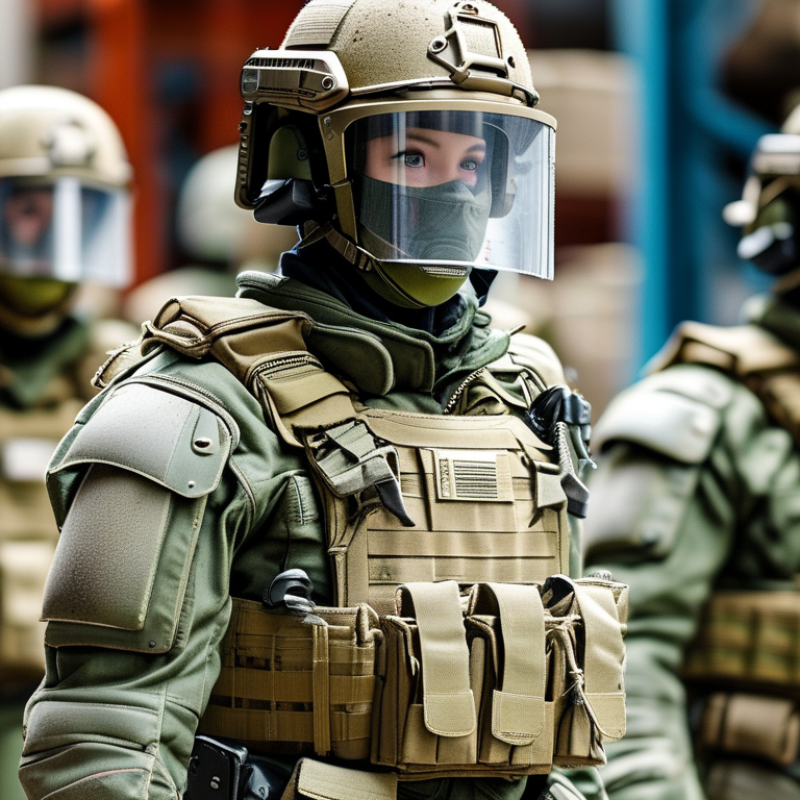
| 1 | Standard Modular Anti-Riot Suit | A general-purpose suit using separate padded panels for the torso, shoulders, elbows, forearms, thighs, knees, and shins. Components are normally connected with straps, hook-and-loop fasteners, or adjustable closures. | Routine public-order deployment where personnel need balanced protection, mobility, and quick equipment replacement. | Padded jacket or vest, arm guards, thigh guards, knee and shin protectors, gloves, and compatible helmet system. | Blunt impacts, abrasion, minor projectiles, and contact with hard surfaces. | A practical baseline option, but coverage depends on the design. It is not automatically chemical-, flame-, or ballistic-protective. |
| 2 | Full-Coverage Heavy-Duty Riot Suit | A more extensive protective ensemble with overlapping hard or semi-rigid guards covering most of the torso and limbs, often incorporating reinforced joints and closures. | High-risk crowd-control operations involving repeated physical contact, coordinated pushing, or a greater likelihood of thrown objects. | Reinforced torso carrier, shoulder and arm armor, groin protection, thigh panels, articulated knee guards, shin guards, gloves, and helmet. | Enhanced impact, abrasion, and penetration resistance compared with lightweight configurations. | Greater weight and heat retention can reduce endurance. Rigid panels may restrict running, climbing, or vehicle access. |
| 3 | Lightweight Mobility Anti-Riot Suit | A reduced-weight system that combines abrasion-resistant fabric with low-profile padding and strategically placed protective inserts. | Long-duration patrols, rapid movement, crowd monitoring, and situations where agility is more important than maximum coverage. | Breathable base garment, low-profile torso padding, elbow and knee protectors, lightweight shin guards, gloves, and helmet. | Abrasion, falls, light blunt impact, and limited contact hazards. | Usually provides less coverage and impact absorption than heavy-duty suits. Insert compatibility and secure retention should be checked. |
| 4 | Flame-Resistant Anti-Riot Suit | A riot-protection system made with inherently flame-resistant or treated fabrics, commonly combined with impact pads and heat-resistant accessories. | Operations where smoke, burning materials, incendiary hazards, or short-duration flame exposure may occur. | Flame-resistant outer garment, impact armor, heat-resistant gloves, hood or neck protection, and helmet with face shield. | Reduced ignition and limited flame-spread risk when the fabric is correctly certified and maintained. | Flame resistance does not equal fireproofing. Certification, exposure duration, garment cleanliness, and replacement intervals are important. |
| 5 | Chemical-Resistant Riot Ensemble | A protective clothing configuration using chemical-resistant outer layers, sealed interfaces, and compatible gloves, boots, and respiratory equipment. | Reducing skin and clothing contamination during incidents involving irritant agents, unknown liquids, or hazardous residues. | Chemical-resistant coverall or over-garment, sealed hood, gloves, boots, face protection, and separately selected respiratory protection. | Limited protection against specified chemicals or liquid splashes, depending on tested material and seam construction. | No single suit protects against every chemical. Buyers must match test data to the exact substance, concentration, exposure route, and mission duration. |
| 6 | Riot-Control-Agent Resistant Suit | A specialized ensemble designed to reduce penetration and retention of selected riot-control agents through the garment, particularly when used with sealed accessories. | Personnel operating in areas where airborne or surface residues from approved riot-control agents may be present. | Low-permeability outer layer, hood, gloves, boots, eye protection, and an appropriate respirator selected separately. | Reduced skin exposure and contamination from specifically tested agents. | Garment protection does not replace respiratory protection. Permeation, leakage, decontamination, and service-life data must be reviewed. |
| 7 | Hot-Climate Ventilated Riot Suit | A riot suit optimized for heat management through breathable fabrics, ventilation zones, moisture-wicking layers, and lighter protective components. | Public-order missions in tropical, desert, or high-temperature environments where heat stress is a major operational risk. | Moisture-wicking base layer, ventilated carrier, perforated or spaced padding, lightweight guards, gloves, and helmet with airflow features. | Basic impact and abrasion protection with improved ventilation and moisture management. | Ventilation can reduce weather resistance. Adequate hydration, rest cycles, and compatibility with communications equipment remain necessary. |
| 8 | Cold-Weather Insulated Riot Suit | A layered protective system incorporating insulation, wind and water resistance, and impact protection for cold or wet conditions. | Maintaining protection and dexterity during winter deployments, prolonged outdoor operations, or cold-weather crowd management. | Insulated underlayer, weather-resistant outer shell, impact guards, insulated gloves, boot system, neck protection, and helmet. | Cold, wind, precipitation, abrasion, and general blunt impact hazards. | Bulkier layers may affect mobility and equipment fit. Moisture management and sizing over winter clothing should be tested before procurement. |
| 9 | Water- and Weather-Resistant Riot Suit | An ensemble using coated or laminated outer fabrics, protected seams, and corrosion-resistant hardware to maintain function in rain and wet conditions. | Outdoor deployments in heavy rain, wet urban environments, or operations requiring extended exposure to changing weather. | Water-resistant outer layer, sealed or protected closures, impact armor, gloves, waterproof footwear, and helmet cover or visor. | Rain, wind, wet surfaces, abrasion, and routine impact hazards. | Water resistance is not the same as chemical resistance or complete waterproofing. Coatings and seam seals can deteriorate with wear and cleaning. |
| 10 | Mission-Configurable Modular Suit | A scalable system built around a common carrier or garment, allowing users to add or remove impact panels, groin protection, pouches, shields, and environmental layers. | Organizations with varied mission profiles, multiple climates, or a need to standardize equipment while adapting protection to threat levels. | Base carrier, interchangeable armor panels, limb guards, protective apron, gloves, helmet, communications routing, and optional weather or chemical layers. | Configurable impact, abrasion, environmental, and limited hazard protection according to the selected modules. | Interchangeability must be verified across sizes and components. Incorrect assembly can create gaps, snag hazards, or reduced mobility. |