
Top Microneedling 2.5 Mm Devices for Global Buyers?
Microneedling 2.5 Mm devices attract global buyers seeking precise needle depth, dependable construction, and clear product documentation. Yet “2.5 mm” alone does not establish suitability or performance. Intended use, device design, local regulatory status, and practitioner training all matter. Small details matter, too: cartridge locking, sterile packaging, and readable instructions.
In their peer-reviewed review, “Microneedling: Advances and Widening Horizons,” dermatology researchers Singh and Yadav describe microneedling as “a minimally invasive procedure that involves repetitive puncturing of the skin with sterilized microneedles.” Their definition is useful, but it does not validate every device or needle depth. The FDA’s 2020 Safety Communication also cautions buyers and users about microneedling devices, including their use with other products. Check the original guidance and the manufacturer’s intended-use documentation.
This guide compares Microneedling 2.5 Mm devices through practical purchasing criteria: traceable specifications, cartridge compatibility, quality controls, and after-sales support. It prioritizes regulator and clinical sources over broad market forecasts, which rarely isolate 2.5 mm products. One limitation deserves attention: public, comparable performance data for this exact depth can be difficult to find. A polished product page is not proof. Global buyers should verify claims directly with manufacturers and relevant authorities before making a purchase.
How 2.5 mm Microneedling Devices Work
A microneedling device uses a moving cartridge of fine needles to create tiny, controlled channels in the skin. At a 2.5 mm setting, the needles can reach deeper tissue than common cosmetic home-use tools. That depth is not a casual setting. Treatment should be assessed and performed by a suitably trained professional, with sterile equipment and careful screening.
The motor moves the cartridge rapidly across the skin. Each pass creates small punctures, prompting a localized wound-healing response that can involve collagen production over time. The sensation may feel like firm, repetitive pressure, while pinpoint bleeding can occur at greater depths. Skin thickness varies across the face and body, so one setting does not suit every area. A device’s displayed depth also may not equal the precise penetration achieved in practice.
That detail matters. Technique, pressure, cartridge condition, and skin movement all affect results and irritation. A responsible provider checks medical history, active skin conditions, and healing risks before treatment. Afterward, skin may look red and feel tender; harsh products and sun exposure can worsen irritation. Recovery differs between people, and improvement is gradual, not guaranteed. Even experienced operators must reassess. Human skin is not uniform.
Key Components and Performance Specifications
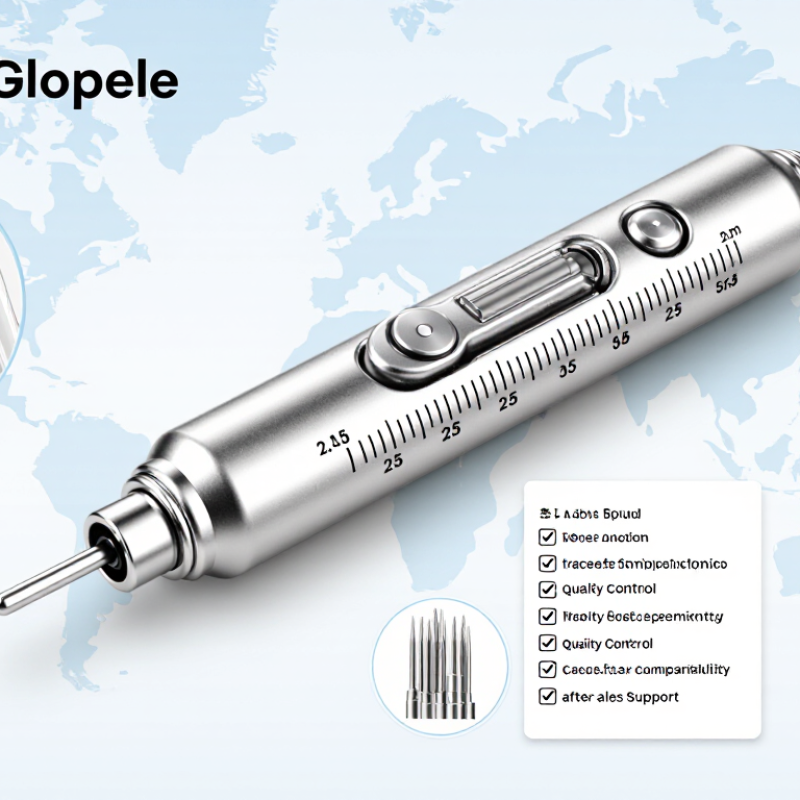
For a 2.5 mm microneedling device, buyers should examine the whole drive system, not just the needle length. A stable motor, controlled stroke, and secure cartridge fit help keep movement consistent across the treatment area. Check whether the depth setting is clearly marked and repeatable. Skin, pressure, and angle can change actual penetration, so a “2.5 mm” label alone says little.
Inspect the cartridge’s needle array, housing, and sterile packaging. Ask for documented needle-material specifications, batch traceability, and evidence supporting single-use claims. Electrical safety and risk management also matter; IEC 60601-1 and ISO 14971 provide relevant frameworks for evaluating medical electrical equipment and device risks. FDA safety communications identify infection and pigment changes among possible microneedling risks. Small details matter. A loose cartridge or unclear depth control deserves follow-up.
Market growth is context, not proof of quality. Grand View Research estimated the global microneedling market at USD 556.2 million in 2022 and projected USD 1.05 billion by 2030. That forecast does not establish device performance. Request test records for speed consistency, depth accuracy, vibration, and operating temperature, then compare results across samples. There is no perfect setting. Buyers should also review cleaning instructions and complaint-handling procedures; those documents are easy to overlook, and sometimes they are not as clear as they should be.
Device Types Available to Global Buyers
Global buyers comparing 2.5 mm microneedling devices may encounter electric pen-style systems, manual stamps, and rollers. Pen-style devices use powered cartridges and often offer adjustable depth settings. Stamps press needles vertically into selected areas, while rollers move across the skin. Not every model reaches a true 2.5 mm working depth. Check the device specifications and cartridge details, rather than relying on a product title alone.
These categories differ in control, handling, and maintenance. A pen may allow more precise depth adjustments, but it still requires training and careful technique. Stamps can suit small, targeted areas, though consistent pressure takes practice. Rollers are simple to handle, yet angle and pressure can affect penetration. At 2.5 mm, treatment should be assessed by a qualified professional; it is not a casual home-care choice. One point can remain unclear: advertised depth may not equal actual penetration.
Tips: Ask suppliers for clear instructions, traceable quality records, and sterile, single-use cartridge options. Confirm service support in your market. Compare carefully. A low price may hide gaps in documentation or after-sales help.
How to Evaluate Quality, Safety, and Regulatory Compliance
For a 2.5 mm microneedling device, a polished product sheet is not proof of quality. Check the needle cartridge for secure locking, even alignment, and intact sterile packaging. Ask for batch traceability, material specifications, and documented quality-control checks. If possible, inspect a sample and confirm that the device operates consistently without unusual heat, noise, or looseness. Small details matter.
Safety depends on more than the machine. Review the instructions for use, cleaning limits, contraindications, and training requirements. A 2.5 mm setting may require qualified professional oversight; buyers should not assume every user or treatment area is appropriate. Verify that cartridge replacement is clear and that single-use components are labeled accordingly. Paperwork matters.
Regulatory rules differ by destination and by the device’s intended use. Confirm its classification, registration or authorization status, labeling language, and importer obligations with the relevant authority or a qualified compliance specialist. Request current certificates and verify their scope; a document may cover a different model or market. These checks can feel tedious. They are not perfect, and a buyer can still overlook something, so keep records and reassess suppliers when specifications change.
Purchasing Factors: Needles, Compatibility, and Supplier Support
For a 2.5 mm microneedling device, needle details deserve more than a glance at the advertised depth. Ask whether cartridges are single-use, individually sealed, and labeled for lot traceability. Check needle count, material, and cartridge fit; a loose connection can affect consistent operation. Depth markings should be readable, and adjustment should feel controlled. Small details matter.
Compatibility is not universal. Confirm that the cartridge is designed for the specific handpiece, rather than relying on a similar-looking connector. Ask the supplier for written compatibility information and clear instructions for inspection, cleaning, and cartridge replacement. Also verify the device’s intended professional use and applicable requirements in your destination market. A low price is less useful if essential parts are difficult to source.
Supplier support deserves practical testing. Ask how quickly technical questions are answered, whether replacement parts are available, and what warranty exclusions apply. Request product specifications, quality documents, and guidance in a language your team can use. If answers stay vague, pause the purchase. This process can feel repetitive, and paperwork is not proof of good service; still, written details make comparisons fairer.
Top Microneedling 2.5 Mm Devices for Global Buyers? – Purchasing Factors: Needles, Compatibility, and Supplier Support
| Purchasing factor | What to verify | Why it matters | Buyer’s check |
|---|---|---|---|
| Maximum needle extension | Confirm that 2.5 mm is an actual selectable setting, not simply the device’s maximum advertised range. Ask how the manufacturer defines and measures extension. | Needle extension and achieved skin penetration are not necessarily identical; pressure, technique, and treatment area can affect the result. | Request the user manual, adjustment increments, and written specifications for the compatible cartridge. |
| Needle cartridges | Check available needle counts and configurations, cartridge connection type, packaging, lot identification, and stated sterility status. | Cartridges are generally device-specific. A physically similar cartridge may not fit correctly or perform as intended. | Obtain a compatibility list and samples for evaluation. Confirm single-use instructions and disposal guidance. |
| Depth adjustment and locking | Review adjustment markings, the range of settings, and whether the cartridge remains securely locked during operation. | Clear controls and secure cartridge retention help users follow the device instructions consistently. | Inspect the adjustment mechanism and request operating instructions and maintenance guidance. |
| Drive and power system | Compare corded and rechargeable configurations, stated operating time, charging requirements, and availability of replacement power components. | Power arrangements affect workflow, portability, and downtime; advertised runtime should be checked against the supplier’s test conditions. | Ask for the input-voltage range, plug options, battery details where applicable, and warranty coverage. |
| Speed settings | Verify the available speed controls and how the supplier reports speed, including units and measurement conditions. | Speed specifications are not directly comparable unless measurement methods and operating conditions are clearly stated. | Request the technical sheet and confirm that speed settings are described in the operating manual. |
| Cleaning and infection-control instructions | Determine which parts are reusable, which are single-use, and the manufacturer-approved cleaning or disinfection process. | Reusable handpieces and disposable cartridges require different handling. Do not assume a component can be sterilized unless the instructions say so. | Request written reprocessing instructions and confirm that they are suitable for the intended clinical setting. |
| Documentation and local market access | Request the device’s intended-use statement, labeling, technical documentation, and market-specific conformity or authorization documents where applicable. | Requirements differ by country and intended use. A document supplied for one market does not automatically establish eligibility in another. | Check requirements with the relevant national regulator or qualified local importer before placing an order. |
| Supplier support and traceability | Assess response times, training materials, spare-part availability, complaint handling, product traceability, and the process for reporting safety issues. | Reliable post-sale support helps buyers manage maintenance, replacement supplies, and product questions throughout the device’s service life. | Ask for support terms, warranty exclusions, service contacts, and a sample traceability record before purchase. |
| Use setting and safety | Confirm the labeled user qualifications, intended treatment setting, warnings, and contraindications for the exact device and cartridge. | A 2.5 mm setting can involve substantial skin penetration. Suitability depends on the device labeling, treatment area, user training, and local rules. | Do not treat the maximum setting as a general-use recommendation. Follow the manufacturer’s instructions and applicable professional requirements. |
Note: This comparison is a purchasing checklist, not a ranking of specific models or a treatment recommendation. Verify all specifications and regulatory requirements for the exact device, cartridge, and destination market.

