

China Top 10 Cold Storage Freezer Units Suppliers
Choosing the right Cold Storage Freezer Units supplier can shape product quality, operating costs, and daily reliability. A freezer room is more than insulated panels and a compressor. It must hold stable temperatures through busy loading periods, changing seasons, and routine defrost cycles. Even a small temperature swing can matter when storing sensitive goods.
This guide introduces ten suppliers serving the cold-storage market. It considers practical factors such as product range, temperature control, energy performance, installation support, and after-sales service. Look for clear technical specifications, documented testing, and realistic capacity guidance. Ask how the system performs during peak demand, not just under ideal conditions. Service access matters too. A well-built unit still needs maintenance. Compare warranty terms and the availability of replacement parts before making a decision.
No single supplier is right for every facility. A compact food shop and a large distribution center have different needs, and a low purchase price may conceal higher running costs. The supplier’s local service network can also affect downtime. Details can be easy to overlook. This overview is a starting point, not a substitute for a site assessment or verified quotations. Some comparisons may remain imperfect because specifications and service coverage vary by region. Check current information directly with each supplier before investing.
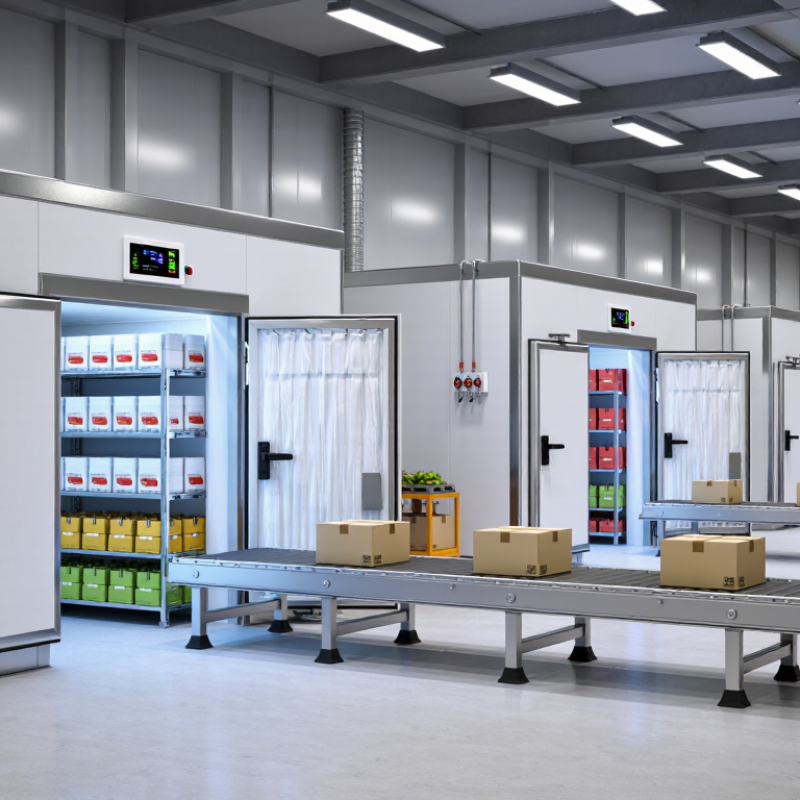
Understanding Cold Storage Freezer Units and Their Main Applications
Cold storage freezer units preserve products by maintaining stable temperatures and limiting unwanted temperature swings. They are used in food distribution, commercial kitchens, laboratories, and other settings that handle temperature-sensitive materials. The right unit depends on what is stored, how often staff access it, and how much space is available. A freezer that is too small can become crowded, restricting airflow around boxes and trays.
Common formats include walk-in rooms, reach-in cabinets, and chest-style units. Walk-ins suit facilities holding large volumes, while reach-in cabinets offer convenient access in busy kitchens. Chest freezers can work well for smaller inventories, though staff may find items harder to locate. Small details matter. Door seals, interior lighting, shelving, and alarm systems all affect daily use.
Operating conditions deserve attention, too. Frequent door openings, warm deliveries, and blocked vents can make temperatures less consistent. Staff should use a calibrated thermometer and keep a simple temperature log. That routine is not perfect; readings can miss brief changes between checks. Still, it offers useful evidence for spotting recurring problems. Before selecting a unit, assess peak inventory, delivery schedules, available floor space, and the site’s electrical capacity. A careful fit matters. Oversizing may waste energy, while undersizing can force awkward stacking and slow retrieval.
How China’s Cold Storage Equipment Supply Market Is Structured
China Top 10 Cold Storage Freezer Units Suppliers
How China’s Cold Storage Equipment Supply Market Is Structured
China’s cold-storage supply market is layered, not simply a list of freezer-unit makers. Equipment manufacturers typically provide compressors, condensing units, evaporators, or packaged systems. System integrators combine these with insulated panels, doors, controls, and site installation. Component specialists support both groups. Buyers should confirm who handles commissioning and service; responsibility can become unclear when several vendors share one project.
The Global Cold Chain Alliance’s 2020 Global Cold Storage Capacity Report estimated China’s capacity at about 131.7 million cubic metres, within a global total of roughly 719 million. This scale supports diverse suppliers, from standard modular rooms to engineered facilities for food processing and distribution. Yet capacity figures do not reveal equipment quality or energy performance. A freezer unit that fits on paper may struggle in a humid loading area or under frequent door openings. Details matter.
Tips: Request the unit’s operating range, cooling capacity at stated conditions, and expected energy use. Check local spare-parts access and ask for commissioning records. Compare like with like. One imperfect but useful question: who responds at 2 a.m. if temperatures rise?
Profiles of 10 Leading Cold Storage Freezer Unit Suppliers in China
China’s cold-storage market is expanding, but a freezer unit must do more than reach a low temperature. The China Federation of Logistics and Purchasing reported national cold-storage capacity of about 228 million cubic metres in 2023. That scale makes energy use, temperature stability, and service access practical purchasing concerns. The ten supplier profiles below describe different capabilities, without relying on brand claims.
Several suppliers focus on turnkey projects, combining insulated panels, refrigeration systems, and commissioning. Others specialize in industrial refrigeration for high-throughput facilities. A third group builds modular units for food processors and regional distribution centres. Some suppliers emphasize low-temperature applications, while others offer multi-temperature zones for chilled and frozen goods. Buyers may also find specialists in control systems, equipment retrofits, remote monitoring, and maintenance. These distinctions matter: a compact unit beside a loading bay faces different demands from a large facility running around the clock.
The International Institute of Refrigeration has repeatedly highlighted refrigeration’s significant energy demand across the global food chain. This makes measured efficiency and operating conditions more useful than brochure promises. Ask suppliers for test conditions, temperature uniformity data, spare-parts lead times, and references from comparable installations. Check door seals and frost accumulation during a site visit. Small details count. One weakness in this comparison is that supplier capabilities can overlap, and published specifications are not always directly comparable. A careful shortlist should include local service capacity, not just equipment price.
Comparing Supplier Products, Technologies, and Service Capabilities
Choosing among China’s top cold storage freezer unit suppliers requires more than comparing quoted prices. Review usable storage volume, temperature range, insulation thickness, door seals, and defrost method. Ask for performance data under conditions similar to your site, including ambient temperature and loading patterns. A freezer that reaches its setpoint quickly when empty may behave differently during frequent deliveries.
Technology affects daily operating costs and product consistency. Compare control accuracy, alarm functions, energy monitoring, and options for remote temperature records. Request clear documentation for compressors, refrigerants, and electrical requirements. Service capability matters just as much: check technician coverage, spare-parts availability, commissioning support, and response times. Get these details in writing. Some specifications look impressive on paper, but maintenance access can be awkward in a crowded facility. That is easy to overlook.
Tips: Ask each supplier for a sample layout and a written list of exclusions. Confirm who handles installation, staff training, and routine maintenance. If possible, speak with an operator using a similar unit. Site conditions vary, so treat reference figures as guidance rather than a guarantee. A short trial can reveal issues that a brochure cannot.
| Supplier Profile | Typical Product Focus | Common Temperature Range | Refrigeration & Control Technologies | Configuration Options | Service Capabilities to Evaluate | Best-Fit Applications |
|---|---|---|---|---|---|---|
| 1. Modular cold-room specialist | Walk-in freezer rooms and modular cold-storage panels | Typically around −18°C to −25°C for frozen storage | Packaged or split refrigeration systems; electronic temperature controllers | Panel thickness, room dimensions, door type, shelving, and floor options | Site measurement, installation, commissioning, and spare-parts availability | Food retailers, restaurants, and small distribution facilities |
| 2. Industrial freezer-system supplier | Large cold rooms, freezer warehouses, and central plant systems | Application-dependent; frozen-storage rooms commonly operate near −18°C or below | Centralized compressor systems, evaporators, condensers, and supervisory controls | Multiple rooms, loading areas, control zones, and plant-room layouts | Engineering design, energy assessment, installation, and planned maintenance | Food processors, logistics hubs, and wholesale distribution centers |
| 3. Blast-freezing equipment supplier | Blast freezers and rapid product-cooling rooms | Designed for rapid freezing; operating conditions depend on product, load, and process | High-capacity refrigeration, forced-air circulation, and cycle controls | Batch or trolley loading, rack layouts, and recipe-based cycle settings | Process sizing, airflow validation, operator training, and commissioning | Prepared foods, seafood, meat, and bakery production |
| 4. Refrigeration condensing-unit supplier | Air-cooled or water-cooled condensing units for cold rooms | Selected to suit the required room temperature and local design conditions | Compressor packages with condenser, receiver, electrical controls, and safety devices | Capacity, refrigerant circuit, voltage, enclosure, and condenser configuration | Application selection, technical documentation, warranty support, and parts supply | Cold-room builders, equipment integrators, and replacement projects |
| 5. Cold-room evaporator supplier | Unit coolers and evaporators for chilled and frozen rooms | Matched to room setpoint, product load, and required air temperature difference | Fan-assisted heat exchange, defrost controls, and temperature-sensor options | Airflow direction, coil selection, fan type, defrost method, and corrosion protection | Selection support, installation guidance, and access to replacement components | New cold rooms and upgrades to existing refrigeration systems |
| 6. Energy-efficiency-focused system provider | Cold-storage packages emphasizing operating-cost management | Configured for the required chilled or frozen storage temperature | Variable-speed drives, electronic expansion controls, and system monitoring may be available | Capacity staging, heat-recovery options, control zoning, and monitoring packages | Load analysis, commissioning records, energy-performance review, and maintenance | Facilities with long operating hours or significant refrigeration loads |
| 7. Low-GWP refrigerant system provider | Refrigeration systems designed around refrigerant and regulatory requirements | Application-specific; suitability depends on refrigerant, equipment design, and conditions | Low-GWP refrigerant options may include systems using CO₂ or other suitable refrigerants | System architecture, safety measures, capacity, and local-code requirements | Refrigerant expertise, risk assessment, technician training, and compliance support | Projects prioritizing refrigerant transition and long-term regulatory planning |
| 8. Temperature-monitoring and controls provider | Controllers, sensors, alarms, and monitoring solutions for cold storage | Monitoring range depends on sensor and controller specifications | Digital control, data logging, remote alarms, and communications interfaces | Sensor count, alarm contacts, data retention, connectivity, and reporting | Configuration, calibration documentation, integration, and technical support | Cold chains requiring temperature records, alarms, or centralized oversight |
| 9. Turnkey cold-storage project contractor | Integrated cold rooms with refrigeration, panels, doors, and controls | Set according to the storage process and project specification | System technology selected to match room size, load, and operating conditions | Custom room layout, panel and door choices, loading access, and control zones | Design coordination, civil-interface planning, installation, and handover | New facilities seeking a single project-delivery interface |
| 10. Replacement and retrofit specialist | Upgrades to existing freezer rooms and refrigeration equipment | Retained or revised to meet the facility’s operating requirement | Replacement compressors, controls, fans, or refrigeration circuits as appropriate | Phased installation, equipment reuse assessment, and control-system upgrades | Condition survey, outage planning, commissioning, and maintenance support | Operating facilities seeking upgrades with limited disruption |
Comparison guide: These are supplier profiles and typical industry configurations, not verified specifications for individual companies. Actual temperature limits, capacities, refrigerant choices, certifications, warranty terms, and service coverage must be confirmed against the selected supplier’s current technical documentation and project requirements.
Key Factors for Evaluating and Selecting a Chinese Supplier
Selecting a Chinese cold storage freezer unit supplier takes more than comparing quoted prices. Check the unit’s operating range, pull-down time, insulation thickness, and performance under your site’s summer conditions. Ask for test records at stated ambient temperatures, not just ideal laboratory figures. A freezer that looks efficient on paper may struggle when doors open frequently. Details matter.
The Global Cold Chain Alliance’s 2020 Global Cold Storage Capacity Report estimated worldwide refrigerated warehouse capacity at about 719 million cubic metres. That scale makes dependable equipment and service important. Ask suppliers for compressor and control-system specifications, energy-use data, warranty terms, and a clear spare-parts list. Request references from installations with similar capacity and climate; then verify how quickly technicians respond. The FAO’s 2019 report estimated that 14 percent of food is lost between harvest and retail, reinforcing the value of stable temperature control. Still, a supplier cannot promise zero product loss. Review alarm functions, temperature-uniformity test results, and commissioning procedures instead. Visit a factory or request a live video inspection if practical. I would also compare the written offer against the delivered unit. That step is easy to overlook, and sometimes it is.

