

What Is Teak Plywood and Why Do Buyers Choose It?
Teak Plywood combines a durable plywood core with a teak face veneer, creating a surface valued for its warm color and distinctive grain. Buyers often consider it for boat interiors, furniture, wall panels, cabinetry, and sheltered outdoor projects. Its appeal is practical as well as visual. Teak can resist moisture better than many common decorative woods, while plywood offers dimensional stability across changing conditions.
Still, the product is not automatically waterproof or maintenance-free. Performance depends on the core material, adhesive quality, veneer thickness, and manufacturing process. A buyer should check the panel grade, thickness tolerance, formaldehyde information, and intended-use rating. Ask for technical data and sourcing details. These documents matter more than a polished showroom sample.
Experienced installers also inspect the sheet edges and surface before cutting. Look for open joints, uneven veneer, delamination, or excessive filler. A clean grain pattern may hide a weak inner construction. That is easy to miss. Sealing exposed edges is often essential, especially near sinks, decks, or humid cabins. Correct fasteners and suitable finishes also influence service life.
There is a trade-off. Teak plywood can cost more than ordinary hardwood plywood, and its appearance varies between batches. Some buyers may prefer a less expensive veneer for purely decorative work. Others accept the higher price because the material delivers a richer finish and a more recognizable character. Responsible purchasing includes verifying legal and sustainable timber sourcing. Buyers should compare supplier claims with credible certifications where available. The best choice is not simply the most attractive panel. It is the panel that matches the project, environment, budget, and maintenance expectations.
Teak Plywood: Definition, Structure, and Key Characteristics
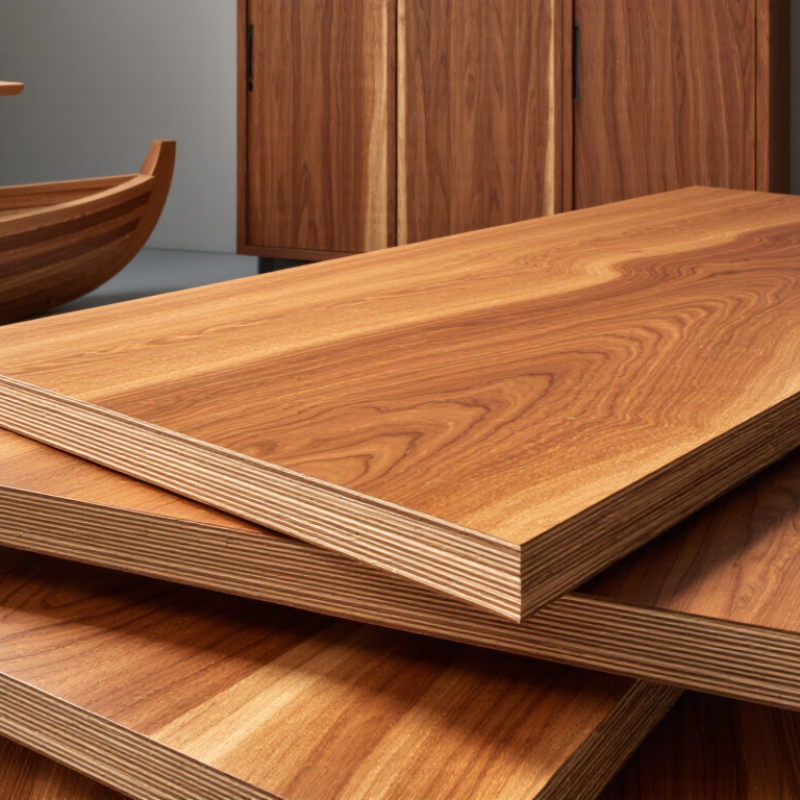
Teak plywood is an engineered wood panel with a real teak surface veneer. It combines thin teak veneers with a stable core, often made from hardwood or mixed wood layers. Manufacturers cross-lay the veneers, changing grain direction between layers. This structure improves stability and reduces splitting. The face veneer provides teak’s warm brown color, visible grain, and naturally refined appearance. Edges may reveal several thin layers.
Buyers choose teak plywood for its appearance, workable strength, and resistance to changing humidity. Teak contains natural oils, which can help slow moisture absorption. It also feels dense and smooth when properly sanded. However, teak plywood is not automatically waterproof. Poor sealing can still cause swelling, staining, or open joints. Color may also change under sunlight, becoming lighter or more golden. In workshop inspections, I check the core carefully. A clean face can hide weak bonding inside. The material is reliable when its construction matches the intended use, but no sheet is flawless.
Tips: Check veneer thickness, core gaps, and edge bonding before purchase. Ask for moisture resistance information and adhesive details. For bathrooms or covered outdoor areas, seal every exposed edge. Do not judge quality by color alone. A darker sheet is not always stronger.
How Teak Plywood Is Manufactured and Graded
Teak plywood begins with carefully selected teak logs and stable core veneers. Manufacturers peel or slice the timber into thin sheets. These veneers are dried to control moisture before assembly. Excess moisture can cause bubbling, warping, or weak bonding later.
The layers are arranged with alternating grain directions. This structure improves strength and reduces movement. A moisture-resistant adhesive is applied between each veneer. The assembled panel enters a hot press under controlled pressure and temperature. After cooling, workers trim, sand, and check the sheet for flatness. Edge sealing may protect exposed layers during storage and installation.
Grading usually considers the face veneer, back veneer, core quality, thickness, bonding, and visible defects. A premium face should show consistent color, tight grain, and limited repairs. Lower grades may contain knots, filled splits, open pores, or noticeable color variation. I inspect sample panels under bright light and measure thickness at several points. No sheet is perfect. Even attractive teak plywood may contain small core gaps that appear only after cutting. Buyers should request test data, production details, and clear grading criteria. A high visual grade does not automatically mean waterproof performance. Adhesive type, pressing quality, and installation conditions still matter. Standards can differ between suppliers, so comparison requires more than a surface inspection.
Performance Benefits in Marine, Outdoor, and Interior Applications
What Is Teak Plywood and Why Do Buyers Choose It?
Teak plywood combines a stable plywood core with teak face veneers, creating a lighter panel than solid teak. Its grain brings warmth, while layered construction helps limit warping across broad surfaces. The detail matters. A quality panel should have even veneers, consistent bonding, and sealed edges. Marine buyers often choose it for cabin soles, bulkheads, seat backs, and locker doors. In these areas, it handles changing humidity better than many ordinary wood panels. Yet “marine” should not be accepted as a vague label. The adhesive system, core quality, thickness, and test documentation deserve careful checking.
On boats, teak’s natural oils offer some resistance to moisture, but they do not make plywood waterproof. Standing water can enter exposed edges, screw holes, or poorly sealed cutouts. Small failures become expensive. Protective coatings and accurate installation remain essential, especially around deck hardware and wet compartments. For outdoor furniture, doors, and shaded wall panels, teak plywood provides a refined appearance without the weight of thick solid boards. Direct sun gradually changes its color, and repeated wet-dry cycles can open neglected joints. A UV-resistant finish and rounded, sealed edges improve service life.
Interior designers use it for cabinetry, feature walls, ceilings, and custom storage. The surface feels warm and can be refinished when scratches appear. However, veneer thickness varies, so aggressive sanding may expose the core. Buyers should request moisture data, formaldehyde information, and clear maintenance guidance before ordering. I would not call teak plywood maintenance-free. Before ordering, confirm veneer thickness and the recommended finish.
What Is Teak Plywood and Why Do Buyers Choose It? - Performance Benefits in Marine, Outdoor, and Interior Applications
| Evaluation Dimension | Typical Teak Plywood Characteristics | Marine Applications | Outdoor Applications | Interior Applications |
|---|---|---|---|---|
| Material structure | A multi-layer panel with teak veneer faces bonded to a plywood core. Construction and core species vary by manufacturer and product grade. | Suitable for boat trim, cabinetwork, locker fronts, and deck-detail components when the panel has an appropriate exterior or marine-grade bond. | Useful for covered furniture, doors, screens, and architectural details when all exposed edges and faces are properly sealed. | Well suited to wall panels, cabinetry, furniture, and decorative joinery where teak appearance is desired. |
| Moisture resistance | Teak has naturally durable heartwood, but plywood performance depends heavily on adhesive, core quality, veneer integrity, and edge sealing. | Choose panels tested or specified for humid exposure; seal cut edges, fastener holes, and joints to limit water entry. | Performs best in protected or intermittently exposed locations. Continuous unsealed exposure can cause swelling, checking, or delamination. | Provides a durable surface in kitchens, bathrooms, and utility areas when ventilation and appropriate finishing are provided. |
| Dimensional stability | Cross-laminated veneers reduce movement compared with solid wood, although plywood still responds to changes in moisture content. | Helps maintain fit around lockers, partitions, and trim where repeated humidity changes occur. | Stable when supported correctly and protected from direct, prolonged wetting and rapid moisture cycling. | Offers predictable panel behavior for cabinet doors, wall cladding, tabletops, and built-in furniture. |
| Durability | Teak heartwood is widely recognized for resistance to decay and insects; the panel’s overall durability is limited by its weakest layer or unprotected edge. | A practical choice for protected marine joinery and trim, but it should not be treated as automatically waterproof. | Suitable for demanding outdoor detailing when the product is exterior-rated and maintained according to the finish system. | Provides long service potential in high-touch furniture and architectural surfaces with routine care. |
| Surface appearance | Typically features a warm golden-brown tone, straight to interlocked grain, and natural oils; color changes with sunlight and aging. | Creates a traditional yacht and boat-interior appearance for panels, cabinetry, handrails, and trim. | Adds a warm natural finish to screens, benches, covered decks, and garden structures. | Used for feature walls, doors, cabinetry, furniture, and high-end decorative surfaces. |
| Machining and installation | Can be cut and routed with standard woodworking tools; teak’s silica and natural oils may accelerate tool wear and affect glue or finish adhesion. | Pre-drilling and compatible marine sealants are recommended around fasteners and penetrations. | Allow for drainage, ventilation, movement joints, and sealed end grain during installation. | Works well with cabinetmaking and panel systems; test adhesives and finishes on offcuts before full installation. |
| Finishing options | May be left to weather naturally or finished with compatible oils, sealers, varnishes, or coatings. Surface preparation is important because teak contains extractives. | A film finish can protect appearance, while breathable exterior systems may simplify maintenance in some locations. | UV exposure gradually turns untreated teak gray; coatings require periodic inspection and renewal. | Clear finishes can emphasize grain and reduce staining, while matte oils preserve a more natural appearance. |
| Maintenance needs | Routine cleaning, inspection of edges and joints, and timely repair of damaged finishes help extend service life. | Inspect regularly for water traps, fastener leaks, coating failure, and damage to exposed end grain. | Maintenance frequency depends on sunlight, rainfall, ventilation, orientation, and the selected finish. | Usually requires less intensive care than exterior installations, but spills and standing moisture should be removed promptly. |
| Key buying checks | Confirm panel thickness, face-veneer grade, core composition, bond classification, formaldehyde class, tolerances, and available documentation. | Verify marine or exterior suitability rather than relying only on the word “teak.” Ask about bond durability and water-exposure testing. | Check whether the panel is rated for the intended exposure and whether installation instructions require full sealing. | Prioritize veneer matching, surface quality, flatness, emissions documentation, and finish compatibility. |
Factors Buyers Consider Before Choosing Teak Plywood
What Is Teak Plywood and Why Do Buyers Choose It?
Teak plywood usually has a teak veneer over layered wood plies. It offers warm color, visible grain, and useful dimensional stability. Buyers often choose it for furniture, wall panels, cabinets, and sheltered interior spaces. However, teak appearance does not automatically mean superior performance. The core quality matters just as much.
Before choosing teak plywood, buyers should inspect veneer thickness, panel flatness, bonding strength, and surface defects. Ask whether the adhesive suits humid conditions. Also check the plywood’s moisture resistance and formaldehyde information. A beautiful face cannot hide weak inner plies for long. I once focused too much on grain matching and overlooked a slightly uneven panel. That mistake affected the final finish.
Thickness and sheet size influence cutting waste and installation effort. Buyers should compare samples under natural light because teak tones can vary. Responsible sourcing also matters. Request clear material documentation and verify the supplier’s technical claims. Do not assume “marine” or “waterproof” without supporting test details.
Tips: Run your hand across the surface. It should feel even, without raised patches or open gaps. Tap the panel lightly; unusual hollow sounds may suggest internal separation. Store sheets flat and dry before installation. A small sample test is worthwhile. Real conditions can be less forgiving.
Teak Plywood Compared with Other Common Plywood Types
Teak plywood is usually plywood with a teak face veneer, not a solid teak board. Its appearance is warm, with tight grain and a naturally oily surface. Buyers often choose it for cabinet doors, boat interiors, wall panels, and furniture details. The Wood Handbook, published by the USDA Forest Products Laboratory in 2021, lists teak density at roughly 0.55–0.75 g/cm³. That moderate density supports good dimensional stability without making panels excessively heavy.
The comparison becomes clearer against common plywood types. Birch plywood offers a pale, uniform surface and strong screw-holding performance. Hardwood plywood can provide similar strength, but its face species and core quality vary widely. Marine plywood uses durable construction and waterproof adhesive, yet it is not automatically rot-proof. Softwood plywood costs less and works well for framing, crates, and hidden structures. Teak plywood usually wins on visual character and surface durability, but it often costs more and may require careful bonding because teak contains natural oils.
The trade-off is real. FAO’s Global Forest Products Facts and Figures 2022 shows Asia-Pacific dominating global wood-based panel production, which supports broad plywood availability but does not guarantee consistent grading. Buyers should check core gaps, veneer thickness, adhesive class, and formaldehyde documentation. A beautiful sheet can still have a weak interior. I have seen projects focus on grain matching and overlook edge sealing. That mistake becomes obvious beside a sink or open window. Teak is not always the best choice. It is simply a demanding material that rewards precise specification.

