
China Top Filter Basket Suppliers How to Choose the Best?
China’s filter manufacturing sector serves water treatment, food processing, chemicals, energy, and industrial equipment markets. The China Filter market report by Research and Markets identifies expanding demand for filtration equipment across municipal and industrial applications. This growth creates more supplier choices, but also more comparison work.
A reliable Filter Basket supplier should provide clear specifications, not only attractive catalog images. Check stainless steel grade, opening size, wire diameter, basket dimensions, flow direction, and pressure tolerance. Ask for material certificates, dimensional inspection records, and sample testing. For hygienic applications, request surface-finish details and welding procedures. Small defects can trap residue inside a basket.
Industry reports from Grand View Research and MarketsandMarkets also show continued investment in industrial filtration and water treatment. These reports indicate that performance, replacement demand, and operating efficiency increasingly influence purchasing decisions. However, market growth does not prove that every factory offers consistent quality.
Supplier verification should include production photos, audit records, export experience, and realistic lead times. ISO 9001 certification can support process control, but it cannot replace product testing. Confirm whether the supplier manufactures baskets directly or outsources critical work. That question is often uncomfortable, yet important.
Cost matters. It should not dominate the decision. A low unit price may hide weak welds, unstable mesh, or frequent replacement costs. Compare total ownership cost, including cleaning time, downtime, packaging, and after-sales support. Independent inspection can reduce risk before mass production.
The best supplier is not always the largest one. It is the partner that documents details, accepts technical questions, and corrects mistakes transparently. Even experienced buyers can overlook fit tolerances. Careful sampling remains essential.
What Is a Filter Basket and Where Is It Used?
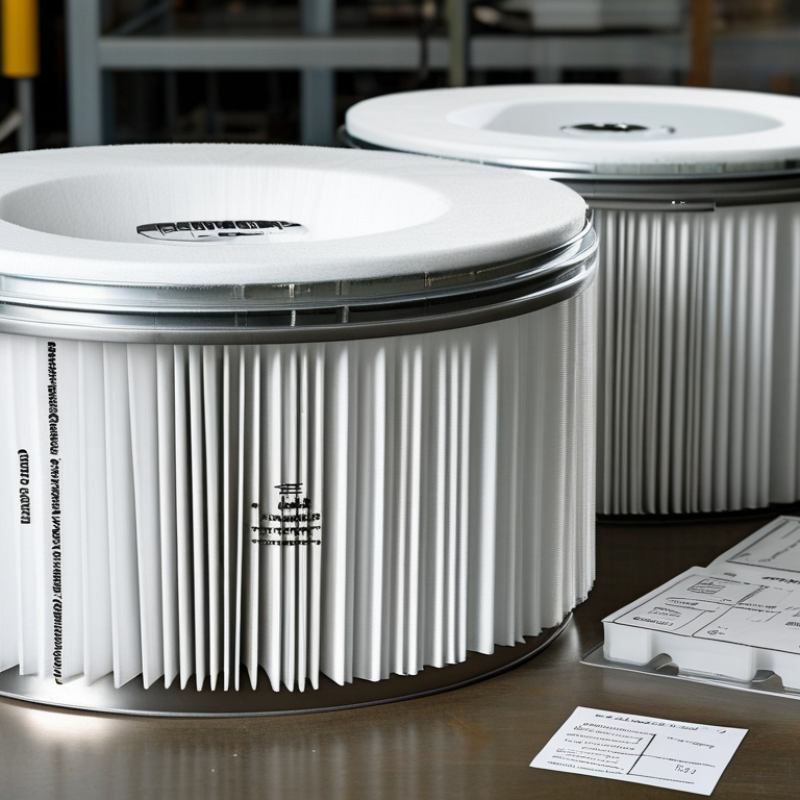
A filter basket is a removable container that captures unwanted particles from a flowing liquid or gas. It usually contains perforated metal, woven mesh, or a sintered filtering surface. The basket sits inside a housing, pipeline, tank, or processing machine. As fluid passes through, dirt remains inside the basket while cleaner fluid continues downstream.
Filter baskets are common in water treatment, food processing, chemical production, brewing, oil circulation, and industrial cooling systems. They can protect pumps, valves, spray nozzles, and heat exchangers from rust, sand, fibers, and production debris. For example, a stainless steel basket may catch grain particles during brewing, while a finer mesh can remove small solids from process water. The correct opening size depends on particle size, flow speed, pressure, temperature, and cleaning method.
In practical maintenance, a basket must be easy to remove and inspect. A strong handle helps, especially when the basket is wet and heavy. Material choice also matters because corrosive fluids can damage ordinary steel. There is no universal best design. A very fine mesh may improve filtration but restrict flow quickly. A coarse basket may last longer but allow harmful particles through. That trade-off deserves careful testing. Operators should check pressure changes, basket damage, and cleaning frequency before selecting a supplier or final specification.
Which Filter Basket Suppliers Are Available in China?
China offers several types of filter basket suppliers, and each serves a different purchasing need. Direct manufacturers usually produce stainless steel mesh baskets, perforated baskets, and custom welded assemblies. They can adjust diameter, height, handle design, and filtration grade. Their workshops may also support laser cutting, spot welding, polishing, and passivation.
Original equipment manufacturers are suitable for buyers with detailed drawings or private specifications. They often provide prototypes before mass production. Ask for material certificates, dimensional reports, and weld inspection records. A reliable factory should explain tolerances clearly, not simply promise “perfect quality.” Small inconsistencies can appear after polishing or heat treatment.
Trading companies are another common option in China. They may combine products from several factories and handle communication, packaging, and export documents. This can help buyers with limited local experience. However, the actual production site may remain unclear. Request the factory address, sample photos, inspection procedures, and a traceable purchase contract. Online supplier platforms also offer many choices, but profile information requires verification.
Look closely at sample workmanship. Check the basket rim for sharp edges, the mesh for blocked openings, and the handle for firm attachment. A low price may reflect thinner wire or weaker welding. That is not always obvious from photographs. Supplier selection is rarely flawless. Even experienced buyers should compare samples, production capacity, delivery records, and after-sales responses before placing a larger order.
What Criteria Define a High-Quality Filter Basket Supplier?
China Top Filter Basket Suppliers: How to Choose the Best?
A high-quality filter basket supplier should prove its experience with measurable details. Ask about material grades, wire diameter, mesh accuracy, and dimensional tolerances. Reliable suppliers can provide material certificates, inspection records, and clear production samples. A polished catalog is not enough.
Examine the basket closely. Welds should be even, clean, and free from sharp burrs. The support frame must resist bending under the intended flow pressure. Check corrosion resistance for wet, chemical, or high-temperature applications. Ask whether the supplier performs pressure, load, and surface inspections before shipment. Small gaps can become expensive problems.
Supplier reliability also depends on communication. Technical staff should understand your filtration rate, operating temperature, cleaning method, and installation limits. Confirm sampling procedures, production capacity, packaging, and delivery controls in writing. A factory visit or independent inspection can reveal more than a sales promise. Do not choose only by the lowest quote. Cheap baskets may use inconsistent wire or weak welds. Still, no supplier is perfect. Test a sample in real working conditions, record the results, and question any unclear specification before placing a larger order.
China Top Filter Basket Suppliers How to Choose the Best? - What Criteria Define a High-Quality Filter Basket Supplier?
| Evaluation Criterion | High-Quality Supplier Benchmark | Relevant Data or Requirement | Recommended Verification | Priority |
|---|---|---|---|---|
| Material Selection | Uses corrosion-resistant stainless steel suitable for the fluid, temperature, and cleaning chemicals. | Common options include 304 stainless steel for general service and 316 or 316L stainless steel for higher chloride or chemical exposure. | Request material certificates and verify the heat number or composition with a material test report. | Critical |
| Mesh Accuracy | Controls aperture size, wire diameter, and mesh uniformity to maintain predictable filtration performance. | Specify the mesh count or micron rating, together with the applicable wire-cloth tolerance and inspection method. | Review dimensional inspection records and request microscope or optical measurement results for the mesh. | Critical |
| Filtration Rating | Clearly distinguishes nominal filtration from absolute or particle-retention performance. | The filtration rating must match the required particle size, flow rate, pressure, and process fluid; a micron value alone does not define total performance. | Ask for application-specific test data rather than relying only on a catalog micron number. | Critical |
| Weld Quality | Provides continuous, clean welds without cracks, burn-through, sharp projections, or excessive discoloration. | Weld procedures should be defined for the selected stainless steel and product geometry; critical welds should be inspected according to the purchase specification. | Inspect sample welds visually and, where required, use dye-penetrant or another agreed non-destructive test. | Critical |
| Dimensional Control | Maintains consistent diameter, height, flange, handle, and connection dimensions across production batches. | Dimensions and tolerances should be defined on an approved drawing; general tolerances should follow the agreed engineering standard. | Compare first-article and batch inspection reports with the approved drawing using calibrated gauges. | High |
| Surface Finish | Delivers a smooth, clean surface appropriate for the process, with no burrs, loose wires, embedded contaminants, or harmful crevices. | The required finish should be stated by surface condition, roughness value, or visual acceptance criteria where cleanliness is important. | Use visual inspection, tactile inspection, and roughness measurement when specified by the application. | High |
| Mechanical Strength | Reinforces the basket against deformation, vibration, lifting loads, and differential pressure. | Design should consider operating pressure, flow direction, basket dimensions, support spacing, and pressure-drop limits. | Review engineering calculations and conduct a fit, load, or pressure test when required by the system design. | Critical |
| Traceability | Can trace raw material, production batch, inspection results, and shipment records. | Each production lot should have an identifiable batch or lot number linked to material and quality records. | Audit a sample traceability record from incoming material through final shipment. | High |
| Quality Management | Operates a documented quality management system with controlled procedures, corrective actions, and inspection records. | ISO 9001 certification is a useful indicator of a formal quality system, but it does not replace product-specific inspection or testing. | Check certificate validity, scope, issuing body, and recent corrective-action records. | High |
| Application Testing | Tests the basket under conditions that represent the actual operating environment. | Testing may include flow, pressure drop, leakage, dimensional fit, vibration, cleaning compatibility, or particle-retention performance. | Request a test plan, acceptance criteria, calibrated equipment details, and signed test results. | Critical |
| Customization Capability | Can manufacture non-standard dimensions, connection types, handles, reinforcement rings, and mesh configurations. | A controlled drawing approval process should be used before production, including revision control and change authorization. | Evaluate engineering drawings, prototype quality, sampling arrangements, and engineering response time. | Medium |
| Production Capacity | Has sufficient equipment, skilled personnel, and production planning to meet repeat-order requirements. | Capacity should be evaluated against required monthly volume, peak demand, lead time, and inspection workload rather than facility size alone. | Request a capacity statement, production schedule example, and evidence of process control for similar products. | High |
| Packaging and Corrosion Protection | Protects mesh, edges, welds, and finished surfaces during handling, storage, and international transportation. | Packaging should prevent impact, moisture contamination, deformation, and contact with carbon-steel particles. | Approve packaging specifications and inspect pre-shipment photographs or packing records. | Medium |
| Delivery Reliability | Provides realistic lead times and consistently meets agreed shipping dates. | Measure on-time delivery rate, average production lead time, order-confirmation accuracy, and response time to schedule changes. | Review historical delivery records and define service-level requirements in the purchase agreement. | High |
| After-Sales Support | Responds promptly to technical questions, nonconformities, replacement needs, and root-cause investigations. | A strong supplier should provide a documented complaint process, corrective-action report, spare-part policy, and warranty terms. | Use a pre-sale technical questionnaire and assess the quality and speed of sample responses. | Medium |
How to Compare China’s Filter Basket Manufacturers
Comparing China’s filter basket manufacturers requires more than checking quoted prices. A low bid may hide thinner wire, uneven welding, or weak packaging. Ask for drawings, mesh count, wire diameter, basket height, and allowable tolerance. Experienced suppliers should explain how these details affect flow, pressure drop, and service life. Request a production sample, not only a polished catalog image. I once accepted a sample with clean welds, then found rough inner edges in production parts. That mistake changed my inspection process.
Review the manufacturer’s process from raw material to final inspection. Confirm the stainless steel grade through material certificates and, for critical applications, independent testing. Check whether workers measure openings, inspect weld penetration, and record batch numbers. Photos of gauges and inspection benches can reveal more than sales claims. Ask how rejected baskets are separated and corrected. A reliable factory will discuss defects without pretending perfection. Still, documents can be outdated. Verify dates, quantities, and sample consistency before approval.
Tips: Compare at least three factories using the same specification sheet. Score material traceability, sample accuracy, communication speed, and corrective-action records. Test baskets under realistic flow conditions. Look for deformation after repeated cleaning cycles. Keep one approved sample as a reference. Do not rely on price alone. A slightly higher cost may prevent blocked lines and premature replacement. I would also leave room for review, because the first specification is rarely flawless.
How to Select the Best Supplier for Your Requirements
Selecting the best China filter basket supplier starts with your process, not the lowest quotation. Define liquid type, temperature, pressure, mesh size, flow rate, and basket dimensions. A basket for hot oil needs different materials and weld control than one used in water treatment.
Market data shows why this matters. Grand View Research reported the global industrial filtration market at about USD 28 billion in 2022, with continued growth through 2030. Rising demand increases supplier choices, but quality differences remain significant. Request material certificates, dimensional drawings, weld inspection records, and batch traceability. ISO 9001 certification is useful, but it does not prove every basket meets your application requirements.
Ask for a sample before placing a large order. Test it under real operating conditions. Check pressure drop, cleaning performance, surface finish, and deformation after repeated use. I would also compare three suppliers using the same technical specification. Procurement research often shows that total cost includes delivery delays, replacement parts, and rejected batches, not only unit price. The details can be uncomfortable. Some suppliers answer quickly but avoid specific test evidence. Others provide excellent samples yet struggle with stable production. Confirm monthly capacity, inspection frequency, packaging, lead time, and corrective-action procedures. A factory visit or independent inspection can expose weaknesses that brochures hide. Be careful with assumptions. A polished catalogue is not production proof.

