

How to Choose a Playground Set in 2026?

Choosing a Playground Set in 2026 is less about buying the tallest tower and more about matching equipment to children, space, and daily use. The World Health Organization’s 2020 physical activity guidelines recommend an average of at least 60 minutes of moderate-to-vigorous activity each day for children and adolescents aged 5–17. A well-planned set can make active play easier to fit into ordinary routines. Still, equipment alone cannot guarantee that children will move more.

Start with ages, available yard space, and the number of children likely to play at once. Measure the ground, then account for the equipment’s full use zone—not only its footprint. The U.S. Consumer Product Safety Commission’s Public Playground Safety Handbook explains how layout, fall height, and protective surfacing affect playground safety. Its guidance is useful even for family buyers, though a home installation is not the same as a public playground. Check manufacturer specifications and installation instructions, too.

Look closely at the details: sturdy connectors, smooth edges, grippy steps, and a slide that suits the youngest regular user. Compare wood, metal, and plastic for upkeep, climate, and repair needs. A broad swing set may serve siblings better than a dramatic climbing wall. That may feel less exciting. Yet the best choice is often the one children can use comfortably, while adults can inspect and maintain it. Set a realistic budget for surfacing and assembly, not just the frame. And be honest: children’s interests change, sometimes faster than expected.
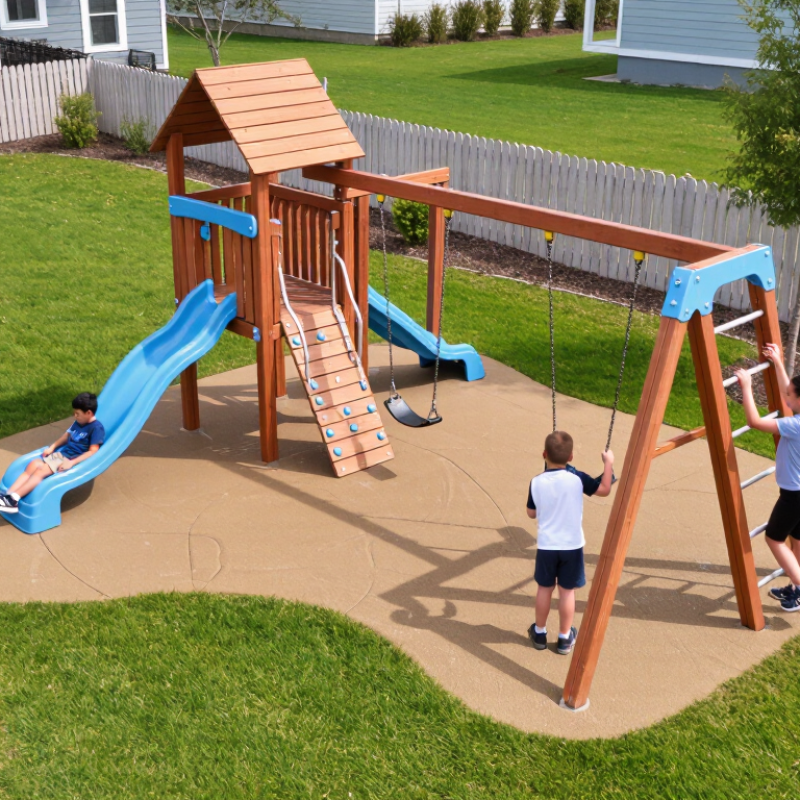
How to Choose a Playground Set in 2026?

Assessing Your Space, Users, and Play Needs

Before comparing playground sets, measure the usable play area, not just the lawn. Mark the proposed footprint with string, then walk around it with a tape measure. Include room for swings to move and children to enter or leave slides safely. Check overhead branches, fences, windows, and sloping ground. A set that fits on paper may feel crowded once the swing arcs are marked. That detail is easy to miss.

Think about who will use the equipment now and in a few years. Toddlers need low steps and close supervision; older children may want climbing routes and faster movement. If siblings have different abilities, look for varied ways to join the same play, such as ground-level activities beside a climbing section. Ask children what they actually enjoy. Their answers may be less ambitious than the catalog pictures.

Then match features to daily play habits. Does your household have space for active swinging, or would a compact climbing structure be used more often? Consider shade, drainage, visibility from the kitchen, and the surface beneath the equipment. Check the maker’s installation and maintenance instructions, and confirm the ground can support the required anchoring. I would not choose by the number of features alone; more parts can mean more upkeep. A little regret is possible either way, so prioritize safe clearance and the play your family will use often.

Comparing Playground Set Types, Materials, and Features

How to Choose a Playground Set in 2026?

Comparing Playground Set Types, Materials, and Features

Start with the children’s ages, available space, and likely play habits. A compact swing-and-slide set suits younger children and smaller yards. Climbing frames offer more challenge, but need clear fall zones. Swings need generous space in front and behind. Measure before buying; a set that fits on paper can crowd a fence or tree.

Materials change upkeep. Powder-coated steel is sturdy, but check joints and coatings for rust or peeling. Plastic components resist splinters and are easy to clean, though sun exposure can fade or weaken some parts. Wood looks natural, but needs regular checks for splinters, rot, and loose bolts. No material is maintenance-free.

CPSC’s Public Playground Safety Handbook cites an estimated 205,850 U.S. children under 15 treated in emergency rooms for playground-equipment injuries in 1999. The figure is historical, not a current annual estimate. Still, it shows why surfacing matters. The handbook recommends protective surfacing extending at least six feet beyond equipment in most directions.

Compare features by how they support safe, varied play: handholds, age-appropriate platforms, guardrails, and accessible routes. CPSC guidance also emphasizes impact-absorbing surfacing suited to equipment fall height. Check the surface depth after rain or heavy use; loose material can shift away from landing areas.

A cheaper set may be reasonable, but only if its instructions, replacement parts, and inspection needs are clear. Small details matter. I would still question any design that looks exciting but leaves little room to land.

Checking Safety Standards, Age Fit, and Accessibility

How to Choose a Playground Set in 2026?
Checking Safety Standards, Age Fit, and Accessibility

Safety begins with the surface, not the bright plastic. The U.S. Consumer Product Safety Commission’s Public Playground Safety Handbook reports that falls account for about 79% of playground-related injuries. Check for impact-absorbing surfacing, clear fall zones, and secure anchors. Then inspect openings, edges, and moving parts at a child’s eye level. The handbook distinguishes equipment for ages 2–5 and 5–12; choose for the youngest regular users, not just the tallest child. That matters. Standards such as ASTM F1487 offer useful benchmarks for public playground equipment, but a label alone cannot replace careful installation and routine checks.

Accessibility needs the same close attention. The U.S. Access Board’s ADA Standards for Accessible Design cover accessible routes and play components. In practice, look for a firm route from the entrance to play areas, transfer supports, and activities children can enjoy without relying on one type of movement. Check whether a wheelchair user can reach the play space, not merely its edge. Try it slowly. A beautiful structure may still leave gaps: sand can shift, ramps can crowd, and an accessible route may end before the most engaging activity. Revisit the site after rain and during busy hours; real access is easier to judge when the equipment is being used.

Evaluating Durability, Maintenance, and Total Cost

How to Choose a Playground Set in 2026?

Evaluating Durability, Maintenance, and Total Cost

A low purchase price can hide years of repair work. Compare the frame, fasteners, platforms, and protective coating, not just the play features. Ask how replacement parts are sourced and whether common repairs need specialist tools. Check surfaces closely: standing water, cracked plastic, or rust around bolts can signal trouble. Small details matter. The U.S. Consumer Product Safety Commission’s 2021 playground-equipment injury estimates recorded about 206,000 emergency-department-treated injuries. That figure is not a product comparison, but it underlines why condition checks and safe upkeep belong in the budget.

Estimate total cost across the set’s expected service life. Include delivery, installation, surfacing, routine inspections, cleaning, repairs, and eventual removal. Request written maintenance guidance and clarify which components need periodic replacement. The CPSC’s Public Playground Safety Handbook recommends regular inspections and maintenance; exposure, use, and local conditions affect how often checks are needed. A shaded set may weather differently from one in full sun. Compare supplier estimates with your own site conditions, and keep a small repair allowance. I would not trust a single “lifetime cost” figure without its assumptions. Even a careful estimate can miss a hidden drainage issue.

Planning Installation, Anchoring, and Ongoing Inspections

Choosing a playground set in 2026 means planning beyond delivery day. Start with a level, well-drained site, then check overhead clearance, underground utilities, and access for maintenance. Follow the equipment maker’s installation instructions, and use a qualified installer when the structure is large or the ground is uneven. Anchors must suit the soil and design. Keep them covered and out of children’s reach; exposed hardware can create a hazard. Small details matter.

The U.S. Consumer Product Safety Commission’s Public Playground Safety Handbook reports that falls account for about 79% of playground injuries. That makes fall zones and impact-absorbing surfacing essential parts of the installation plan, not optional finishing touches. Match surfacing depth to the equipment’s critical fall height, and check it again after heavy rain or repeated use. A neat-looking surface may still be compacted.

Set a simple inspection routine: look for loose bolts, cracked parts, splinters, standing water, and displaced surfacing. Inspect more closely after storms and at the start of each busy season. Keep dated notes and photos; they make gradual wear easier to spot. Don’t assume a quick glance is enough. If a support shifts or an anchor loosens, close that area and arrange a competent repair before use. Even careful plans miss things. Revisit them.