Why Choose Graphite Sheet for Industrial Applications?
Why Choose Graphite Sheet for Industrial Applications?
Industrial equipment often works under heat, pressure, vibration, or chemical exposure. In these conditions, a sealing material must do more than fill a gap. Graphite Sheet is commonly selected for gaskets and related sealing duties because flexible graphite can conform to flange surfaces and tolerate elevated temperatures. It can also help maintain a seal through temperature changes, when the application and product grade are properly matched.
The details matter. A graphite sheet’s performance depends on its construction, density, thickness, reinforcement, and the conditions at the joint. For example, a reinforced grade may suit a demanding flange, while an unreinforced sheet may fit a different design. Buyers should check operating temperature, pressure, media compatibility, flange condition, and installation requirements against the manufacturer’s technical data. No material is universal. A suitable sheet can still fail if the flange is damaged, the bolt load is uneven, or the gasket is installed incorrectly.
That is worth remembering. Choosing Graphite Sheet is not simply a matter of comparing prices or temperature ratings. Engineers and maintenance teams should consider the full sealing system and review test data from reliable suppliers. A careful selection can reduce leakage risks and maintenance interruptions, but results depend on real operating conditions. Even experienced teams sometimes have to reassess a choice after field use. That is useful evidence, not a reason to assume every graphite product performs the same.
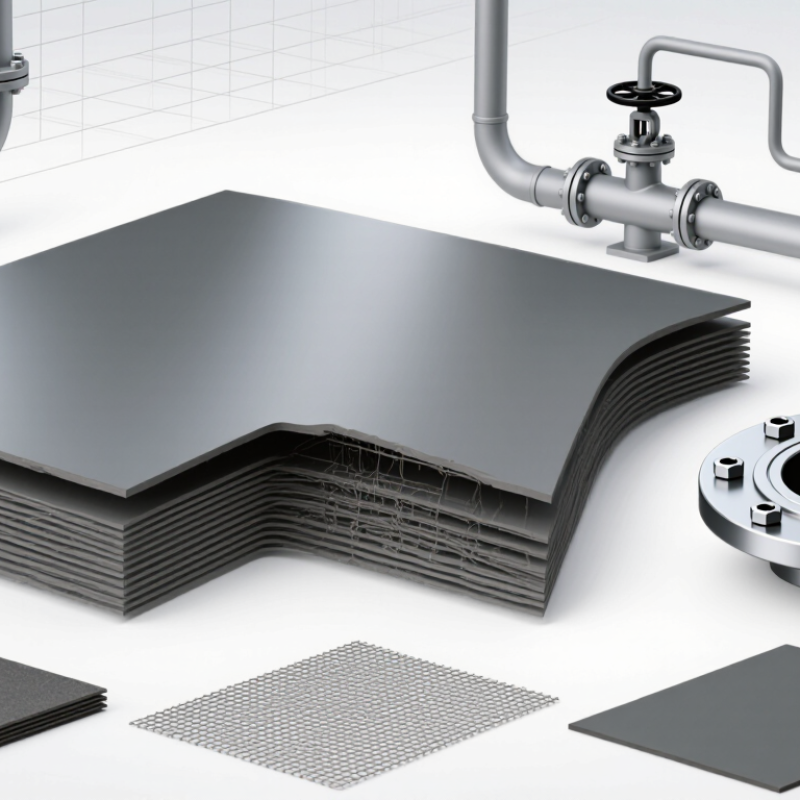
What Graphite Sheet Is and How It Is Made
Graphite sheet is a flat material made from graphite, a form of carbon with layers that can slide across one another. In industrial settings, sheets are used where heat transfer, sealing, or electrical conductivity matters. Their exact properties depend on the graphite source, processing method, density, and any reinforcement added. Not every graphite sheet is made the same way. That distinction matters.
Many flexible graphite sheets begin with natural graphite flakes. The flakes are treated so they expand when heated rapidly, forming a loose, worm-like structure. This expanded graphite is then compressed between rollers into a dense sheet. No binder may be needed, though some products include metal reinforcement or other layers for added strength. The process sounds simple. It is not always uniform: pressure, thickness, and raw-material quality can affect the finished sheet.
Manufacturers may also produce sheets from graphite powder or synthetic graphite, using different forming and bonding steps. These routes can create materials with different strength, purity, and thermal behavior. A finished sheet may look smooth and consistent, but its edges can shed particles if cut roughly. For selection, check the stated thickness, density, temperature limits, and chemical compatibility rather than relying on appearance alone. A small sample can reveal handling issues before a full installation.
Key Properties That Support Industrial Performance
Industrial equipment often experiences heat, vibration, and pressure changes at the same time. Graphite sheet is valued for handling several of these demands in a compact sealing material. Its compressibility helps it conform to flange surfaces, including minor scratches and unevenness. This can reduce leak paths when the joint is designed and installed correctly. Small details matter.
Graphite also transfers heat effectively along the sheet, though performance varies by grade and direction. In gaskets near hot pipes or process vessels, that property can help spread localized heat. The material resists many chemicals, but it is not suitable for every medium or environment. Strong oxidizing conditions, for example, may limit its use, especially at elevated temperatures. Always check compatibility against actual service conditions.
For maintenance teams, flexible graphite is generally easy to cut and fit, which can simplify replacement work. Its sealing performance still depends on flange finish, bolt load, temperature, and pressure—not just the sheet itself. A thicker sheet may seem more forgiving, but it can also affect joint stability. That trade-off deserves attention. Selecting a grade from operating data and checking the finished joint are more reliable than choosing by temperature rating alone. Industry conditions vary, and the specification may need revisiting after field inspection.
Why Choose Graphite Sheet for Industrial Applications? — Key Properties That Support Industrial Performance
Note: These are general material characteristics, not guaranteed specifications. Properties and service limits vary by grade, manufacturing process, thickness, density, atmosphere, and test method. Confirm suitability using application-specific data.
How Graphite Sheets Compare With Other Industrial Materials
Industrial material choices depend on temperature, pressure, process fluids, and maintenance access. Graphite sheet is often considered for static seals because it can conform to flange surfaces under compression. It also conducts heat well and tolerates high temperatures in many environments. A small detail: surface finish matters.
Compared with metal shims, graphite is softer and can seal across minor surface irregularities, while metal offers greater rigidity and resistance to physical damage. Against elastomer sheets, graphite generally suits hotter service, but elastomers may provide better flexibility in lower-temperature applications. PTFE offers broad chemical resistance, though its behavior under sustained load and heat can differ. No material wins every test.
Graphite has limits. In hot, oxygen-rich conditions, it can oxidize, so temperature ratings must reflect the actual atmosphere, not just a data-sheet maximum. It may also tear or shed particles if handled roughly. During installation, technicians should check flange alignment, surface condition, and specified compression. The trade-off is real: graphite can seal reliably, but poor fitting or unsuitable service conditions can still cause leakage. A material comparison should include operating records and inspection findings, not just purchase cost.
Common Industrial Uses Across Heat, Sealing, and Electrical Systems
Graphite sheet earns its place in industrial systems where heat, pressure, or electrical contact must be managed. In heat-transfer assemblies, thin sheets can spread heat across uneven surfaces, such as between a power module and a metal housing. The contact faces should be clean and flat; small gaps can reduce performance. Fit matters. Graphite conducts heat well, but it does not replace a correctly designed cooling system.
For sealing, flexible graphite sheets are cut into gaskets for flanges, valves, and equipment exposed to elevated temperatures. They can conform to surface irregularities when compressed, though the right grade and thickness depend on pressure, fluid, temperature, and flange condition. Not every joint.
Electrical uses are different: conductive graphite sheets may serve as thermal interface layers or parts of grounding and contact assemblies. Their conductivity can also create an unwanted path between components, so clearances and insulation need careful checking. A specification alone may miss real surface variation.
A small prototype test can reveal what the drawing cannot. That extra step may feel slow, but it often prevents a costly fit problem later.
Factors to Consider When Selecting a Graphite Sheet
Selecting a graphite sheet begins with the job it must perform. A gasket needs reliable sealing under pressure, while a heat spreader needs consistent contact with nearby surfaces. Check operating temperature, pressure, and exposure to steam, oils, or process chemicals. Conditions matter.
For sealing, compare thickness, density, compressibility, and recovery after compression. A rough flange may need a different sheet than a smooth, carefully machined joint. Confirm the required bolt load; excessive compression can damage the sheet or distort the assembly. Graphite also conducts electricity, so it may be unsuitable where electrical isolation is required. Do not assume every grade behaves alike.
Temperature ratings need context. In air, graphite can oxidize at elevated temperatures, and performance depends on grade and exposure time. Review test data for the actual service conditions, not just a headline temperature. For thermal applications, consider conductivity, contact pressure, and surface flatness. Small gaps can reduce heat transfer. Handling is easy to overlook: thin sheets can crease or shed particles during cutting. Selection is rarely tidy; a sample test under realistic conditions may reveal a mismatch that a datasheet misses.