

How to Choose a Bluetooth Tracker for Global Sourcing?
Choosing a Bluetooth Tracker for global sourcing requires more than comparing advertised range or the lowest unit price. Buyers must examine the complete product system, from chipset stability to packaging, applications, and after-sales support. A tracker may work perfectly in a quiet office, then struggle inside a steel warehouse with thick concrete walls. Real-world testing matters.
Mark Powell, CEO of the Bluetooth Special Interest Group, has described Bluetooth as “a technology that connects people and things.” That idea remains practical for international buyers. The right Bluetooth Tracker should connect reliably with common smartphones, support current Bluetooth standards, and provide clear battery-life information. It should also offer replaceable or rechargeable power options, depending on the intended market. Small details matter. A loose battery cover can create costly returns.
Global sourcing adds further questions. Can the supplier provide samples quickly? Are firmware updates documented? Does the mobile application support the target languages? Is the packaging suitable for long-distance transport? Buyers should also review privacy controls, consent-based location features, data handling, and regional compliance requirements. A responsible supplier should explain these points without vague promises.
Price still matters, but it should not dominate the decision. A cheaper tracker may use an unstable app, weak adhesive, or limited technical support. I have seen attractive samples become inconsistent during larger production runs. That possibility deserves attention. Testing several batches, recording connection performance, and checking supplier communication can reveal problems early. No spreadsheet predicts every warehouse wall. A careful sourcing process combines measurable specifications with practical doubt, helping buyers choose a Bluetooth Tracker that performs beyond the sample stage.
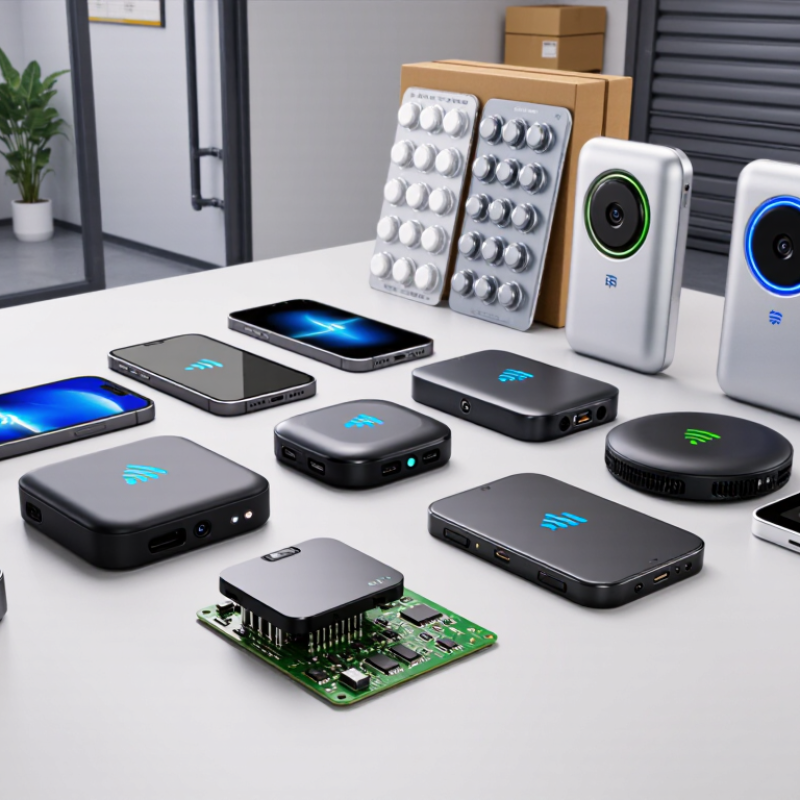
Define the Core Functions of a Bluetooth Tracker
A Bluetooth tracker should solve one clear problem: locating nearby or misplaced assets. Bluetooth SIG’s 2024 Market Update reports 5.4 billion Bluetooth devices shipped in 2023. It projects annual shipments could reach 7 billion by 2028. This scale supports broad phone compatibility, but compatibility must be tested, not assumed.
The core function is low-energy location signaling. A tracker should send stable Bluetooth Low Energy signals through walls, bags, and warehouse shelves. Its app should show the last detected position, signal strength, and time of contact.
A loud buzzer helps in a crowded office. A replaceable battery can reduce after-sales complaints. For outdoor sourcing, check water resistance, operating temperature, and drop performance with physical samples. Small details matter.
Global use needs more than range. Crowdsourced finding depends on nearby devices and local network coverage. It may work poorly in quiet ports or rural areas. NIST SP 800-121 Rev. 2 emphasizes authenticated pairing and encryption for Bluetooth security.
Buyers should also require separation alerts, unknown-tracker warnings, and clear data deletion controls.
Privacy cannot be treated as a decorative feature.
In testing, battery claims often look optimistic. Measure them under repeated alerts, weak signals, and cold storage. A practical specification should include those imperfect conditions.
Compare Tracking Technologies, Coverage, and Platform Compatibility
How to Choose a Bluetooth Tracker for Global Sourcing?
For global sourcing, compare tracking technology before comparing prices. Bluetooth trackers are compact and affordable. They work well near warehouses, trucks, and airports with nearby compatible devices. However, coverage becomes weak in rural areas or sealed containers. Cellular trackers offer broader coverage through mobile networks. They usually need a subscription and may face roaming limits. Satellite tracking reaches remote regions, but hardware and data costs are higher. It can also drain batteries faster.
Coverage claims need careful testing. A device may show strong results in a city, then fail inside a metal shipping crate. Check update frequency, location accuracy, battery life, and network dependency. Platform compatibility matters just as much. Confirm support for your team’s phones, web dashboards, alert systems, and inventory software. An open API can reduce manual updates. Still, integration documents may not explain every limitation.
Tips: Test two technologies on the same route. Use an indoor warehouse, a moving vehicle, and a remote location. Check whether alerts arrive quickly on different operating systems. Ask about data storage, account access, and replacement batteries. A short pilot is more reliable than a polished product sheet. My own preference would change by route, not by device type. One overlooked issue can spoil an otherwise sensible choice.
Evaluate Battery Life, Durability, and Privacy Protection
How to Choose a Bluetooth Tracker for Global Sourcing?
Global sourcing often exposes trackers to heat, dust, rain, and long warehouse storage. Berg Insight’s 2024 market report estimates about 120 million active consumer tracking devices across Europe and North America. That scale increases the importance of reliable battery testing. Do not trust the longest advertised runtime. Test a sample for 30 days, with frequent location updates and weak-signal conditions. Record battery loss each week. Cold storage can reduce practical performance.
Durability needs more than an IP rating. IP67 indicates dust protection and temporary immersion in one metre of water for 30 minutes. It does not prove drop resistance or chemical tolerance. Check the enclosure, button seal, adhesive strength, and charging contacts. A tracker should survive a carton falling from a low shelf. Test it. My own evaluation would include repeated drops, rain exposure, and rough handling inside a shipping tote. One weakness may appear after several cycles.
Privacy protection deserves equal attention. Pew Research Center reported in 2023 that 81% of Americans feel concerned about how companies use their data. Choose systems with rotating identifiers, encrypted communication, limited data retention, and clear account deletion controls. Review permission settings before deployment. Unknown-tracker alerts can also reduce unwanted monitoring risks. Yet privacy claims are difficult to verify from packaging alone. Request security documentation, update policies, and independent testing results. A low price is not always efficient. Sometimes, it simply hides future risk.
| Evaluation Dimension | Recommended Benchmark | Practical Data or Specification | Verification Method | Procurement Priority |
|---|---|---|---|---|
| Tracking Technology | Bluetooth Low Energy for low-power location finding | Bluetooth-only trackers generally depend on nearby smartphones or gateways to report their location. They do not provide independent satellite positioning. | Confirm the supported Bluetooth version, companion application, crowd-location network, and gateway compatibility. | High |
| Expected Bluetooth Range | At least 30 m in open indoor or outdoor conditions | Typical consumer Bluetooth range is approximately 30–100 m in open conditions, but walls, metal structures, radio interference, and antenna design can reduce the usable distance substantially. | Request test results from open-space, warehouse, office, and metal-container environments. | High |
| Battery Life | Minimum 12 months for a replaceable-battery design | Common coin-cell Bluetooth trackers offer approximately 6–24 months of battery life. Actual performance depends on advertising frequency, temperature, alert volume, and mobile-app usage. | Check battery type, rated capacity, replacement procedure, low-battery alert, and test conditions used for the published rating. | Very High |
| Rechargeable Battery Option | USB-C charging with battery health monitoring | Rechargeable models reduce disposable battery waste but require periodic charging. Charging intervals can range from several days to several months depending on whether cellular or satellite positioning is included. | Review charging-cycle data, charging time, overcharge protection, standby consumption, and charger availability in the target market. | Medium–High |
| Water and Dust Protection | At least IP67 for general logistics use; IP68 for frequent exposure | IP67 indicates protection against dust and temporary immersion in water up to 1 m for up to 30 minutes under controlled test conditions. IP68 provides a higher immersion rating defined by the manufacturer. | Request an IP test report from an accredited laboratory and confirm whether the rating applies to the complete assembled product. | Very High |
| Impact and Vibration Resistance | Designed for repeated drops, vibration, and handling during transport | A rugged enclosure should use impact-resistant material, protected seams, secure battery retention, and strain relief around mounting points. No universal drop standard applies to every consumer tracker. | Ask for drop-test height, number of drops, vibration profile, temperature range, and post-test functionality results. | Very High |
| Operating Temperature | At least −20°C to 60°C for international logistics | Lithium coin cells typically lose available capacity at low temperatures, while prolonged high temperatures can accelerate battery aging and enclosure degradation. | Verify the operating and storage temperature ranges separately, including battery performance at both extremes. | High |
| Privacy-Preserving Identifier | Rotating Bluetooth identifiers instead of a permanent public identifier | Rotating identifiers make it more difficult for unauthorized parties to continuously recognize and follow a tracker. The rotation interval and implementation vary by product. | Request the privacy architecture, identifier-rotation interval, pairing process, and independent security assessment. | Very High |
| Data Encryption | Encryption in transit and at rest, with access control for location data | Location records should be protected during transmission and storage. Stronger designs limit access through account authentication, device binding, and role-based permissions. | Review the security white paper, encryption protocols, authentication options, breach-notification process, and penetration-test summary. | Very High |
| Anti-Stalking Protection | Unknown-tracker alerts for both major mobile operating systems | Effective protection may include unwanted-tracker notifications, audible alerts, device identification, and instructions for disabling the tracker. Availability can depend on the operating system and application version. | Test alerts with separated devices and confirm support for current versions of the main mobile operating systems. | Very High |
| Data Retention and Deletion | Clear retention period and permanent account-deletion process | A privacy-focused service should explain how long location history, account details, diagnostics, and device identifiers are retained and how users can request deletion. | Examine the privacy policy, deletion workflow, backup-retention rules, and data-processing locations. | High |
| Connectivity for Global Sourcing | Stable operation across the intended countries and warehouse environments | Bluetooth-only trackers need nearby compatible devices or gateways. GPS or cellular trackers may provide wider coverage but normally consume more power and may require a data subscription. | Map the sourcing route, verify local radio requirements, test gateway density, and check subscription availability in every target country. | Very High |
| Regulatory and Radio Compliance | Documentation for each destination market | Wireless products may require market-specific approvals, labeling, electromagnetic compatibility testing, and restrictions related to lithium batteries or radio-frequency use. | Request applicable conformity declarations, laboratory reports, battery transport documents, and destination-market labeling files. | Very High |
| Total Cost of Ownership | Evaluate hardware, battery, software, data, and replacement costs together | A low purchase price can be offset by subscription fees, non-replaceable batteries, proprietary gateways, cloud storage charges, or high failure rates during transport. | Calculate a 24-month cost per tracked asset, including accessories, connectivity, battery replacement, returns, and privacy-compliance administration. | Very High |
Assess Global Sourcing Costs, Certifications, and Supplier Reliability
How to Choose a Bluetooth Tracker for Global Sourcing?
Assess Global Sourcing Costs, Certifications, and Supplier Reliability
A low unit price can hide expensive gaps. Request a complete cost sheet before comparing suppliers. Include tooling, minimum order quantities, packaging, freight, import duties, testing, and warranty reserves. Firmware changes may also create engineering fees. Ask for costs at 1,000, 10,000, and 50,000 units. The pricing pattern often reveals production limits.
Certification requires careful market mapping. A tracker may need radio approval, battery documentation, electromagnetic compatibility testing, and regional labeling. Requirements differ between sales destinations. Do not accept a certificate without checking its product model, test standard, issuing laboratory, and validity. For connected products, review privacy and data-handling obligations with qualified advisers. Paperwork is not proof of full compliance.
Supplier reliability needs evidence, not confidence. Request recent audit reports, production photos, quality records, and references from comparable projects. Inspect pre-production samples and test Bluetooth range, battery life, alert accuracy, and enclosure strength. A small pilot order can expose weak packaging or inconsistent firmware. Build acceptance criteria before payment. Add traceability for components and a clear process for defects.
In sourcing reviews, I have found that communication speed can mislead. Fast replies do not guarantee stable production. Ask how the supplier handles shortages, failed tests, and late shipments. Their answers matter more than polished presentations. I would also keep a backup supplier, even when the first factory performs well. That decision costs more initially. It may prevent a much larger disruption later.
How to Choose a Bluetooth Tracker for Global Sourcing?
Assess Global Sourcing Costs, Certifications, and Supplier Reliability
The scoring model uses a 100-point procurement framework: landed cost and certification readiness each represent 25%, supplier reliability represents 30%, and logistics capability represents 20%. Certification requirements and shipping costs should be verified for the target sales markets before supplier selection.
Verify Product Performance Through Testing and Quality Control
When choosing a Bluetooth tracker for global sourcing, product performance deserves more than a factory claim. Request samples from different production batches. Test pairing speed, connection stability, sound volume, and location updates in real environments. Try the tracker inside a backpack, under a car seat, and behind concrete walls. Record the distance where the signal becomes unreliable. Small differences can reveal weak antennas or inconsistent assembly.
Tips: Create a simple test sheet for every sample. Check battery voltage, standby time, button response, waterproof sealing, and casing strength. Repeat each test several times. One successful sample proves very little. Ask the supplier for component specifications, inspection records, and corrective-action reports. Keep photos and measurement data for later comparison.
Quality control should continue before shipment. Inspect random units, not only selected samples. Test charging contacts, battery installation, firmware behavior, and packaging protection. A tracker may work well in a quiet warehouse but fail near crowded wireless networks. That result should not be hidden. It may require better testing conditions or a design change. I have seen teams trust attractive reports too quickly. A perfect report can still miss daily-use problems. Verify the weak points before placing a larger order.

