

What Is the Best Type of Mobility Scooter?
Choosing the best type of mobility scooter is less about finding a universal winner and more about matching a scooter to everyday life. Where will it be used? A compact model may suit short trips through shops or narrow hallways, while a larger outdoor scooter may feel steadier on longer journeys and uneven paths. There is no perfect choice for everyone.
The Mobility Scooter should fit the rider, not just the shopping list. Consider turning space, seat comfort, controls, battery range, and how easily the scooter can be transported or stored. A listed range is only a guide; rider weight, terrain, temperature, and speed can affect real-world performance. Small details matter. For example, a scooter that fits neatly in a car boot may be less comfortable on a long outing. It is worth checking the manufacturer’s specifications and, where possible, arranging a supervised test ride. A healthcare professional or mobility specialist can help assess individual needs, especially when posture, balance, or hand strength is a concern. Even careful research has limits: a model that feels right in a showroom may behave differently on familiar routes. This guide compares common scooter types, their practical strengths, and their trade-offs, so readers can ask better questions before making a decision.
Key Factors for Choosing a Mobility Scooter
Choosing a mobility scooter starts with the places you actually travel. Measure doorways, lift entrances, and the tight turn beside your kitchen table. The U.S. Access Board’s 2010 ADA Standards use a 60-inch turning circle as a common accessibility reference. It is not a scooter-sizing rule, but it can help you assess indoor clearance. I still find turning space easy to underestimate.
Next, match the scooter to your routine. Check its total weight, disassembled part weights, seat comfort, ground clearance, and stated travel range. A long-range model may be unnecessary for short errands, while a compact scooter may struggle on uneven paths. Treat advertised range as an estimate: hills, rider weight, temperature, and battery age can reduce it. Ask a qualified mobility specialist to assess fit and safe operation, especially if balance, posture, or transfers are concerns.
Reliability matters. The World Health Organization’s 2022 Global Report on Assistive Technology estimates that more than 2.5 billion people need at least one assistive product. That broad figure is not scooter-specific, but it underscores why proper matching and support matter. Test the scooter on the surfaces you use, if possible. Check how easily you can reach the controls. A small detail can change everything.
Types of Mobility Scooters and Their Features
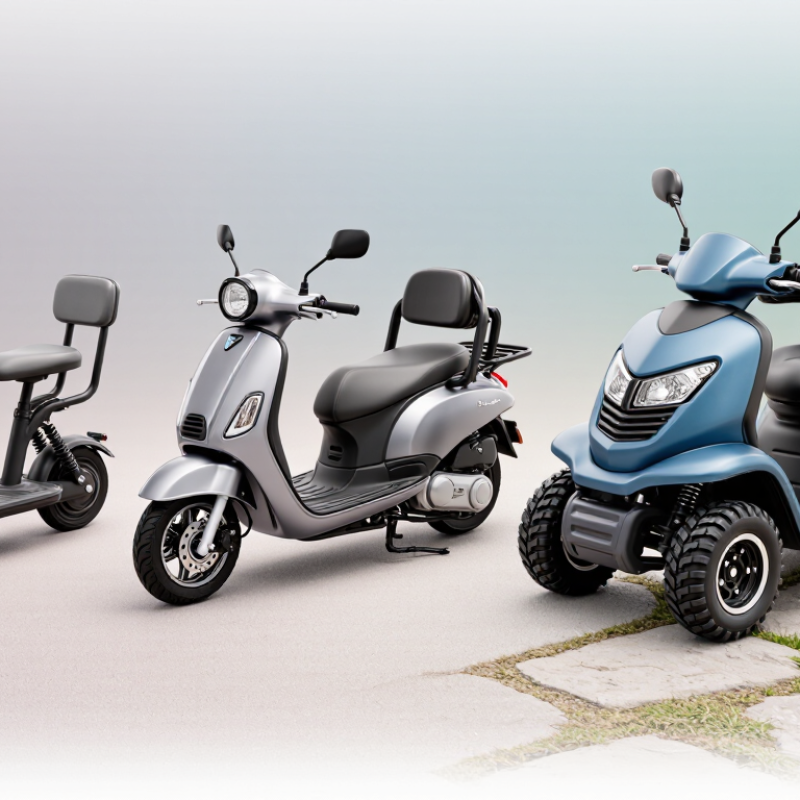
Mobility scooters differ in turning space, stability, portability, and range. Three-wheel models turn neatly in tight indoor spaces, but their narrower front end may feel less steady on uneven paths. Four-wheel scooters usually offer a broader, more planted feel outdoors. Folding or travel models are lighter to lift and store, though compact frames can mean a firmer ride and less legroom. Heavy-duty models typically have larger seats and stronger frames; check the specified weight capacity rather than judging by appearance. Small details matter. Can the tiller adjust? Are the controls easy to reach? Can you turn around beside a kitchen table?
The World Health Organization and UNICEF’s 2022 Global Report on Assistive Technology estimates that 2.5 billion people need at least one assistive product; this could rise to 3.5 billion by 2050. That broad figure is not scooter-specific, but it underlines why fit and daily use deserve attention. A showroom turn can mislead: measure doorways, test the tightest turn at home, and try the scooter on the surfaces you actually travel. Not always simple. Battery range varies with rider weight, hills, temperature, and battery condition, so treat advertised distance as a guide, not a promise. I would also reconsider a model that feels comfortable only on a smooth floor.
What Is the Best Type of Mobility Scooter?
Typical estimated travel range per charge by scooter type
Portable scooters are easier to transport, while mid-size models balance portability and range. Full-size scooters generally offer longer range and greater stability. Actual distance varies with terrain, rider weight, battery condition, and speed; check the specifications of the model you are considering.
Comparing Scooters for Indoor and Outdoor Use
The best mobility scooter depends less on a label than on where it needs to travel. Indoors, a compact model with a tight turning radius can make kitchen corners and narrow hallways easier to navigate. Measure doorways and turning spaces before choosing; advertised dimensions do not show how comfortably a scooter handles a crowded room. Measure the tight spots.
Small indoor scooters are often easier to store and maneuver, but their smaller wheels may feel less steady over cracked pavement or uneven paths. Check the seat height, controls, and foot space, especially if transfers are difficult. A brief test in a familiar room can reveal awkward reaches or turns that specifications miss. Small details matter.
For outdoor use, larger wheels, more ground clearance, and effective suspension can help with rough sidewalks and gentle slopes. These features may also make a scooter heavier and less convenient indoors. Consider typical trip length, portable storage, and battery range, allowing extra capacity for hills, cold weather, and battery aging. Test the route. No scooter suits every surface, and steep inclines or loose gravel may challenge models that perform well on pavement.
If possible, try the scooter on the actual paths you use, with advice from a qualified mobility professional. A little inconvenience during a test can prevent a poor fit.
Matching Scooter Types to Different Mobility Needs
What Is the Best Type of Mobility Scooter?
Matching Scooter Types to Different Mobility Needs
The best scooter is the one that fits the rider’s routes, transfers, and storage space. A compact folding model can suit car trips and short errands, especially when a caregiver must lift it into a trunk. Check folded dimensions and total weight first. Measure the trunk, too. A tight hallway may favor a three-wheel scooter, which usually turns more sharply indoors. For uneven pavements or longer outdoor trips, a four-wheel model often offers a steadier feel. Still, turning space and ground clearance vary by design.
WHO and UNICEF’s 2022 Global Report on Assistive Technology estimates that 2.5 billion people need at least one assistive product, with that number expected to reach 3.5 billion by 2050. That broad need does not make every scooter suitable for every person. AARP’s 2024 Home and Community Preferences Survey found that 75% of adults aged 50 and older want to remain in their homes as long as possible. For someone navigating a narrow doorway, home measurements may matter more than top speed.
A common mistake is treating advertised range as decisive; that is too simplistic. Real use changes with rider weight, slopes, temperature, and battery condition. Check whether the seat height supports an easy transfer, and whether the controls feel manageable during a test drive. If balance, posture, or hand strength is a concern, ask an occupational therapist or mobility specialist to assess the fit. I would not choose from a brochure alone.
Safety, Comfort, and Practical Considerations
The best mobility scooter is the one that feels predictable on your everyday routes. Check that your feet rest comfortably, controls are easy to reach, and the seat supports you without pressure. A tight turn in a hallway can reveal more than a showroom ride. Try stopping on a gentle slope, crossing a doorway threshold, and turning at walking speed. Small details matter. ISO 7176 standards cover testing areas such as stability and braking for powered mobility devices; ask a qualified supplier how a model’s test results relate to your needs.
Comfort and safety also depend on the route. A compact scooter may suit shops and narrow corridors, while larger wheels and a longer range may help on uneven outdoor paths. Yet extra size can make storage and transport harder. The World Health Organization and UNICEF’s 2022 Global Report on Assistive Technology estimates that 2.5 billion people need one or more assistive products, while nearly one billion lack access. These figures cover assistive products broadly, not scooters alone, but they underline why fit and access matter. I would not choose by range alone: battery performance can change with hills, load, temperature, and age. Test the scooter with the bag, clothing, and usual route you actually use. A rushed test is imperfect, but better than choosing from specifications alone.
What Is the Best Type of Mobility Scooter? — Safety, Comfort, and Practical Considerations
| Scooter Type | Best Suited For | Stability and Safety | Comfort | Maneuverability | Portability and Storage | Practical Considerations |
|---|---|---|---|---|---|---|
| Travel / portable | Short trips, errands, and people who need to transport a scooter in a vehicle. | Typically suited to smooth, paved routes. Smaller wheels and a lighter frame may be less forgiving on uneven ground. | Often has a more compact seat and fewer adjustment options than larger models. | Generally compact, making it convenient in tighter indoor spaces; turning performance varies by design. | Usually designed to disassemble or fold for transport. Check the weight of the heaviest piece and whether it can be lifted safely. | Best when easy transport matters more than long-distance comfort or rough-surface capability. Confirm the assembled dimensions fit through doorways and into storage. |
| Three-wheel | Indoor use and paved, relatively even outdoor routes where a tighter turning circle is useful. | Often less stable than a comparable four-wheel model, especially on slopes, uneven surfaces, or during sharp turns. Drive slowly and follow the manufacturer’s guidance. | May offer more legroom at the front, though seat support and adjustability differ between models. | Typically offers a tighter turning circle, which can help in shops and other confined areas. | Available in both compact and larger formats; portability depends on the specific model. | A practical choice for maneuverability on level ground, but not automatically the best option for outdoor routes with cambers or rough patches. |
| Four-wheel | Regular outdoor use, longer outings, and routes that include varied but manageable paved surfaces. | The four-wheel layout generally provides a steadier feel than a similar three-wheel scooter. It does not eliminate tipping risk on steep slopes or uneven ground. | Often available with a larger seat and more supportive features than compact travel models. | Usually needs more turning space than a three-wheel design, so check indoor clearances. | Often larger and heavier than portable models, which can make vehicle transport more difficult. | A balanced option for many users who need outdoor stability as well as everyday comfort. Check ground clearance, turning radius, and intended terrain. |
| Heavy-duty / high-capacity | Users who need a higher weight capacity, a larger seating area, or a more substantial outdoor scooter. | Can have a robust frame and larger components, but stability still depends on the model, terrain, load, and correct operation. | May provide a wider seat and more supportive options. Verify the seat dimensions and weight capacity rather than assuming they will suit every user. | Typically larger, so it may be harder to use in narrow hallways, small rooms, or crowded indoor spaces. | Usually the least convenient type to lift or transport; measure storage and vehicle space before purchase. | Consider only a model whose stated capacity and dimensions meet the user’s needs. Check charging access, transport arrangements, and local access restrictions. |
| Before choosing any type | Match the scooter to the user’s balance, posture, strength, vision, and typical routes. Check the manufacturer’s maximum user weight, braking and control layout, battery range under realistic conditions, turning space, seat fit, and ability to transfer on and off safely. A healthcare professional or mobility specialist can help assess suitability, and local rules may apply to where a scooter can be used. | |||||
Note: Scooter features, dimensions, performance, and weight capacity vary by model. A four-wheel scooter is not automatically suitable for rough terrain, and a portable model may require help with lifting or assembly. Check the manufacturer’s specifications and arrange a supervised trial where possible.

