

2026 Best Strut Channel Machine Buying Guide?
Choosing the right Strut Channel Machine in 2026 requires more than comparing speed and price. Manufacturers must examine forming accuracy, material compatibility, tooling flexibility, electrical controls, and long-term service support. A machine may look efficient on a showroom floor, yet perform poorly with thicker steel, changing channel sizes, or demanding production schedules.
This buying guide is designed for factory owners, engineers, and purchasing teams evaluating practical equipment. It explains how roll-forming stations, punching units, cutting systems, and automatic feeding devices affect daily output. Small details matter. A misaligned roller can leave visible marks along a two-meter channel. An inconsistent hole position can create installation delays and costly rework. Experience from production environments shows that stable performance often matters more than impressive maximum speed.
Look beyond the brochure.
Buyers should request sample runs, inspect finished channels, and confirm tolerance data before placing an order. Ask how quickly worn tooling can be replaced. Check whether the supplier provides commissioning, operator training, spare parts, and responsive technical support. Energy use, floor space, noise, and maintenance access also deserve attention, although they are often overlooked during price negotiations.
No machine is perfect. I may favor a slower line when it delivers dependable accuracy and easier maintenance. That judgment can change with your material, workforce, and order mix. The strongest decision combines verified production evidence, transparent supplier communication, and a realistic return-on-investment calculation. This 2026 guide helps readers question attractive specifications and select equipment that can remain reliable beyond the first year.
What Is a Strut Channel Machine and How Does It Work?
2026 Best Strut Channel Machine Buying Guide
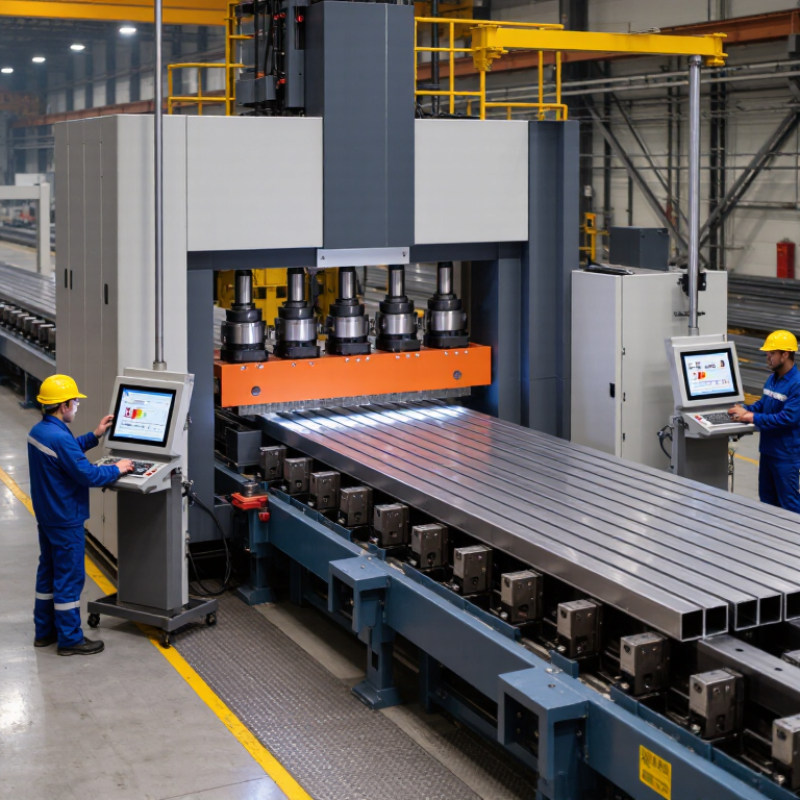
A strut channel machine is a roll-forming system that converts steel coil into rigid, U-shaped support channels. It normally includes a decoiler, leveling unit, roll-forming stations, punching equipment, and a cutting device. The line feeds metal continuously. Each roller gradually bends the strip without damaging its surface.
During production, punching tools create slots or holes at programmed distances. The cutoff unit then separates each finished channel at the required length. Operators adjust width, height, material thickness, hole spacing, and production speed through the control system. Small setting errors matter. A slight misalignment can cause uneven flanges, rough edges, or difficult assembly later.
From practical machine evaluations, I would inspect frame stiffness, roller alignment, tool accessibility, and emergency controls before comparing output speed. Stronger frames usually reduce vibration during long production runs.
Servo-driven punching can improve repeatability, but it may increase maintenance demands. Check the actual tolerance range, not only the advertised capacity.
Test samples are essential. Measure channel dimensions with calipers, inspect punched holes, and check whether lengths remain consistent after continuous operation.
I once treated fast setup as the main advantage; that was a mistake. Stable forming and easy maintenance often save more time than impressive maximum speed. A reliable machine should also include clear manuals, spare tooling information, and practical operator training.
Which Strut Channel Machine Types Fit Different Production Needs?
2026 Best Strut Channel Machine Buying Guide: Which Strut Channel Machine Types Fit Different Production Needs?
A small fabrication shop usually needs a compact roll forming machine with manual loading and simple punching. It suits low-volume orders, frequent profile changes, and limited floor space. Grand View Research estimates the global metal forming machine market will grow at roughly 4% annually through 2030. That growth reflects rising demand for flexible equipment, not only faster machines. I would prioritize accessible tooling over maximum speed here. Downtime is expensive.
Medium-volume producers may benefit from an automatic line with a decoiler, servo feeder, punching unit, and flying cut-off. Servo control improves hole spacing and reduces repeated manual adjustments. A 2024 Deloitte smart manufacturing survey reported that 86% of industrial leaders view smart production as important for competitiveness. That figure supports digital monitoring, but it does not guarantee a return on investment. The software can still be poorly configured.
High-volume plants often require a heavy-duty continuous roll forming line with automatic stacking and inline inspection. Multiple profiles can share a platform when quick-change tooling is available. Industry reports from MarketsandMarkets place industrial automation among the fastest-expanding manufacturing technology segments, driven by productivity and labor pressures. Yet maximum automation is not always wise. Complex lines need skilled maintenance, spare sensors, and stable material quality. Ask for trial production using your actual steel thickness, hole pattern, and channel length. Small differences matter.
2026 Best Strut Channel Machine Buying Guide? - Which Strut Channel Machine Types Fit Different Production Needs?
| Machine Type | Best-Fit Production Need | Typical Material Range | Typical Production Speed | Common Profile Capability | Hole-Punching Capability | Recommended Automation Level | Main Buying Consideration |
|---|---|---|---|---|---|---|---|
| Entry Level Compact Strut Channel Roll Former | Small workshops, maintenance contractors, prototype orders, and low-volume production with frequent product changes. | Carbon steel or galvanized steel Approximately 0.80–2.00 mm | Approximately 8–18 m/min | Usually one profile family, such as 41 × 21 mm or 41 × 41 mm. | Limited Stand-alone punching or manual drilling is commonly used. | Manual or semi-automatic feeding, cutting, and length setting. | Prioritize compact layout, quick tooling adjustment, low setup cost, and easy operator access. |
| Flexible Multi-Profile Roll Forming Line | General fabrication plants producing several channel sizes or switching between solid and slotted profiles. | Galvanized, pre-galvanized, or mild steel Approximately 0.80–2.50 mm | Approximately 12–25 m/min | Several compatible widths and heights, subject to roll-tool design and machine adjustment range. | Available In-line punching can produce repeated round, square, or elongated slots. | Automatic length control with servo feeding and programmable recipes. | Confirm changeover time, tooling interchangeability, profile tolerances, and the maximum number of product recipes. |
| High Output Continuous Roll Former with In-Line Punching | Medium- to high-volume production of slotted channels for electrical, mechanical, solar, and construction applications. | Galvanized or coated steel Approximately 1.00–2.50 mm | Approximately 18–35 m/min, depending on hole spacing and profile complexity. | Standard channel sections with continuous or repeating slot patterns. | Integrated Servo-driven punching before or after roll forming, depending on the profile and hole pattern. | Automatic decoiler, straightener, servo feeder, punching press, flying cut-off, and PLC control. | Evaluate punching accuracy at line speed, press capacity, die life, scrap handling, and synchronization between punching and forming. |
| Heavy Duty Thick-Gauge Strut Channel Machine | Structural support systems, industrial frames, heavy cable trays, pipe supports, and applications requiring higher load capacity. | Mild steel, galvanized steel, or stainless steel Approximately 1.50–4.00 mm | Approximately 8–20 m/min | Deeper or wider channels, reinforced lips, and heavier structural profiles. | Available Requires correctly sized punching equipment and hardened tooling for thicker material. | Automatic feeding and cutting with reinforced forming stands and closed-loop length control. | Check motor torque, shaft diameter, stand rigidity, roll material, punching force, and cut-off performance at maximum thickness. |
| Custom Production Special-Profile Roll Forming Line | Manufacturers producing non-standard channels, custom lips, special mounting holes, or application-specific profiles. | Material and thickness selected according to the engineered profile Commonly 0.80–3.00 mm | Approximately 6–25 m/min | Custom dimensions, formed edges, stiffening ribs, and special return lips. | Project Dependent Punching, notching, embossing, or pre-cutting may be integrated after engineering review. | Servo-controlled line with recipe management and application-specific sensors. | Require profile drawings, material samples, tolerance targets, tooling simulations, and a documented acceptance test. |
| Fully Automated Integrated Coil-to-Length Production Cell | Large plants seeking reduced labor, stable repeatability, automatic packing, and continuous multi-shift operation. | Galvanized, pre-painted, or stainless steel Approximately 0.80–3.00 mm | Approximately 15–40 m/min, subject to profile and punching requirements. | Multiple standard profiles supported through dedicated or quick-change tooling systems. | Fully Integrated Programmable hole patterns, cut lengths, batch counts, and production sequences. | Automatic coil loading, servo control, in-line inspection, cut-to-length, stacking, and data monitoring. | Compare total cost of ownership, maintenance access, sensor redundancy, software support, safety systems, and spare-parts availability. |
| Short-Run Pre-Cut Blank Roll Forming System | Job shops and plants producing short batches where different blank lengths or reduced coil waste are important. | Mild, galvanized, or stainless steel Approximately 0.80–2.50 mm | Approximately 8–22 m/min | Standard and semi-custom channels with controlled blank length. | Optional Holes may be punched in the blank before forming or added in a separate operation. | Semi-automatic loading with programmable blank feeding and cut-length control. | Select this type when material utilization and short changeover time are more important than maximum throughput. |
What Key Specifications Should Buyers Compare in 2026?
In 2026, buyers should compare more than advertised production speed. Examine the machine’s usable material range, including strip width and thickness. A strong strut channel machine should maintain stable forming pressure across different profiles. Check dimensional tolerance at the channel opening, flange height, and finished length. Small errors can complicate installation later. Ask whether the line supports quick tooling changes. This matters when orders include several channel sizes.
Review the electrical system, control interface, and automation level carefully. Servo-driven feeding can improve length accuracy, but only when calibration remains consistent. Request sample parts made from your actual steel grade and thickness. Inspect hole spacing, cut edges, surface marks, and straightness under normal production conditions. Energy consumption also deserves attention, especially during long shifts. Reliable access to spare parts and technical support can reduce costly downtime. These details are easy to overlook.
Tips: Build a comparison sheet with production speed, tolerance, setup time, power use, warranty terms, and training. Do not select the fastest machine automatically. I have seen impressive trial speeds hide frequent adjustments. My own evaluations are never perfect, because factory conditions change. Leave room for maintenance skill, future product changes, and operator feedback. A slightly slower line may deliver better output when quality stays consistent.
How to Evaluate Machine Quality, Safety, and Customization Options?
Choosing the best strut channel machine in 2026 requires more than comparing prices. In my inspections, machine quality starts with the frame, drive system, and forming accuracy. A rigid frame should resist vibration during continuous production. Rollers must remain aligned when processing different steel thicknesses. A good sample is not enough. Ask for production records, test reports, and maintenance history.
Measure finished channels at several points. Check width, hole spacing, edge shape, and surface marks. Small deviations matter. Safety deserves equal attention. Guards should cover rotating parts without blocking routine inspection. Emergency stops must be easy to reach and tested regularly. Electrical cabinets need clear labeling, stable wiring, and suitable protection for the working environment. Ask whether the machine’s safety design matches local workplace requirements.
Customization can reduce future limitations. Confirm whether the machine supports your required widths, profiles, hole patterns, and material gauges. Tool changes should be practical, not dependent on complicated adjustments. Request a trial using your actual coil material. This exposes feeding problems early. I once focused too heavily on forming speed. That mistake ignored changeover time and operator comfort. A slower machine with simple controls may produce more reliable daily output. Review training, spare-part access, remote support, and warranty terms before ordering. A polished brochure proves little. Direct evidence is better.
What Are the Steps for Choosing the Best Strut Channel Machine?
2026 Best Strut Channel Machine Buying Guide
Choosing the best strut channel machine starts with the channel specifications. Measure the required width, height, thickness, and steel grade. A machine must match your production range, not just one popular size. Check forming capacity, punch accuracy, cutting tolerance, and maximum line speed. Ask for sample parts made from your actual material. A polished demonstration can hide weak performance.
Review the complete workflow before comparing prices. Confirm whether the machine supports roll forming, punching, cutting, and length control in one line. Examine the control system, sensor layout, emergency stops, and guarding. Operators should reach adjustment points without standing near moving tooling. Request clear manuals, installation guidance, training, and spare-part availability. Reliable technical support can prevent several days of costly downtime.
Calculate the total operating cost over several years. Include electricity, tooling replacement, maintenance, setup time, material waste, and staffing. Inspect the frame, shafts, bearings, and weld quality when possible. Ask how quickly the machine changes between channel sizes. Faster changeovers matter when orders vary frequently. A spreadsheet helps, but it cannot replace a factory inspection. One overlooked detail may be noise during long shifts or difficult access beneath the forming section. Leave room for doubt, and let operators test the controls before approval.
2026 Best Strut Channel Machine Buying Guide
Key evaluation criteria for choosing a strut channel roll forming machine
The chart presents a practical 100-point purchasing model. Material compatibility and forming capacity should receive the highest priority, followed by dimensional accuracy and production speed. Changeover flexibility, safety and automation, and access to service parts help determine long-term operating value.

