

10 Best Tool Tools for Global Buyers in 2026
Global buyers need more than a sharp price when choosing tools. They need dependable performance, clear specifications, and support that remains available after delivery. This guide to the 10 Best Tool Tools for Global Buyers in 2026 considers those practical details, not just product claims. The phrase “Tool Tools” may sound unusual, but the buying questions are familiar: Will a tool suit the job, arrive as described, and hold up through regular use?
The selections are assessed through factors buyers can check, including materials, ergonomics, compatibility, spare-part access, warranty terms, and supplier communication. A drill’s weight matters during a full shift. So does whether replacement batteries are easy to source. For measuring tools, readable displays and stated accuracy deserve a closer look. Product pages can help, but detailed documentation and responsive answers offer stronger grounds for comparison. Regional requirements and operating conditions also differ, so no single option fits every buyer.
A low upfront price can become expensive when parts are hard to find. No shortlist is perfect. Even reliable brands may vary by model, seller, and service network. Use these ten picks as a starting point, then confirm specifications and delivery details with the supplier before ordering. That extra check takes time. It can prevent avoidable surprises and help global buyers choose tools suited to real work, rather than attractive listings alone.
Understanding Tool Tools and Global Buyer Needs in 2026
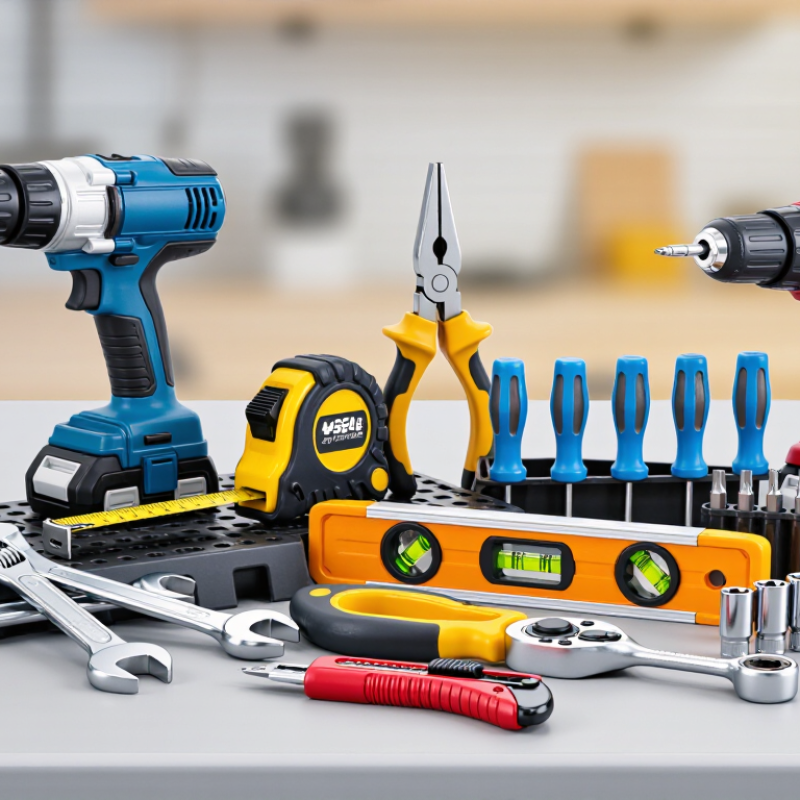
In 2026, global buyers need to judge tool tools by the work they must perform, not just by a product photo or a low quoted price. The category can include hand tools, powered equipment, measuring devices, and accessories. Each serves different tasks. A maintenance crew may value durable handles and easy replacement parts, while a precision workshop may prioritize repeatable measurements. Buyers should compare operating limits, materials, grip comfort, and expected duty cycles. Details add up.
Conditions also differ across markets and job sites. Check that voltage, plugs, manuals, packaging, and product specifications match the intended destination and use. Ask for clear test information and inspect a sample when possible; a specification sheet alone cannot reveal awkward balance or a hard-to-read scale. Buyers should also consider spare-part access, delivery timing, and how tools are protected from knocks during transit. A polished catalog can still leave important questions unanswered. I would resist choosing a supplier on price alone, though balancing cost against reliability is not always simple. The best evaluation is practical: compare the tool with the actual task, then confirm what support comes with it.
Criteria for Evaluating Tools for International Buyers
When comparing tools across markets, start with the task, not the product label. A compact wrench may look familiar, yet its measurement system, jaw range, and finish can differ. Check dimensions in millimeters and inches, then confirm the working range against your materials. Small details matter. A photo rarely shows balance or grip comfort, so look for clear specifications and practical demonstrations.
For powered equipment, verify the rated voltage, frequency, plug type, and battery compatibility before comparing prices. These details affect whether a tool fits your workplace setup. Confirm that manuals explain safe operation in a language your team understands. Ask how replacement parts are identified and ordered, and whether service support is available in your region. Delivery estimates should account for packaging, tracking, and damage procedures. Cheap shipping can become expensive.
Compare warranty terms carefully: coverage, duration, exclusions, and who handles returns. Keep written answers, since verbal assurances can be difficult to verify across time zones. Check product materials and test methods, but do not treat one certificate as proof of suitability everywhere. Requirements vary by destination and application. Even a careful comparison can miss something. Check twice.
Profiles of the 10 Best Tool Tools for Global Buyers
Global buyers should compare accuracy, durability, repairability, and local supply—not price alone. Tape measures suit quick site checks; calipers handle finer measurements. Utility knives and hand saws cover basic cutting. Adjustable wrenches and pliers support everyday fitting work. Screwdrivers remain essential for controlled fastening. Simple tools, often overlooked.
For powered work, cordless drills offer flexible drilling and fastening, while angle grinders suit cutting and surface preparation. Torque wrenches help prevent under-tightening or damaged fasteners. A clear storage system protects all ten categories during shipping and daily use. Fortune Business Insights valued the global power tools market at USD 36.07 billion in 2023 and projected USD 55.8 billion by 2032. That growth suggests broad demand, but market size does not prove a tool will fit every workshop. No ranking is perfect.
Tips: Ask for calibration records, spare-part availability, warranty terms, and tested samples. Check voltage, plug compatibility, packaging, and language on instructions for the destination market. The ILO’s 2023 report estimates nearly three million work-related deaths annually across industries; it is not tool-specific, but it underlines why safe handling and clear instructions matter. Compare carefully. A low quote can still cost more later.
10 Essential Power Tool Categories for Global Buyers in 2026
Typical rated input power of common corded models, in watts. Values are indicative category ranges, not brand-specific specifications or a product ranking.
Actual specifications vary by model, market, and application. Compare the rated input power and local electrical requirements for each product.
Comparing Quality, Pricing, and Worldwide Availability
10 Best Tool Tools for Global Buyers in 2026
Comparing Quality, Pricing, and Worldwide Availability
For global buyers, a tool’s list price rarely tells the whole story. Compare material, tolerances, warranty terms, replacement-part access, and shipping costs. Ask suppliers for test records and sample units; a smooth finish can hide weak joints. Small details matter. The World Bank’s Logistics Performance Index 2023 compares logistics efficiency across 139 economies, a useful reminder that delivery reliability varies by market. Check local stock and realistic lead times before choosing a low-priced option.
Availability affects value. UNCTAD’s Review of Maritime Transport 2024 notes that shipping carries over 80% of world trade by volume, so port delays can disrupt replenishment. For each tool, compare the landed cost: unit price, freight, duties, packaging, and likely service expenses. Request the same quotation format from every supplier. It is not perfect, but it makes comparisons fairer. Also confirm that spare parts and clear instructions can be obtained in the buyer’s region.
Tips: Test one sample under real working conditions before placing a large order. Record performance, delivery time, and packaging damage. A spreadsheet helps; judgment still matters. Recheck prices and stock near purchase time, since exchange rates and freight conditions change.
10 Best Tools for Global Buyers in 2026: Comparing Quality, Pricing, and Worldwide Availability
Comparison of common, unbranded tool categories. Price ranges are indicative 2026 retail estimates in USD for general-purpose products; actual prices vary by country, specification, taxes, accessories, and power source. Availability refers to typical access through international tool retailers and distributors, not a guarantee of local stock.
| Tool | Typical Use | Quality Factors to Compare | Indicative Price (USD) | Worldwide Availability | Buyer Considerations |
|---|---|---|---|---|---|
| Cordless Drill/Driver | Drilling holes and driving screws in wood, metal, and other common materials. | Chuck accuracy, clutch settings, gearbox durability, battery capacity, and balance. | $40–$250 | Very high; widely sold in corded and cordless formats. | Check voltage, battery-platform compatibility, charger input range, and local replacement-battery access. |
| Impact Driver | Driving long or large fasteners where higher rotational force is useful. | Torque control, impact mechanism durability, speed settings, vibration, and noise. | $50–$280 | High; commonly available in markets with established DIY and construction sectors. | Confirm compatible bits and batteries; use impact-rated accessories where required. |
| Circular Saw | Straight cuts in sheet goods, boards, and other suitable materials. | Blade alignment, base-plate rigidity, depth and bevel adjustment, guard movement, and motor performance. | $45–$300 | Very high; corded models are broadly available, with cordless versions common in many regions. | Verify blade diameter, arbor size, voltage, cutting depth, and whether blades are easy to source locally. |
| Jigsaw | Curved cuts and detail work in wood, plastics, and suitable thin materials. | Blade-change system, shoe stability, cutting accuracy, vibration, and orbital-action settings. | $35–$220 | High; generally available through hardware and power-tool retailers. | Check blade-shank compatibility and availability of blades suited to the materials being cut. |
| Angle Grinder | Grinding, cutting, and surface preparation with the correct accessory. | Guard strength, spindle reliability, switch design, vibration, and overload protection. | $30–$250 | Very high; common in construction, fabrication, and maintenance markets. | Match disc diameter, spindle thread, voltage, and accessory rating; use the correct guard and protective equipment. |
| Random-Orbit Sander | Smoothing wood, paint, and other compatible surfaces with reduced visible sanding marks. | Pad balance, dust collection, speed control, vibration, and replacement-pad fit. | $35–$200 | High; corded models are widely distributed, while cordless options vary by market. | Confirm pad diameter, hook-and-loop or other disc attachment, and dust-port compatibility. |
| Rotary Hammer | Drilling into masonry and concrete; some models also support light chiseling. | Impact energy, vibration control, chuck durability, operating modes, and serviceability. | $90–$600 | Moderate to high; more readily found in construction-focused retail channels. | Check chuck system, drill-bit availability, concrete capacity, and local repair support. |
| Combination Wrench Set | Tightening and loosening fasteners with hexagonal heads. | Size accuracy, jaw fit, corrosion resistance, edge finishing, and material strength. | $15–$180 per set | Very high; available through automotive, industrial, and general hardware suppliers. | Choose metric, imperial, or mixed sizing according to the fasteners used in the destination market. |
| Pliers Set | Gripping, bending, cutting, and holding small components. | Joint smoothness, jaw alignment, cutting-edge durability, handle comfort, and corrosion resistance. | $12–$120 per set | Very high; basic types are broadly available worldwide. | Compare the included types, such as combination, long-nose, and diagonal-cutting pliers; avoid treating insulated handles as proof of electrical safety certification. |
| Tape Measure | Measuring lengths for construction, installation, and general layout work. | Scale readability, blade stiffness, hook movement, lock reliability, and case durability. | $5–$45 | Very high; commonly sold in hardware and general merchandise stores. | Select metric, imperial, or dual-scale markings and check blade length and regional measurement preferences. |
Choosing the Right Tools for Your Market and Applications
Choosing tools for a global market starts with the job, not the catalogue. A drill used for daily site work needs different durability and service support from one used for occasional home repairs. Match torque, runtime, weight, and dust protection to the task. Fit matters.
Grand View Research estimated the global power tools market at USD 36.5 billion in 2023, with projected growth of 4.3% annually from 2024 to 2030. That expansion does not mean every market needs the same kit. In humid workshops, corrosion resistance matters; on remote sites, battery availability and repair access may matter more. The IEA’s Global Critical Minerals Outlook 2024 reported that lithium demand rose 30% in 2023, underscoring why buyers should check battery replacement options and long-term supply.
Compare tools under realistic working conditions. Test grip with gloves, check balance overhead, and measure runtime using the materials your crews actually cut or drill. Verify voltage compatibility, charging requirements, spare-part access, and clear user documentation for each destination market. These details are easy to overlook. A high specification can still disappoint when service is far away or consumables are hard to source. And some assumptions will be wrong; pilot a small set with local users before placing a large order.
Related Posts
-
How to Navigate Global Import and Export Certifications for the Best Carbide Cutters
-
Top Strategies for Choosing the Right Milling Cutter for Your Manufacturing Needs
-

5 Essential Tips for Global Buyers: Maximizing ROI with Indexable Tooling in Manufacturing
-
How to Choose Indexable Milling Tools in 2026?
-
7 Innovative Approaches to Custom Parts Manufacturing for Your Business Success
-

Choosing Top Quality Manufacturers for the Best Carbide Tools in Global Sourcing

